
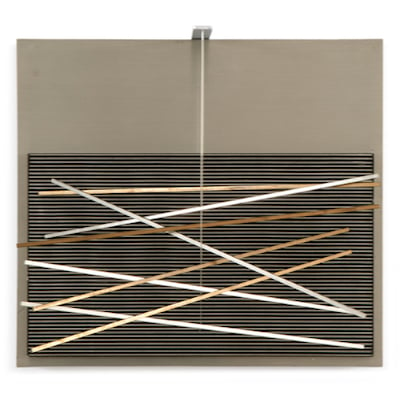
What is kinetic art?
- Show All
- Established
- Discoveries
- Show All
Artworks Related to Kinetic art
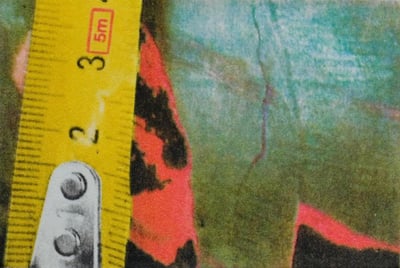
Rita McBride
Untitled (Rulers III), 2011
Photography
Photogravure
EUR 900
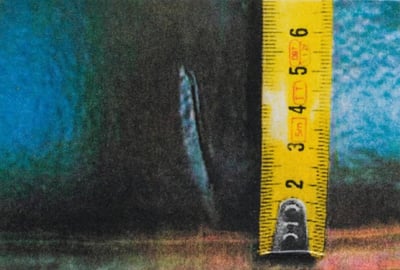
Rita McBride
Untitled (Rulers IV), 2011
Photography
Photogravure
EUR 900

Rita McBride
Blueprint, 2011
Limited Edition Print
Woodcut
Currently Not Available

Rita McBride
BINGO, 2014
Limited Edition Print
Offset Print
EUR 7,000

Dario Perez-Flores
Prochromatique yc1, 2013
Painting
Mixed Media
EUR 3,500

Francois Morellet
Ondes parasites 3, 2014
Limited Edition Print
Screen-print
EUR 2,150

Francois Morellet
Ondes parasites 2, 2014
Limited Edition Print
Screen-print
EUR 2,150

Francois Morellet
Ondes parasites 1, 2014
Limited Edition Print
Screen-print
EUR 2,150
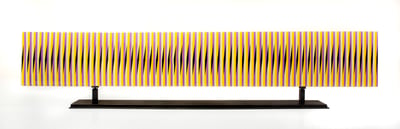
Carlos Cruz-Diez
Stèle horizontale 15, 2013
Ceramics
Mixed Media
EUR 12,000

Julio Le Parc
Cercles par déplacement, 1965 - 2015
Sculpture / Object
Mixed Media
EUR 9,000
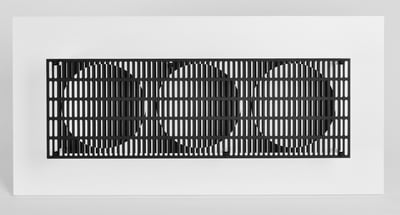
Antonio Asis
3 Cercles noir et blanc, 2014
Sculpture / Object
Mixed Media
EUR 3,000

Antonio Asis
boules tactiles sur font rouge, 2015
Sculpture / Object
Mixed Media
EUR 3,000

Ludwig Wilding
SBST 2838, 2000
Sculpture / Object
Object
EUR 1,500

Ludwig Wilding
SBST 2823, 1993
Sculpture / Object
Object
EUR 1,500

Ludwig Wilding
SB II, 1986
Sculpture / Object
Object
EUR 1,500

Ludwig Wilding
SBST 2818, 1986
Sculpture / Object
Object
EUR 1,500
Related Articles

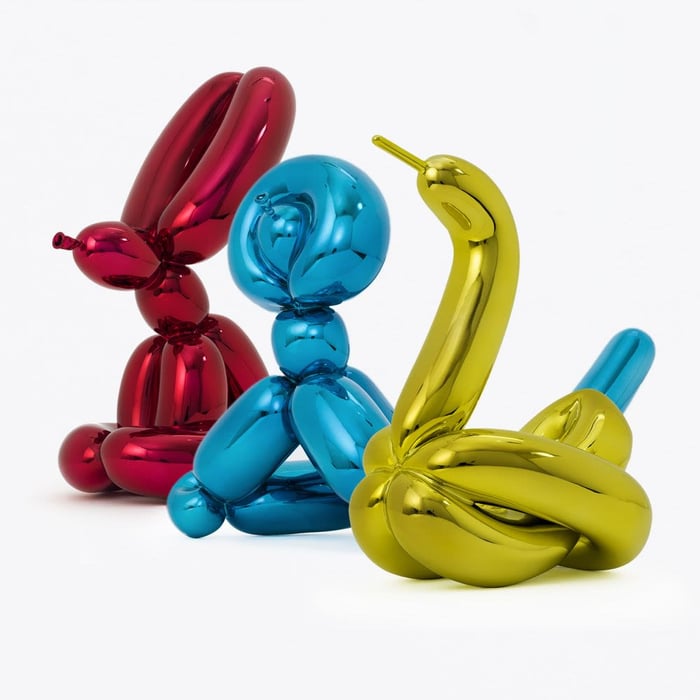

Patina is the distinctive greenish surface that bronze develops over time due to exposure to air and humidity. Artists can also apply chemicals to bronze to artificially create patina. Alternatively, bronze can be polished to reveal its natural rich gold color. Patina is not exclusive to bronze; it can also occur on other metals like copper and even on wood and stone, enhancing the material's character over time.

Art Intervention refers to art created with the intention of interacting with an existing situation, structure, artwork, audience, or institution. This form of art gained popularity in the 1960s as artists sought to provoke change within political and social contexts. The concept of Artist-in-Residence programs was influenced by the ideas and practices of this movement.

Original artwork is art that stems directly from the personal inspiration and creativity of an artist. It is not a direct copy of another artist’s work, though it may be inspired by it. The subject matter can be similar, but it cannot be an exact replication. The term also refers to a unique piece, as opposed to a multiple or edition.
Can't find your Answer?
Thank you! Your question has been sent — we'll get back to you shortly.
