

What is pop-art?
- Show All
- Established
- Discoveries
- Show All
Artworks Related to Pop art

Damien Hirst
Psychedelic (from Kaleidoscopes), 2024
Limited Edition Print
Giclée printing
Inquire For Price

Damien Hirst
Faneel H13-11 from Where The Land Meets The Sea, 2023
Limited Edition Print
Photograph
GBP 5,500 - 7,100

Damien Hirst
Diacetoxyscirpenol Spot Print, 2005
Limited Edition Print
Etching
GBP 55,000 - 71,500

Damien Hirst
Xylene Cyanol Dye Solution, 2005
Limited Edition Print
Etching
GBP 18,000 - 23,400

Damien Hirst
Perillartine, 2012
Limited Edition Print
Woodcut
GBP 14,000 - 16,000

Damien Hirst
Beverley Hills from Colour Space, H5-2, 2018
Limited Edition Print
Giclée printing
GBP 7,000 - 10,000

Andy Warhol
Old Fashioned Vegetable from Campbell's Soup II (F.&S.54), 1969
Limited Edition Print
Screen-print
GBP 60,000 - 70,000

Andy Warhol
Happy Bug Day, 1955
Limited Edition Print
Lithograph
GBP 6,500 - 8,400

Red Grooms
Untitled from The New York Collection for Stockholm, 1973
Limited Edition Print
Screen-print
GBP 1,140

Larry Rivers
Untitled from The New York Collection for Stockholm, 1973
Limited Edition Print
Mixed Media
GBP 2,340

James Rosenquist
Untitled from The New York Collection for Stockholm, 1973
Limited Edition Print
Screen-print
GBP 2,880

Claes Oldenburg
M.Mouse (with) 1 Ear (equals) Tea Bag Blackboard Version, 1973
Limited Edition Print
Mixed Media
GBP 2,220

Andy Warhol
Untitled (Mao) from The New York Collection for Stockholm, 1973
Limited Edition Print
Mixed Media
GBP 20,000 - 26,000

Andy Warhol
Jessica Lange, 1979
Drawing / Watercolor
Mixed Media
EUR 15,000
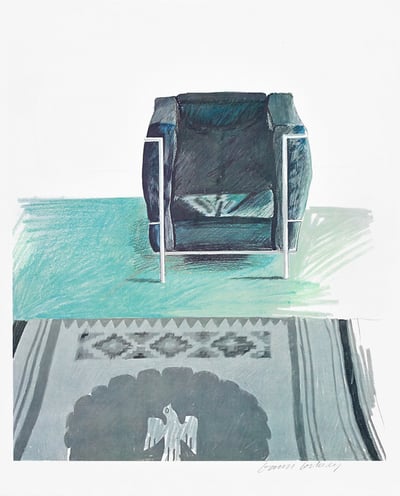
David Hockney
Corbusier Chair and Rug, 1969
Limited Edition Print
Offset Print
GBP 12,500 - 16,200

Keith Haring
Apocalypse VIII, 1988
Limited Edition Print
Silkscreen
EUR 22,350
Related Articles


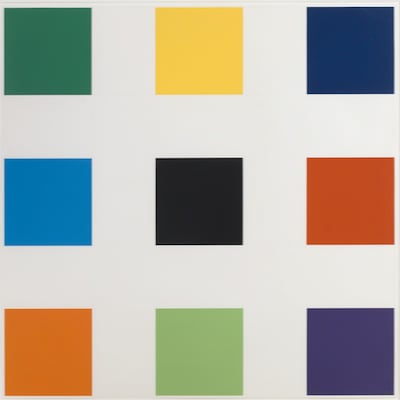
Hard Edge art is a style of abstract painting that became popular in the 1960s. It features areas of color separated by crisp, sharp edges that are painted with geometric precision. The term hard-edge painting was coined by art critic Jules Langsner to describe this approach, which contrasts with the softer, more fluid forms of other abstract styles.
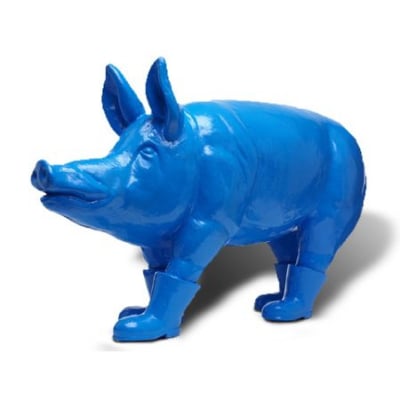
Environmental art is a collective term that refers to a wide range of artistic practices and works that engage with historical and ecological themes. The term often encompasses ecological concerns, although it is not exclusively defined by them. Environmental art acknowledges and appreciates the early history of the environmental art movement, including works with activist themes and those celebrating the connection between nature and the artist through the use of natural materials.

Systems Art refers to a group of artists who, during the late 1960s and early 1970s, used the frameworks of conceptualism and minimalism to create art that was responsive to its environment. Rejecting traditional art themes, they embraced aesthetic systems and experimented with diverse media. Systems Art often connected with contemporary political movements of the time, emphasizing the interrelationship between the artwork, its context, and the broader social and political environment.
Can't find your Answer?
Thank you! Your question has been sent — we'll get back to you shortly.
