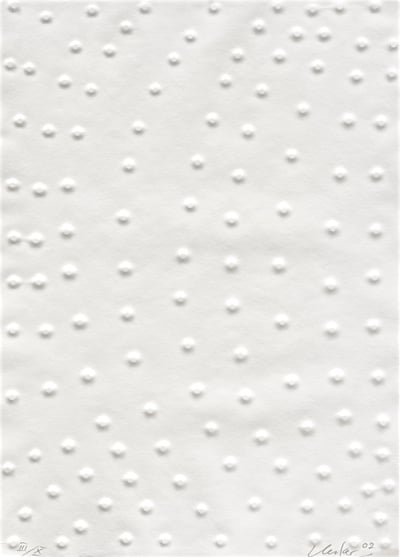
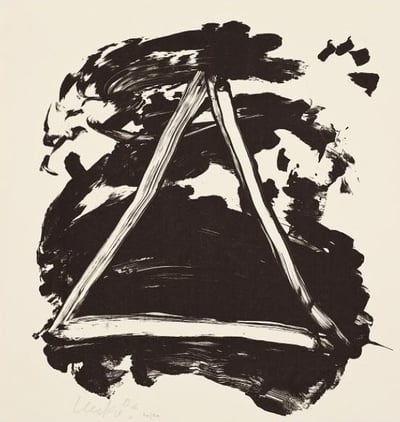
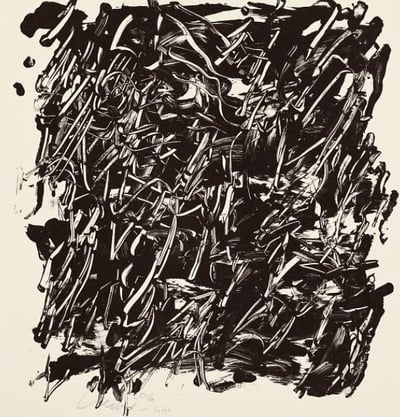
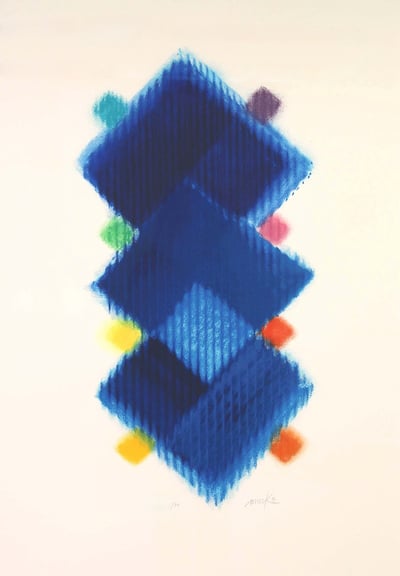
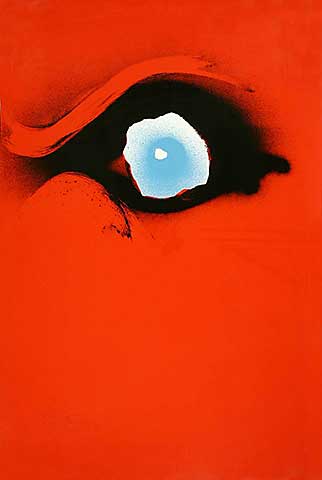
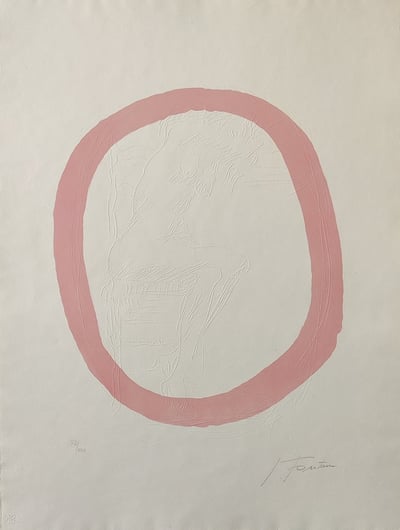
Embossed prints, on Eskulan paper, with accompanying text sheet.
Signed, dated, and numbered.
Co-published by Dorothea van der Koelen, Mainz and Edouard Weiss, Paris.
Literature: Van der Koelen, Dorothea and Martin (eds.): Günther Uecker - Opus Liber, Directory of Bibliophile Books and Works, Mainz 2007, Cat. No. L 0203, ill. pp. 507-511.
Graphein VIII, Christen Ägypten (2002) by Günther Uecker is a refined embossed print from his Graphein series, a body of work that explores the act of writing and marking as both a physical and spiritual gesture. Created on handmade Eskulan paper, the work features an array of raised dots arranged in a subtle, radiating pattern, evoking both braille and celestial constellations. The tactile surface, devoid of color or pigment, emphasizes form and light—hallmarks of Uecker’s approach to sensory and meditative expression. The title refers to Christian communities in Egypt, possibly invoking themes of endurance, silent testimony, and cultural memory. This minimalist yet deeply symbolic piece invites the viewer to read through touch, reflection, and light, rather than language. Published in an edition of 120, with additional artist’s copies, it was co-produced by Dorothea van der Koelen in Mainz and Edouard Weiss in Paris, further affirming its place in Uecker’s philosophical and materially resonant oeuvre.
Gunther Uecker (Germany, 1930) is a key figure in the ZERO movement. Known for his nail-covered sculptures and reliefs, he explores light, shadow, and texture in dynamic ways. His works, often interactive, reflect themes of nature, rhythm, and spirituality, making him one of Germany’s most innovative postwar artists.
EmbossingEmbossing is a technique used to create raised designs or images on a surface, typically paper. Artists achieve this effect by altering the shape of the paper, often by pressing it from the reverse side using a template and a tool like a sanded dowel. The result is a design with multiple levels of depth, giving a three-dimensional appearance.
Embossed prints, on Eskulan paper, with accompanying text sheet.
Signed, dated, and numbered.
Co-published by Dorothea van der Koelen, Mainz and Edouard Weiss, Paris.
Literature: Van der Koelen, Dorothea and Martin (eds.): Günther Uecker - Opus Liber, Directory of Bibliophile Books and Works, Mainz 2007, Cat. No. L 0203, ill. pp. 507-511.
Graphein VIII, Christen Ägypten (2002) by Günther Uecker is a refined embossed print from his Graphein series, a body of work that explores the act of writing and marking as both a physical and spiritual gesture. Created on handmade Eskulan paper, the work features an array of raised dots arranged in a subtle, radiating pattern, evoking both braille and celestial constellations. The tactile surface, devoid of color or pigment, emphasizes form and light—hallmarks of Uecker’s approach to sensory and meditative expression. The title refers to Christian communities in Egypt, possibly invoking themes of endurance, silent testimony, and cultural memory. This minimalist yet deeply symbolic piece invites the viewer to read through touch, reflection, and light, rather than language. Published in an edition of 120, with additional artist’s copies, it was co-produced by Dorothea van der Koelen in Mainz and Edouard Weiss in Paris, further affirming its place in Uecker’s philosophical and materially resonant oeuvre.
Gunther Uecker (Germany, 1930) is a key figure in the ZERO movement. Known for his nail-covered sculptures and reliefs, he explores light, shadow, and texture in dynamic ways. His works, often interactive, reflect themes of nature, rhythm, and spirituality, making him one of Germany’s most innovative postwar artists.
It’s about…creating… an instrument with which we can eat art.
- Gunther Uecker
Gunther Uecker (b. 1930, Germany) is a German artist renowned for his innovative contributions to kinetic art and Op art. He is best known as a key member of the ZERO group, a collective of artists who sought to redefine art in the aftermath of World War II. Uecker's work is characterized by his use of nails as a primary medium, creating dynamic, textured surfaces that interact with light and shadow. These nail-reliefs are both tactile and visually striking, embodying a sense of movement and energy. His explorations of light, shadow, and surface texture have made him a significant figure in post-war European art. Uecker's work has been exhibited in major museums around the world, including the Solomon R. Guggenheim Museum in New York and the Centre Pompidou in Paris.
Activist Art is a form of art created to address social and political issues. It often involves public engagement and works closely with communities to raise awareness or inspire change. While it can include elements of performance art, it is not limited to this form. Examples include creating and distributing social protest posters or organizing community-based art projects that highlight specific causes.