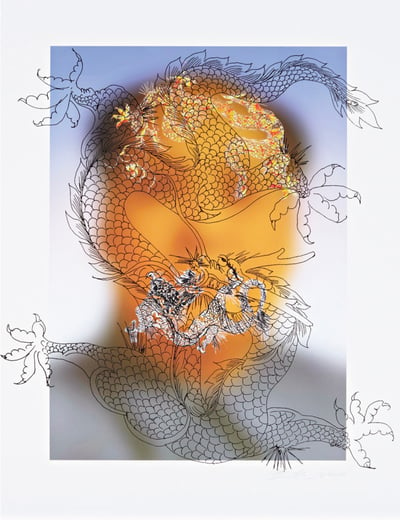
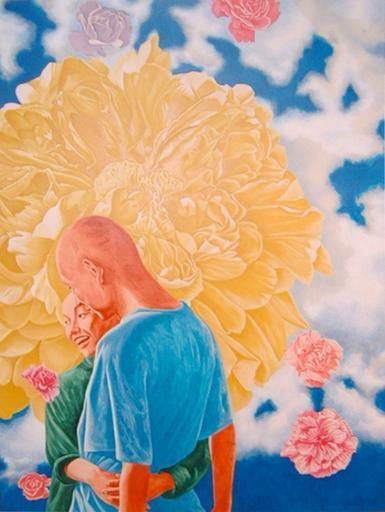
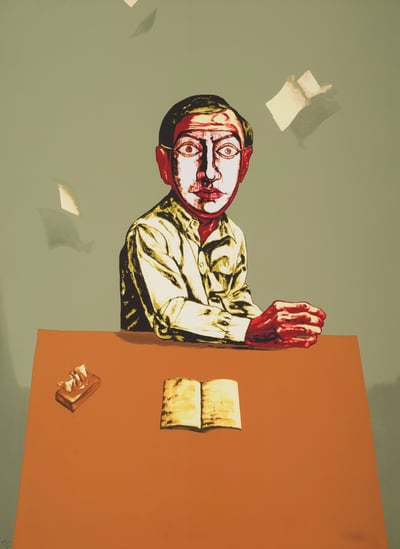
color photograph, signed bottom right, photo certificate by the artist.
Huang Yan's Chinese Shanshui Tattoo (1999) is an iconic work that blends traditional Chinese landscape painting with contemporary art through photography. This color photograph depicts a human back as the canvas for intricate, classical Shanshui (mountain-water) painting, merging body art with ancient Chinese aesthetics. The tattoo-like landscape, featuring mountains, trees, and flowing water, overlays the natural contours and muscles of the body, symbolizing the harmony between humans and nature. The photograph, signed at the bottom right by the artist and accompanied by a photo certificate, measures 50 x 60 cm. This work reflects Huang Yan’s innovative approach in merging Chinese cultural heritage with modern expression, challenging perceptions of identity and tradition in contemporary art.
Huang Yan (China, 1966) merges traditional Chinese art with contemporary mediums, famously painting landscapes on human bodies. His innovative works, such as the Chinese Landscape Tattoo series, explore themes of identity, nature, and cultural heritage, blending ancient aesthetics with modern artistic expressions. Huang’s art bridges the past and present, symbolizing a living connection to tradition.
PhotographA photograph is an image captured with a camera. Traditionally, photographs were made by exposing film and then developing the image on light-sensitive paper using chemicals. Today, photographs can also be captured digitally and printed or displayed electronically. The process requires a camera, whether film or digital, and a photographer.
color photograph, signed bottom right, photo certificate by the artist.
Huang Yan's Chinese Shanshui Tattoo (1999) is an iconic work that blends traditional Chinese landscape painting with contemporary art through photography. This color photograph depicts a human back as the canvas for intricate, classical Shanshui (mountain-water) painting, merging body art with ancient Chinese aesthetics. The tattoo-like landscape, featuring mountains, trees, and flowing water, overlays the natural contours and muscles of the body, symbolizing the harmony between humans and nature. The photograph, signed at the bottom right by the artist and accompanied by a photo certificate, measures 50 x 60 cm. This work reflects Huang Yan’s innovative approach in merging Chinese cultural heritage with modern expression, challenging perceptions of identity and tradition in contemporary art.
Huang Yan (China, 1966) merges traditional Chinese art with contemporary mediums, famously painting landscapes on human bodies. His innovative works, such as the Chinese Landscape Tattoo series, explore themes of identity, nature, and cultural heritage, blending ancient aesthetics with modern artistic expressions. Huang’s art bridges the past and present, symbolizing a living connection to tradition.
The body is not just a surface; it holds our history and culture. To paint on it is to rewrite those stories.
- Huang Yan
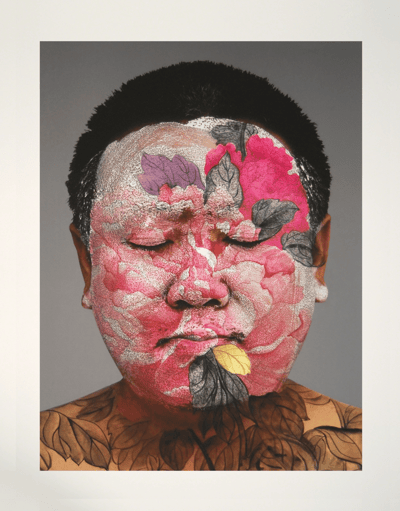
Huang Yan is a contemporary multimedia artist from Beijing, China. He currently lectures at Changchun University. He combines painting, photography and sculpture to create his artwork. Yan is most famous for using human beings as canvas, painting landscapes, patterns and flowers on people's faces and bodies. The photographs of the painted people becomes the artwork. Much of his landscape paintings are influenced by the Song dynasty and he also uses zen and Buddhist themes in his work. One of the most famous artists in China today, Mr. Huang who started out as a poet, has had exhibitions of his work all over the world. His biggest controversy came in 2014, when his porcelain busts of Mao weren't allowed to leave China for an exhibition in France. The busts were considered to be disrespectful to the deceased communist leader. Huang Yan is also a businessman and author. He operates his own art gallery, Must Be Contemporary Art, and writes mostly about fellow contemporary Chinese artists. His wife, Zhang Tiemei, is also an artist and they often work together.
Body art involves creating art directly on or with the human body. Common forms include body piercings and tattoos, but it also encompasses practices like branding, scarification, scalping, body painting, full-body tattoos, body shaping, and sub-dermal implants. Body art can also refer to a subcategory of performance art where the artist's body is central to the artwork.