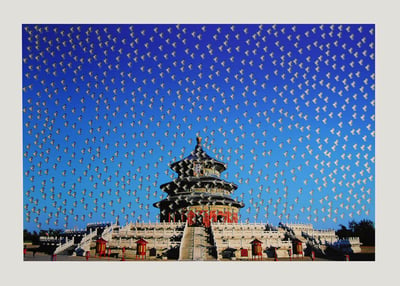
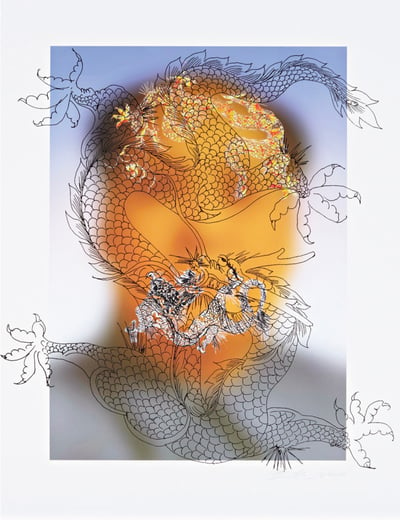
Gilclee, with silkscreen overlay - Image: 88.4 x 81 cm (34 3/4 x 31 7/8 in); - sheet: 108 x 86.5 cm (42 1/2 x 34 in)
Huang Yan’s Mao With Dragons is a striking mixed-media work that overlays traditional Chinese motifs onto a blurred, ethereal portrait. The giclée print features a large central figure reminiscent of Mao Zedong, with the face obscured by soft gradients, creating a dreamlike effect. Over this, a delicate silkscreen overlay of intricate dragon patterns, symbolic in Chinese culture, weaves across the image. The dragons add layers of cultural symbolism, alluding to power, protection, and legacy, while simultaneously engaging with themes of modernity versus tradition. By merging historical iconography with contemporary portraiture, Huang Yan provokes reflections on cultural identity and the transformation of historical figures in collective memory. Limited to 200 pieces with 20 artist proofs, Mao With Dragons exemplifies Yan’s unique approach to blending political and cultural narratives.
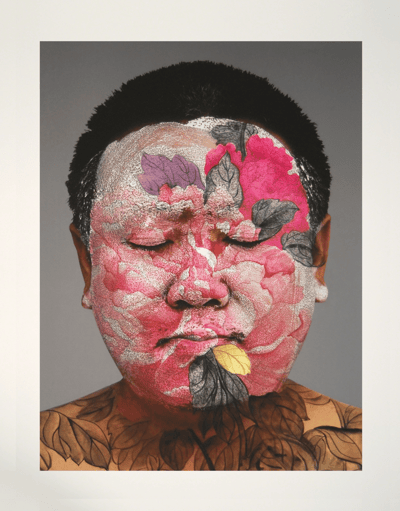
Huang Yan (China, 1966) merges traditional Chinese art with contemporary mediums, famously painting landscapes on human bodies. His innovative works, such as the Chinese Landscape Tattoo series, explore themes of identity, nature, and cultural heritage, blending ancient aesthetics with modern artistic expressions. Huang’s art bridges the past and present, symbolizing a living connection to tradition.
mixed mediaMixed media refers to artwork that incorporates more than one medium within a single piece. Unlike multimedia art, which combines distinct forms of visual art and often includes elements like sound, video, or digital media, mixed media focuses on combining traditional art materials, such as paint, ink, and collage. Mixed media art allows artists to achieve a wide range of effects and textures by layering and blending different materials.
Gilclee, with silkscreen overlay - Image: 88.4 x 81 cm (34 3/4 x 31 7/8 in); - sheet: 108 x 86.5 cm (42 1/2 x 34 in)
Huang Yan’s Mao With Dragons is a striking mixed-media work that overlays traditional Chinese motifs onto a blurred, ethereal portrait. The giclée print features a large central figure reminiscent of Mao Zedong, with the face obscured by soft gradients, creating a dreamlike effect. Over this, a delicate silkscreen overlay of intricate dragon patterns, symbolic in Chinese culture, weaves across the image. The dragons add layers of cultural symbolism, alluding to power, protection, and legacy, while simultaneously engaging with themes of modernity versus tradition. By merging historical iconography with contemporary portraiture, Huang Yan provokes reflections on cultural identity and the transformation of historical figures in collective memory. Limited to 200 pieces with 20 artist proofs, Mao With Dragons exemplifies Yan’s unique approach to blending political and cultural narratives.
Huang Yan (China, 1966) merges traditional Chinese art with contemporary mediums, famously painting landscapes on human bodies. His innovative works, such as the Chinese Landscape Tattoo series, explore themes of identity, nature, and cultural heritage, blending ancient aesthetics with modern artistic expressions. Huang’s art bridges the past and present, symbolizing a living connection to tradition.
The body is not just a surface; it holds our history and culture. To paint on it is to rewrite those stories.
- Huang Yan
Huang Yan is a contemporary multimedia artist from Beijing, China. He currently lectures at Changchun University. He combines painting, photography and sculpture to create his artwork. Yan is most famous for using human beings as canvas, painting landscapes, patterns and flowers on people's faces and bodies. The photographs of the painted people becomes the artwork. Much of his landscape paintings are influenced by the Song dynasty and he also uses zen and Buddhist themes in his work. One of the most famous artists in China today, Mr. Huang who started out as a poet, has had exhibitions of his work all over the world. His biggest controversy came in 2014, when his porcelain busts of Mao weren't allowed to leave China for an exhibition in France. The busts were considered to be disrespectful to the deceased communist leader. Huang Yan is also a businessman and author. He operates his own art gallery, Must Be Contemporary Art, and writes mostly about fellow contemporary Chinese artists. His wife, Zhang Tiemei, is also an artist and they often work together.
Activist Art is a form of art created to address social and political issues. It often involves public engagement and works closely with communities to raise awareness or inspire change. While it can include elements of performance art, it is not limited to this form. Examples include creating and distributing social protest posters or organizing community-based art projects that highlight specific causes.