

Lambda print mounted on aluminium. - Signed bottom right, photo certificate by the artist, work published in the catalog "P3 Performative-Paper-Project" side event of the 52nd Venice Biennale, 2007 Palazzo Frisacco, Tolmezzo (UD).
Landscape by Huang Yan is a Lambda print photograph, part of an exclusive edition of 12, mounted on aluminum and signed by the artist. This artwork juxtaposes traditional Chinese landscape aesthetics with contemporary photography. At the center stands a tattooed figure, embodying both ancient and modern elements, positioned against a painted landscape backdrop reminiscent of classic Chinese scrolls. The rugged foreground, with cracked concrete and debris, contrasts sharply with the lush, idealized nature behind, creating a powerful tension between the past and the present. This piece, published in the catalog for the P3 Performative-Paper-Project at the 52nd Venice Biennale in 2007, reflects Huang Yan's exploration of cultural identity and transformation.
Artwork Copyright © Huang YanHuang Yan (China, 1966) merges traditional Chinese art with contemporary mediums, famously painting landscapes on human bodies. His innovative works, such as the Chinese Landscape Tattoo series, explore themes of identity, nature, and cultural heritage, blending ancient aesthetics with modern artistic expressions. Huang’s art bridges the past and present, symbolizing a living connection to tradition.
Artwork Copyright © Huang YanLandscape
Form
Medium
Size
- Inches
- Centimeters
Edition
Price
- USD
- EUR
- GBP
- CHF
- Authenticity Guaranteed
- Insured Shipping
- Online Since 2005
●Inventory 6130
●Signed
●Comes with gallery invoice and certificate
●Sell Us a Similar Artwork. Learn more.
Lambda print mounted on aluminium. - Signed bottom right, photo certificate by the artist, work published in the catalog "P3 Performative-Paper-Project" side event of the 52nd Venice Biennale, 2007 Palazzo Frisacco, Tolmezzo (UD).
Landscape by Huang Yan is a Lambda print photograph, part of an exclusive edition of 12, mounted on aluminum and signed by the artist. This artwork juxtaposes traditional Chinese landscape aesthetics with contemporary photography. At the center stands a tattooed figure, embodying both ancient and modern elements, positioned against a painted landscape backdrop reminiscent of classic Chinese scrolls. The rugged foreground, with cracked concrete and debris, contrasts sharply with the lush, idealized nature behind, creating a powerful tension between the past and the present. This piece, published in the catalog for the P3 Performative-Paper-Project at the 52nd Venice Biennale in 2007, reflects Huang Yan's exploration of cultural identity and transformation.
Artwork Copyright © Huang YanHuang Yan (China, 1966) merges traditional Chinese art with contemporary mediums, famously painting landscapes on human bodies. His innovative works, such as the Chinese Landscape Tattoo series, explore themes of identity, nature, and cultural heritage, blending ancient aesthetics with modern artistic expressions. Huang’s art bridges the past and present, symbolizing a living connection to tradition.
Artwork Copyright © Huang YanAvailability
Size
Form
Medium
SORT BY

Huang Yan
Chinese Shanshui Tattoo, 1999
Photography
Photograph
EUR 3,670

Huang Yan
Face tattoo , 2005
Photography
Photograph
USD 16,000

Huang Yan
Landscape
Photography
Lambda print
EUR 10,150
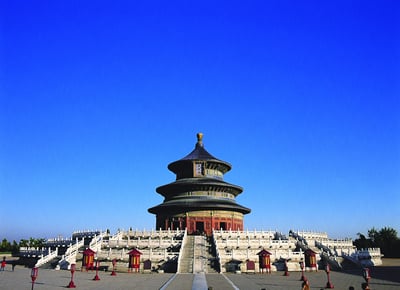
Huang Yan
Bird Tiantan No.1, 2006
Photography
Photograph
USD 4,850
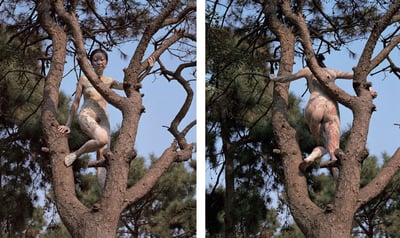
Huang Yan
Pinaster Landscape Diptych, 2007
Photography
Photograph
Inquire For Price
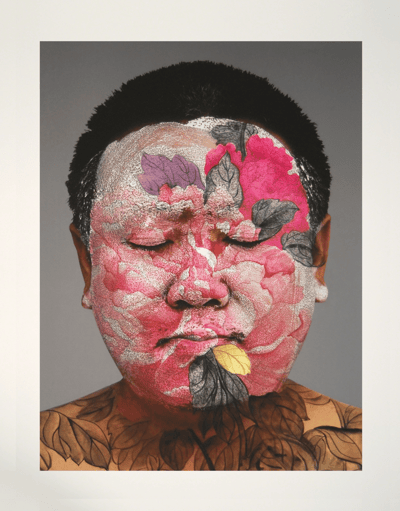
Huang Yan
Self Portrait, 2008
Limited Edition Print
Mixed Media
USD 1,350
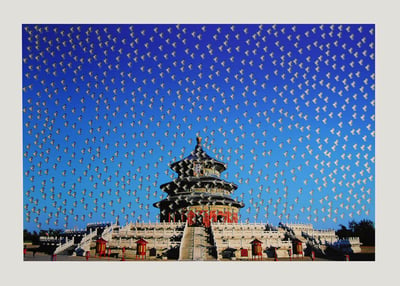
Huang Yan
Temple of Heaven, 2008
Limited Edition Print
Giclée printing
USD 850
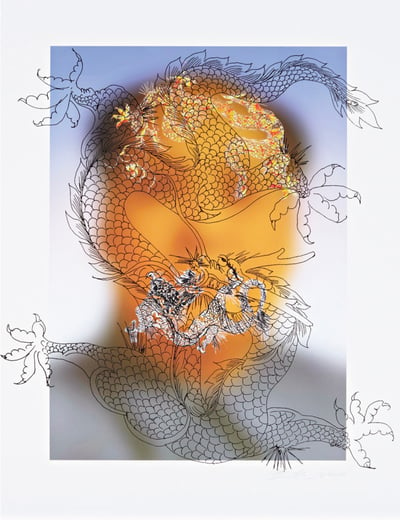
Huang Yan
Mao With Dragons, 2008
Limited Edition Print
Mixed Media
USD 850
Related Artists
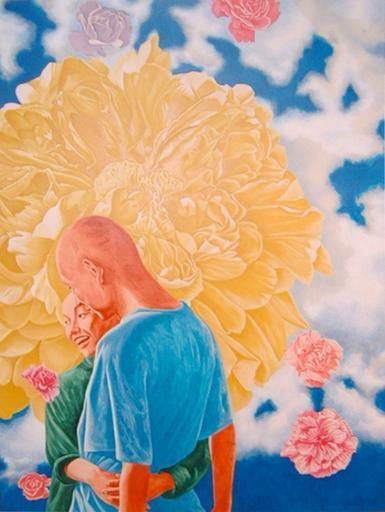

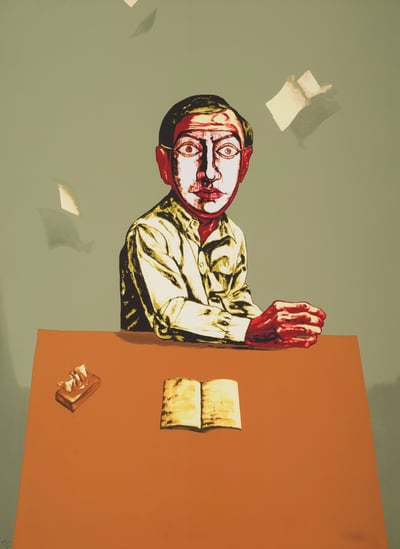
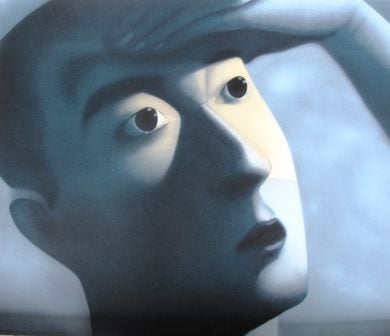

Artwork by Feng Zhengjie
What is Chinese contemporary art?
Chinese Contemporary Art is marked by a wide range of styles and experimental approaches. In the 1980s, avant-garde exhibitions were often shut down by government officials. The 1990s saw the rise of political pop and cynical realism, while China's One-Child Policy influenced artists to explore the individual as a subject matter.

Huang Yan
Landscape
123 x 153 cm


