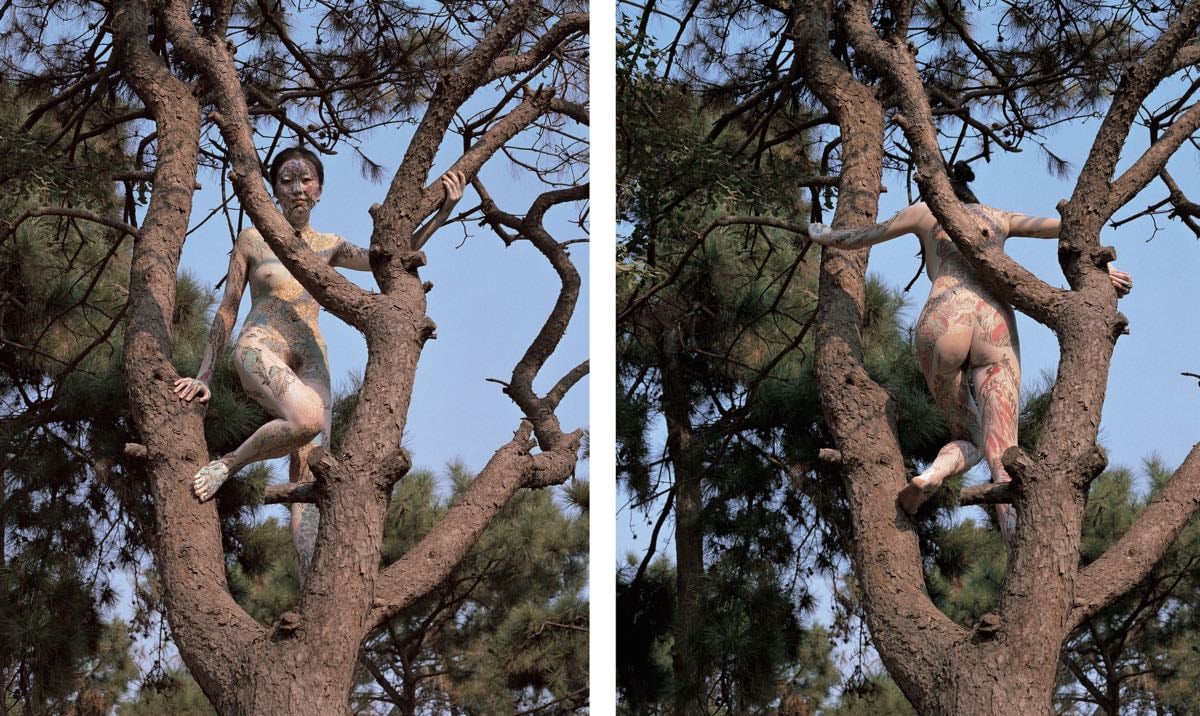
Chromogenic Print (C-print) Diptych - Rare limited edition of 8 - Signed, by the artist - Size is 150 x 120 cm for each photograph
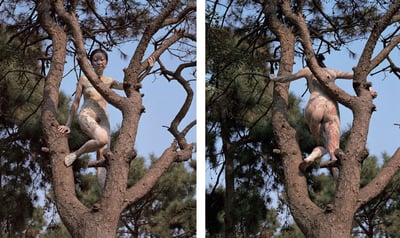
Huang Yan's Pinaster Landscape Diptych (2007) is a striking photographic work that merges the human form with nature in a seamless and evocative manner. This diptych, printed as a chromogenic (C-print) edition limited to only 8 pieces, presents two views of a human figure nestled within the branches of a pine tree. The figure’s body is painted to blend organically with the tree’s bark and textures, creating a visual fusion between flesh and foliage. Huang Yan's use of body painting as camouflage suggests themes of unity with nature, the transient boundaries between human and environment, and a return to natural origins. Each photograph, sized at 150 x 120 cm, captures both a front and back perspective, enhancing the viewer’s sense of immersion in this natural landscape. Signed by the artist, this diptych invites reflection on humanity’s interconnectedness with the earth.
Huang Yan (China, 1966) merges traditional Chinese art with contemporary mediums, famously painting landscapes on human bodies. His innovative works, such as the Chinese Landscape Tattoo series, explore themes of identity, nature, and cultural heritage, blending ancient aesthetics with modern artistic expressions. Huang’s art bridges the past and present, symbolizing a living connection to tradition.
PhotographA photograph is an image captured with a camera. Traditionally, photographs were made by exposing film and then developing the image on light-sensitive paper using chemicals. Today, photographs can also be captured digitally and printed or displayed electronically. The process requires a camera, whether film or digital, and a photographer.
Chromogenic Print (C-print) Diptych - Rare limited edition of 8 - Signed, by the artist - Size is 150 x 120 cm for each photograph
Huang Yan's Pinaster Landscape Diptych (2007) is a striking photographic work that merges the human form with nature in a seamless and evocative manner. This diptych, printed as a chromogenic (C-print) edition limited to only 8 pieces, presents two views of a human figure nestled within the branches of a pine tree. The figure’s body is painted to blend organically with the tree’s bark and textures, creating a visual fusion between flesh and foliage. Huang Yan's use of body painting as camouflage suggests themes of unity with nature, the transient boundaries between human and environment, and a return to natural origins. Each photograph, sized at 150 x 120 cm, captures both a front and back perspective, enhancing the viewer’s sense of immersion in this natural landscape. Signed by the artist, this diptych invites reflection on humanity’s interconnectedness with the earth.
Huang Yan (China, 1966) merges traditional Chinese art with contemporary mediums, famously painting landscapes on human bodies. His innovative works, such as the Chinese Landscape Tattoo series, explore themes of identity, nature, and cultural heritage, blending ancient aesthetics with modern artistic expressions. Huang’s art bridges the past and present, symbolizing a living connection to tradition.
The body is not just a surface; it holds our history and culture. To paint on it is to rewrite those stories.
- Huang Yan
Huang Yan is a contemporary multimedia artist from Beijing, China. He currently lectures at Changchun University. He combines painting, photography and sculpture to create his artwork. Yan is most famous for using human beings as canvas, painting landscapes, patterns and flowers on people's faces and bodies. The photographs of the painted people becomes the artwork. Much of his landscape paintings are influenced by the Song dynasty and he also uses zen and Buddhist themes in his work. One of the most famous artists in China today, Mr. Huang who started out as a poet, has had exhibitions of his work all over the world. His biggest controversy came in 2014, when his porcelain busts of Mao weren't allowed to leave China for an exhibition in France. The busts were considered to be disrespectful to the deceased communist leader. Huang Yan is also a businessman and author. He operates his own art gallery, Must Be Contemporary Art, and writes mostly about fellow contemporary Chinese artists. His wife, Zhang Tiemei, is also an artist and they often work together.
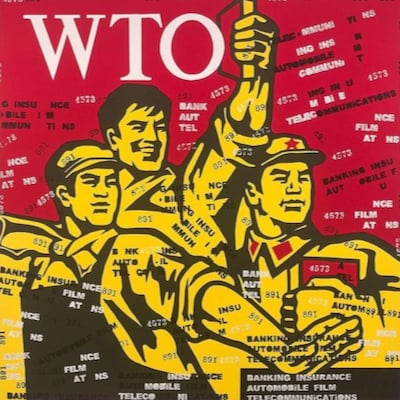
Political Pop was an art movement that emerged in China during the 1980s, blending the Pop Art style of Western countries with the socialist realism of China. This movement arose during a time of rapid social and political change in China, as artists sought to create works that questioned and critiqued these cultural shifts. Political Pop often juxtaposed iconic images from Chinese propaganda with Western consumer culture, highlighting the tensions between tradition and modernization.