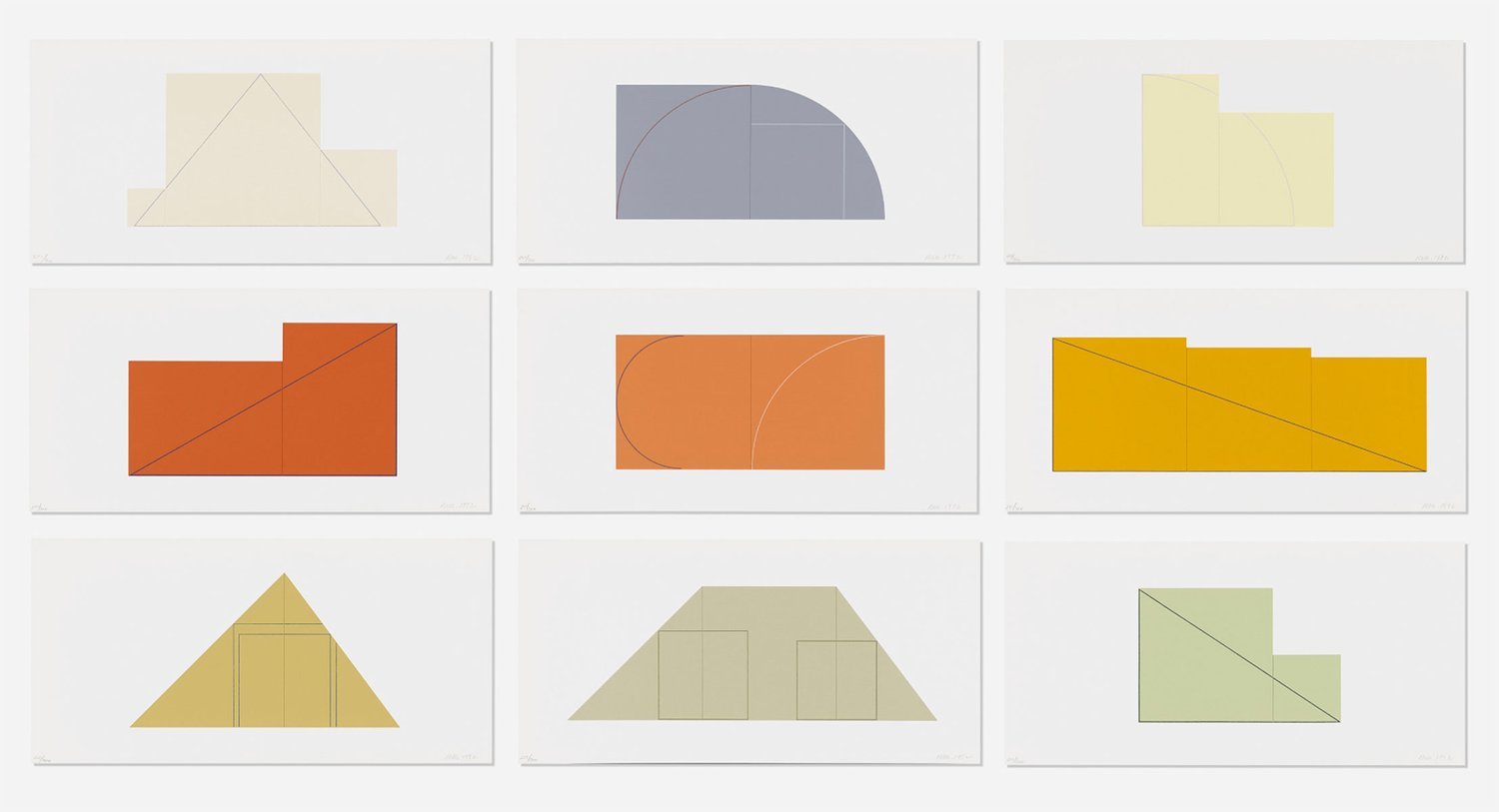
Screenprint in colors on Fabriano paper
- The Complete set of Nine Screenprints
- Signed and Numbered
- 11.63 x 23.88 inches (each)
- Co-published by Edition Domberger, Filderstadt, West Germany and Parasol Press, New York
Robert Mangold's Multiple Panel Paintings, Suite (1992) is a series of nine screenprints on Fabriano paper, each measuring 11.63 x 23.88 inches. The set showcases Mangold's minimalist geometric aesthetic, featuring variations of shapes such as triangles, rectangles, and semicircles, all rendered in muted and earthy tones—such as ochre, terracotta, gray, and cream. Each print is composed with precise, thin lines that intersect and divide the forms, creating a sense of architectural balance and harmony. The use of color and form varies between the panels, emphasizing the exploration of structure and repetition within Mangold’s practice. The series exemplifies his focus on the interplay between simplicity, shape, and spatial arrangement, inviting viewers to contemplate the subtle variations and relationships between the panels.
Artwork Copyright © Robert MangoldRobert Mangold (United States, 1937) is a minimalist artist renowned for his geometric abstractions that explore the interplay of shape, line, and color. His work often features subtle color palettes and hand-drawn graphite lines, creating a harmonious balance between form and space. Mangold's paintings and prints have been exhibited internationally, influencing contemporary abstract art.
Artwork Copyright © Robert MangoldMultiple Panel Paintings, suite, 1992
Form
Medium
Size
- Inches
- Centimeters
Edition
Price
- USD
- EUR
- GBP
- CHF
- Authenticity Guaranteed
- Insured Shipping
- Online Since 2005
●Inventory 12238
●Signed
●Comes with gallery invoice and certificate
●Sell Us a Similar Artwork. Learn more.
Screenprint in colors on Fabriano paper
- The Complete set of Nine Screenprints
- Signed and Numbered
- 11.63 x 23.88 inches (each)
- Co-published by Edition Domberger, Filderstadt, West Germany and Parasol Press, New York
Robert Mangold's Multiple Panel Paintings, Suite (1992) is a series of nine screenprints on Fabriano paper, each measuring 11.63 x 23.88 inches. The set showcases Mangold's minimalist geometric aesthetic, featuring variations of shapes such as triangles, rectangles, and semicircles, all rendered in muted and earthy tones—such as ochre, terracotta, gray, and cream. Each print is composed with precise, thin lines that intersect and divide the forms, creating a sense of architectural balance and harmony. The use of color and form varies between the panels, emphasizing the exploration of structure and repetition within Mangold’s practice. The series exemplifies his focus on the interplay between simplicity, shape, and spatial arrangement, inviting viewers to contemplate the subtle variations and relationships between the panels.
Artwork Copyright © Robert MangoldRobert Mangold (United States, 1937) is a minimalist artist renowned for his geometric abstractions that explore the interplay of shape, line, and color. His work often features subtle color palettes and hand-drawn graphite lines, creating a harmonious balance between form and space. Mangold's paintings and prints have been exhibited internationally, influencing contemporary abstract art.
Artwork Copyright © Robert MangoldAvailability
Size
Medium
SORT BY

Robert Mangold
Untitled II, 2007
Limited Edition Print
Etching and Aquatint
USD 6,000

Robert Mangold
Multiple Panel Paintings, suite, 1992
Limited Edition Print
Screen-print
USD 13,200

Robert Mangold
Arabesque I, 1992
Limited Edition Print
Silkscreen
USD 2,100

Robert Mangold
Untitled 2 ( from A Book of Silk Screen Prints), 1992
Limited Edition Print
Serigraph
USD 1,100

Robert Mangold
Semi Circle IV, 1995
Limited Edition Print
Lithograph
Currently Not Available

Robert Mangold
Semi Circle III, 1995
Limited Edition Print
Lithograph
Currently Not Available
Related Artists
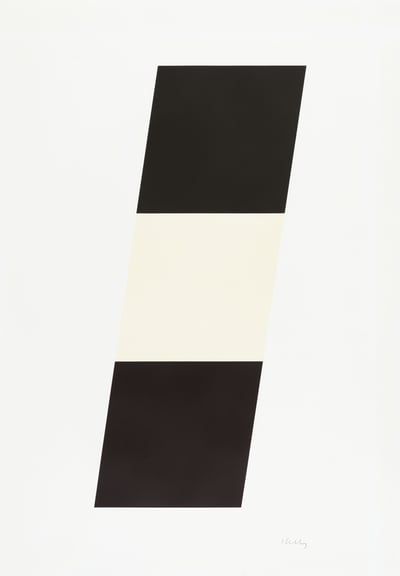
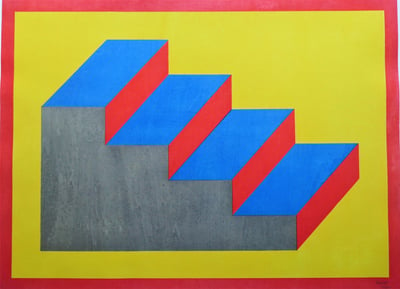
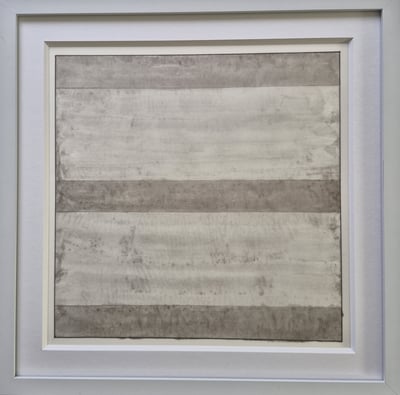

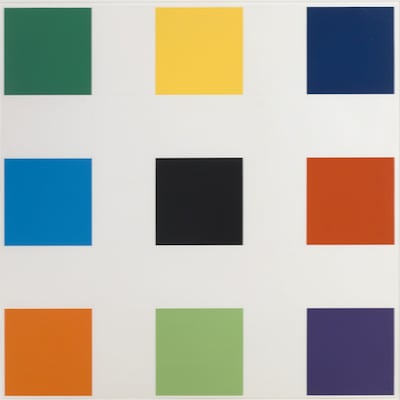
Artwork by Ellsworth Kelly
What is Hard Edge Art?
Hard Edge art is a style of abstract painting that became popular in the 1960s. It features areas of color separated by crisp, sharp edges that are painted with geometric precision. The term hard-edge painting was coined by art critic Jules Langsner to describe this approach, which contrasts with the softer, more fluid forms of other abstract styles.