
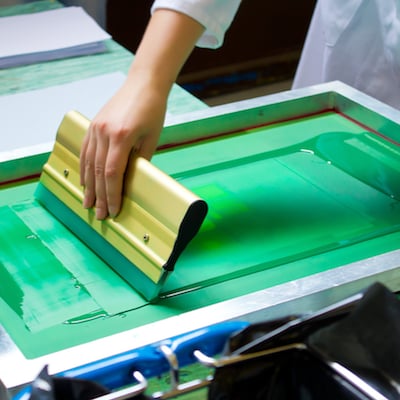
What is a screen-print?
- Show All
- Established
- Discoveries
- Show All
Artworks Related to Screen-print
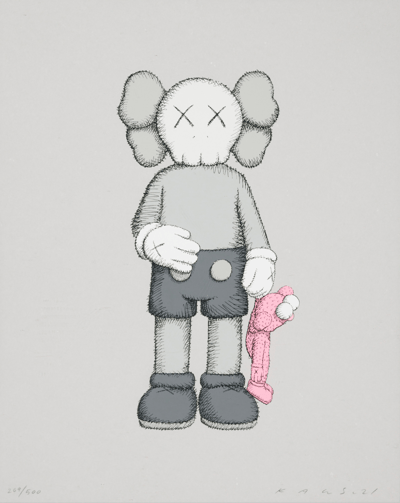
KAWS
Share, 2021
Limited Edition Print
Screen-print
USD 8,350

James Rosenquist
Miles, 1975
Limited Edition Print
Screen-print
USD 2,000

Jasper Johns
Cross Hatch, 1977
Limited Edition Print
Screen-print
Currently Not Available

Andy Warhol
Saint Apollonia (F. & S. II.330), 1984
Limited Edition Print
Screen-print
USD 23,500

Robert Indiana
Yield Brother, 1971
Limited Edition Print
Screen-print
USD 2,500

Banksy
Morons (Sepia), 2007
Limited Edition Print
Screen-print
USD 80,000 - 95,000

Peter Blake
Small Union Flag, 2016
Limited Edition Print
Screen-print
GBP 2,700

Andy Warhol
Ingrid Bergman, Herself (F. & S. II.313), 1983
Limited Edition Print
Screen-print
USD 60,000 - 70,000

Andy Warhol
Saint Apollonia (F. & S. II.331), 1984
Limited Edition Print
Screen-print
USD 23,500

Ellsworth Kelly
Jacmel, 1978-1980
Limited Edition Print
Screen-print
USD 8,500

Andy Warhol
Tre Amici, 1984
Limited Edition Print
Screen-print
USD 80,000 - 90,000

Banksy
Turf war , 2003
Limited Edition Print
Screen-print
GBP 34,800

David Shrigley
I try to be friendly, 2023
Limited Edition Print
Screen-print
GBP 11,400

Andy Warhol
Single Dollar Sign (FS II. 278), 1982
Limited Edition Print
Screen-print
EUR 120,000 - 140,000

Alex Katz
Trio, 2017
Limited Edition Print
Screen-print
EUR 29,500

Andy Warhol
Saint Apollonia, II.333, 1984
Limited Edition Print
Screen-print
USD 23,500
Related Articles


Environmental art is a collective term that refers to a wide range of artistic practices and works that engage with historical and ecological themes. The term often encompasses ecological concerns, although it is not exclusively defined by them. Environmental art acknowledges and appreciates the early history of the environmental art movement, including works with activist themes and those celebrating the connection between nature and the artist through the use of natural materials.

Carborundum is the trademark name for silicon carbide crystals, an abrasive material commonly used in sandpaper, cutting tools, and grinding wheels. Originally, artists used carborundum for grinding lithography stones. In collagraph printmaking, it is applied to plates to create texture and tone gradients, adding depth and contrast to the prints.

Automatism refers to a technique in the creative process that accesses material from the unconscious or subconscious mind. It is based on Sigmund Freud’s psychoanalytic method of free association. Artists value this process for its ability to inspire creative thought and spontaneous creation.
Can't find your Answer?
Thank you! Your question has been sent — we'll get back to you shortly.
