

What is etching?
- Show All
- Established
- Discoveries
- Show All
Artworks Related to Etching
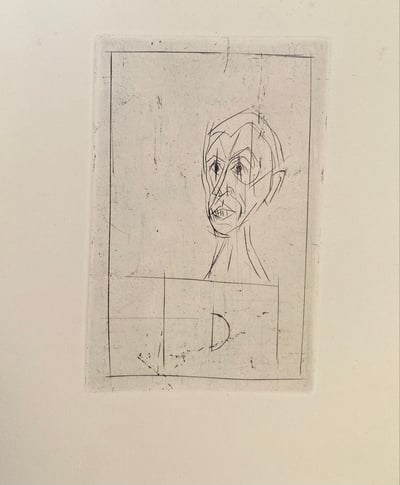
Alberto Giacometti
Tete de D de trois-Quarts sur socle I, 1947
Limited Edition Print
Etching
USD 1,300

Alberto Giacometti
Tete de B sur socle et deur tetes esquissées, 1946-1947
Limited Edition Print
Etching
USD 1,300
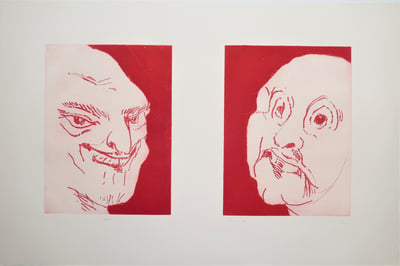
Thomas Schutte
Alte Freunde (Old friends) 2, 2010
Limited Edition Print
Etching
EUR 2,650
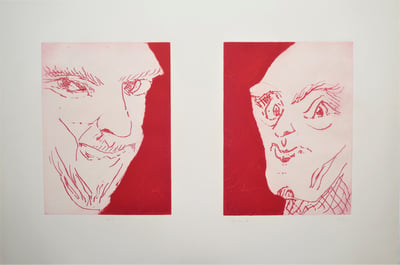
Thomas Schutte
Alte Freunde (Old friends), 2010
Limited Edition Print
Etching
EUR 2,650

Pablo Picasso
Bull and Horse (plate III) in the Arena from Le Chef-d'œuvre inconnu, 1927
Limited Edition Print
Etching
USD 8,000
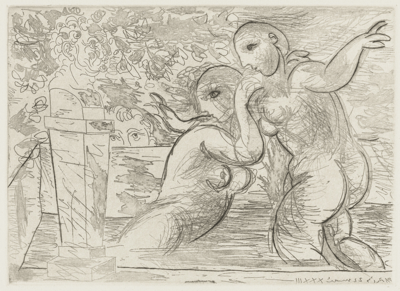
Pablo Picasso
Les Baigneuses Surprises, from La Suite Vollard, 1933
Limited Edition Print
Etching
USD 16,800

Pablo Picasso
Le Cocu magnifique I, 1968
Limited Edition Print
Etching
EUR 11,900
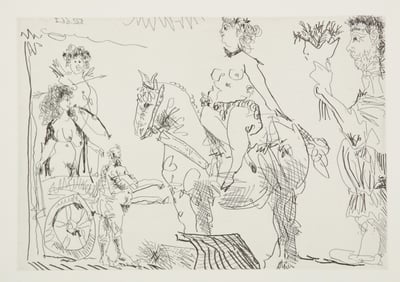
Pablo Picasso
Le Cocu magnifique, 1968
Limited Edition Print
Etching
EUR 11,900

Alex Katz
Profile of Vincent, 1974
Limited Edition Print
Etching
USD 1,900
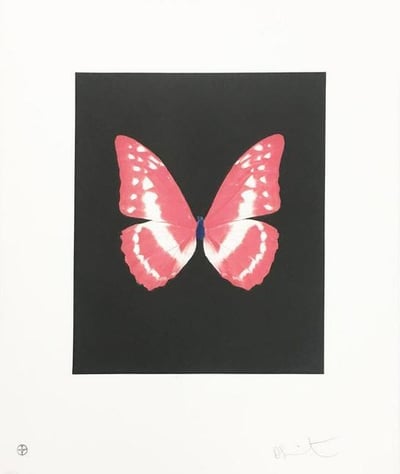
Damien Hirst
Eternal Rest, 2009
Limited Edition Print
Etching
USD 5,400

Reinhoud d'Haese
Deluxe Edition, 1989
Limited Edition Print
Etching
Currently Not Available

Richard Diebenkorn
Softground Y, 1982
Limited Edition Print
Etching
Currently Not Available

Tracey Emin
You forgot who you are, 2013
Limited Edition Print
Etching
GBP 3,500

Donald Baechler
Family I, 1986
Limited Edition Print
Etching
Currently Not Available

Anish Kapoor
Red shadows 2, 2016
Limited Edition Print
Etching
Currently Not Available
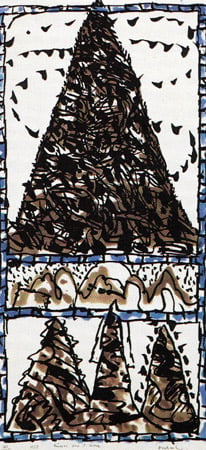
Pierre Alechinsky
Reserve pour l'hiver, 1988
Limited Edition Print
Etching
Currently Not Available
Related Articles
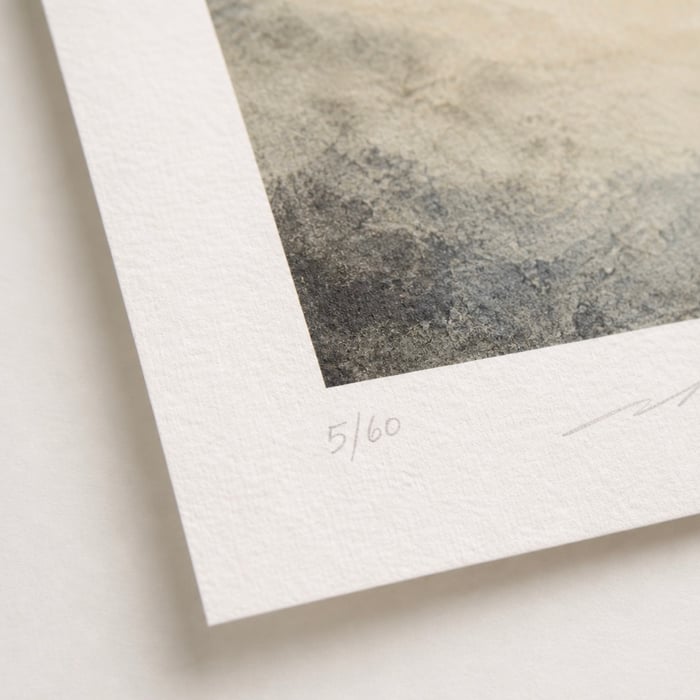


A C-type print, also known as a chromogenic print, is a photographic print made from a color negative or slide. The print is created on chromogenic paper, which contains three emulsion layers, each sensitized to a different primary color. After exposure, the paper is processed in a series of chemical baths, where each layer reacts to the chemicals to produce the final image. C-type prints are known for their rich color depth and are widely used in fine art and commercial photography.

EAT (Experiments in Art and Technology) was a movement formed to foster collaborations between engineers and artists. It facilitated direct, person-to-person connections between these two groups. The movement was originally launched in 1967 by artists Robert Whitman and Robert Rauschenberg, along with engineers Fred Waldhauer and Billy Klüver. EAT carried out various projects and activities that expanded the role of artists in contemporary society, encouraging the integration of art and technology.

Linocut is a printmaking technique similar to woodcut, where a sheet of linoleum is used as the relief surface. The design is carved into the linoleum using a V-shaped gouge or chisel, creating raised areas that form a mirror image of the final print. Ink is applied to the raised areas with a roller, and the linoleum sheet is then pressed onto fabric or paper. The printing can be done by hand or with a press.
Can't find your Answer?
Thank you! Your question has been sent — we'll get back to you shortly.
