
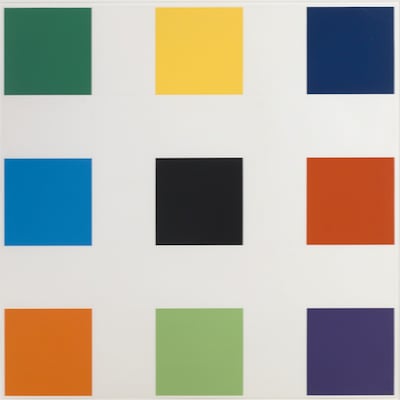
What is Hard Edge Art?
- Show All
- Established
- Discoveries
- Show All
Artworks Related to Hard Edge art
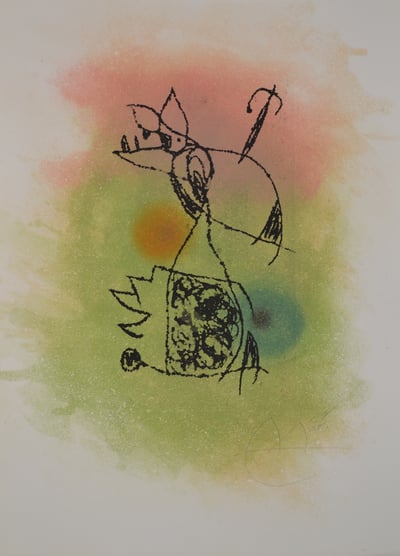
Joan Miró
Le Criquet - D1021, 1978
Limited Edition Print
Etching and Aquatint
USD 6,500

Joan Miró
Le Souriceau - D1026, 1978
Limited Edition Print
Etching
USD 6,300

Joan Miró
Grand Duc II (Grand Duke II) - D395, 1965
Limited Edition Print
Etching
USD 6,250

Joan Miró
L'Invention Du Feu - D284, 1960
Limited Edition Print
Aquatint
USD 5,250

Joan Miró
Series II - Rouge et Vert - M288, 1961
Limited Edition Print
Lithograph
USD 4,375
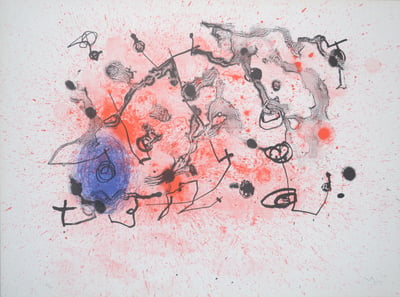
Joan Miró
Series II, Blue and Red - M291, 1961
Limited Edition Print
Lithograph
USD 4,375
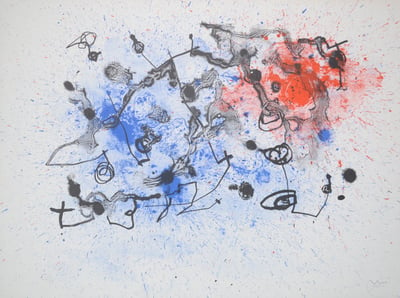
Joan Miró
Series II - Blue And Red - M290, 1961
Limited Edition Print
Lithograph
USD 4,375

Joan Miró
Series II Blue Red And Green - M294, 1961
Limited Edition Print
Lithograph
USD 4,375
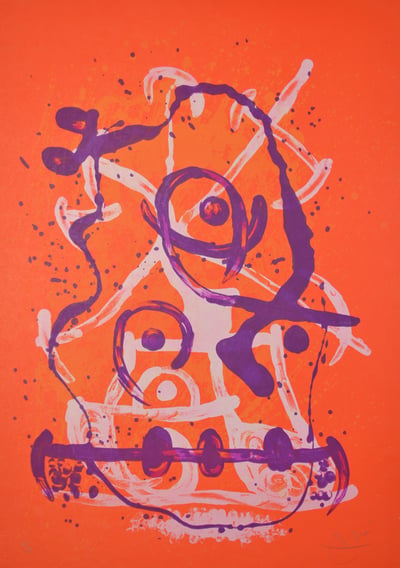
Joan Miró
Chevauchee Rouge Et Violet - M610, 1969
Limited Edition Print
Lithograph
USD 6,500
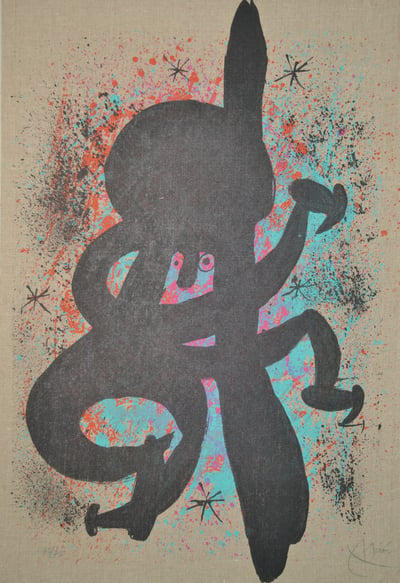
Joan Miró
The Feverish Eskimo - M637, 1969
Limited Edition Print
Lithograph
USD 6,500

Joan Miró
La Nuit Tentaculaire - M639, 1969
Limited Edition Print
Lithograph
USD 6,200
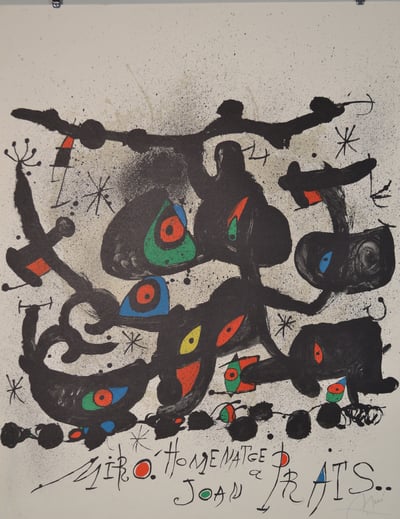
Joan Miró
Homentage A Joan Prats - M735, 1971
Limited Edition Print
Lithograph
USD 6,200

Joan Miró
Hommage A Miro - M868, 1972
Limited Edition Print
Lithograph
USD 5,300

Joan Miró
Homentage A Joan Prats - M852, 1972
Limited Edition Print
Lithograph
USD 5,300
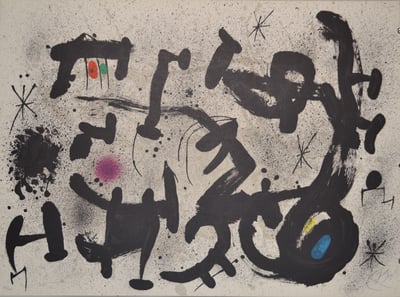
Joan Miró
Hommage A Joan Prats - M1034, 1975
Limited Edition Print
Lithograph
USD 5,200
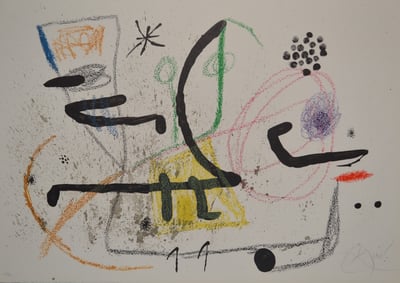
Joan Miró
Maravillas - M1061, 1975
Limited Edition Print
Lithograph
USD 6,500
Related Articles

Provenance refers to the chronology of ownership, location, or custody of an artwork. Tracing an object's provenance helps establish its authenticity and historical context by documenting its ownership history, storage locations, and custody over time. This process often involves expert opinions, comparative analysis, and scientific testing to provide evidence of the artwork’s origin and history.

Art Intervention refers to art created with the intention of interacting with an existing situation, structure, artwork, audience, or institution. This form of art gained popularity in the 1960s as artists sought to provoke change within political and social contexts. The concept of Artist-in-Residence programs was influenced by the ideas and practices of this movement.

Matter painting is a technique that involves blending thick impasto paints with materials like cement, mud, sand, or shells. The term first emerged in the 1950s to describe the works of Belgian and Dutch painters who explored the physical properties of painting materials and the different ways paint could be manipulated. This approach emphasizes texture and the tactile qualities of the surface, creating a sculptural effect on the canvas.
Can't find your Answer?
Thank you! Your question has been sent — we'll get back to you shortly.
