

What is late modernism?
- Show All
- Established
- Discoveries
- Show All
Artworks Related to Late modernism

Robert Rauschenberg
In Transit (Goddess Depot), 2001
Limited Edition Print
Lithograph
USD 6,600

Andy Warhol
Mao, II.99, 1972
Limited Edition Print
Silkscreen
USD 90,000 - 110,000

Andy Warhol
Flash - November 22, 1963, II.41, 1968
Limited Edition Print
Screen-print
USD 13,200

Andy Warhol
After the Party, II.183, 1979
Limited Edition Print
Screen-print
USD 40,000 - 50,000

Roy Lichtenstein
Untitled Plate (Waterlily), 1990
Ceramics
Plate
USD 2,500

Ellsworth Kelly
Orange and Blue over Yellow, 1964-65
Limited Edition Print
Lithograph
USD 20,000 - 25,000

Alexander Calder
Red Moon and Swirl, 1965
Limited Edition Print
Lithograph
Currently Not Available

Frank Stella
Had Gadya: Front Cover, from Illustrations after El Lissitzky's Had Gadya, 1984
Limited Edition Print
Collage
USD 19,850

Yoko Ono
John Lennon - Imagine, 2018
Limited Edition Print
Giclée printing
GBP 1,980
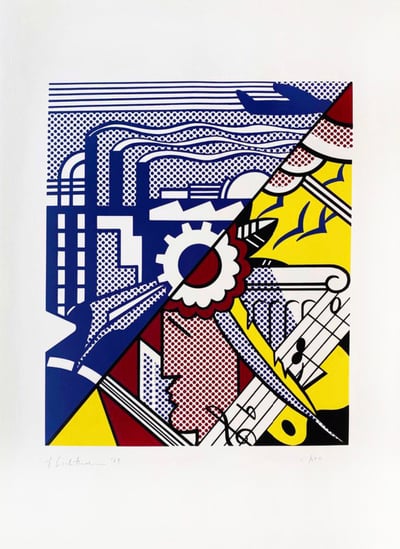
Roy Lichtenstein
Industry and the Arts (II), 1969
Limited Edition Print
Screen-print
GBP 30,000 - 40,000

Robert Longo
Rippling Water, 2016
Limited Edition Print
Archival Print
EUR 10,000 - 12,000

Robert Longo
Horsehead Nebula, 2008
Limited Edition Print
Pigment print
EUR 14,000 - 17,000

Robert Longo
Head of Christ, 2018
Limited Edition Print
Archival Print
EUR 9,000 - 12,000

Robert Longo
Freud’s Desk and Chair, Study Room, 2004
Limited Edition Print
Pigment print
EUR 9,000 - 12,000

Robert Longo
Earth, 2017
Limited Edition Print
Archival Print
EUR 6,000 - 8,000

Julian Schnabel
Best Buddies, 1992
Limited Edition Print
Serigraph
USD 4,000 - 6,000
Related Articles


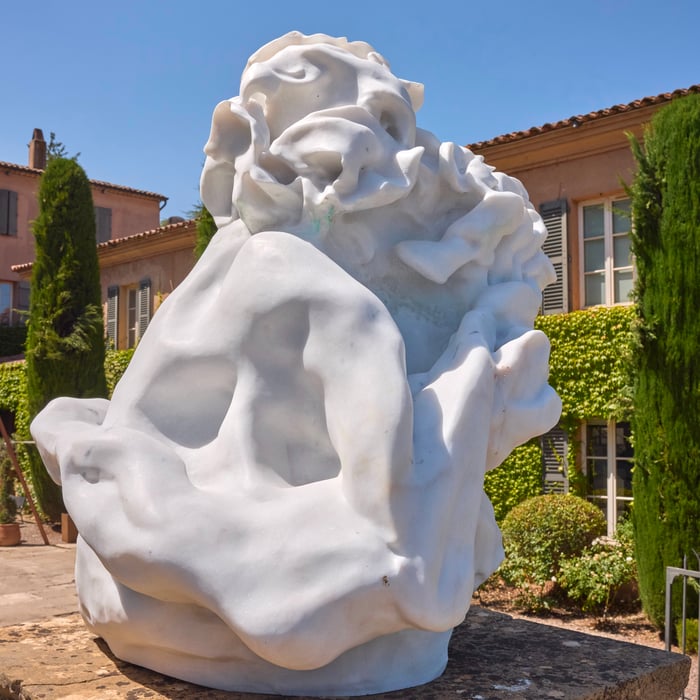
An object with distinctive or unusual qualities that naturally draws attention and prompts discussion among people.

Naïve art describes a style of artwork that is simple and unsophisticated, often created by artists without formal training in an academy or art school. The style is characterized by a lack of advanced techniques, giving it a childlike appearance. Naïve art often features bright colors, simple shapes, and a straightforward approach to subject matter, reflecting the artist's untrained perspective.

Interactive art is a form of art where the spectator is actively involved by the artist to achieve the artwork's purpose. This involvement can include allowing the visitor to walk around, in, or on the art installation, or even becoming a part of the artwork itself. Works in this category often feature computers, sensors, and interfaces that respond to various inputs such as meteorological changes, heat, motion, or other types of data programmed by the artist.
Can't find your Answer?
Thank you! Your question has been sent — we'll get back to you shortly.
