

What is late modernism?
- Show All
- Established
- Discoveries
- Show All
Artworks Related to Late modernism

Ellsworth Kelly
Black/Brown, 1970–72
Limited Edition Print
Lithograph
USD 7,390

Joan Miró
Untitled (from the Bouquet de rêves pour Neila portfolio), 1967
Limited Edition Print
Lithograph
USD 3,060

Joan Miró
Untitled (from the La bague d’Aurore portfolio), 1957
Limited Edition Print
Mixed Media
USD 14,850

Joan Miró
Les Geants III, 1960
Limited Edition Print
Aquatint
USD 4,690

Cy Twombly
Studio Lexington, 2008
Limited Edition Print
Drypoint
EUR 4,800

Gunther Uecker
Souvenir for Verheyen, 1989
Sculpture / Object
Mixed Media
GBP 15,000 - 20,000

Andy Warhol
Salade de alf Landon (Wild Raspberries IV.128A), 1959
Limited Edition Print
Offset Print
Inquire For Price

Andy Warhol
Wild Raspberries IV.136A (Roast Iguana), 1959
Limited Edition Print
Offset Print
Inquire For Price

Ross Bleckner
Untitled, 2001
Painting
Mixed Media
Inquire For Price
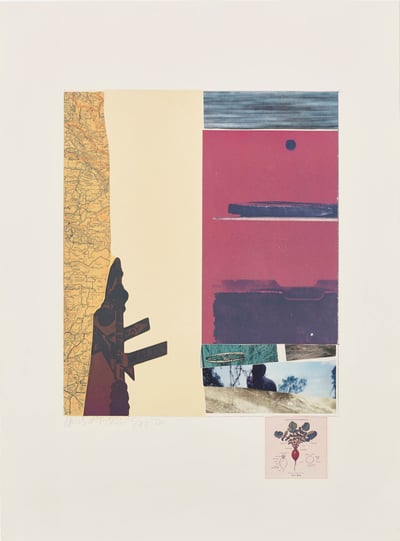
Robert Rauschenberg
XI (from Horsefeathers Thirteen), 1972
Limited Edition Print
Mixed Media
Inquire For Price

Joan Miró
Le Marteau sans maître: one plate, 1976
Limited Edition Print
Etching and Aquatint
USD 4,950

Joan Miró
Plate III from Espriu-Miró, 1975
Limited Edition Print
Etching and Aquatint
USD 8,350
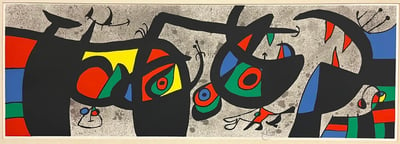
Joan Miró
Le lézard aux plumes d' or -II, 1971
Limited Edition Print
Lithograph
EUR 14,300

Red Grooms
City of Chicago exhibition poster, 1968
Limited Edition Print
Lithograph
Inquire For Price

Julian Schnabel
Untitled, 1992-1999
Limited Edition Print
Inkjet print
EUR 1,100
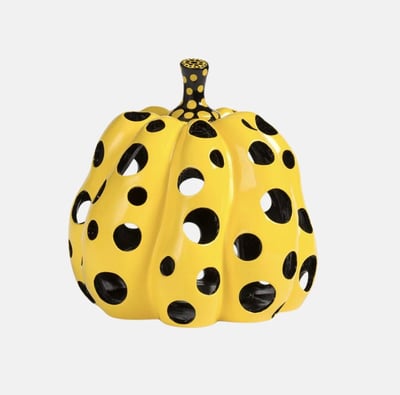
Yayoi Kusama
Pumpkin (NGV), 2025
Sculpture / Object
Mixed Media
GBP 12,000 - 15,000
Related Articles



Grupo Frente was a movement founded in 1954 in Brazil by teaching artist Ivan Serpa. The movement included many students from the Rio de Janeiro Museum of Modern Art and sought to reject the nationalism and figuration present in the modernist forms of Brazilian painting. Grupo Frente emphasized experimentation and abstraction, aiming to explore new artistic possibilities beyond traditional constraints.

A triptych is an artwork divided into three sections or panels, often hinged together, allowing it to be displayed open or folded shut. It is a type of polyptych, a term for multi-panel artworks. Typically, the central panel is the largest, flanked by two smaller panels, although some triptychs have panels of equal size. Triptychs have been historically significant in religious art but are also used in contemporary works.

A Chinese term that describes performance art. This concept is relatively new and may be challenging to articulate unless people understand the intentions behind it. It is a flexible concept that emphasizes everyday, common, and community-focused elements. The art form is heightened, refined, and reflective of how people behave, move, and live.
Can't find your Answer?
Thank you! Your question has been sent — we'll get back to you shortly.
