
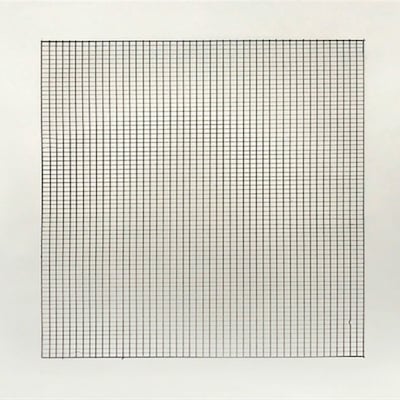
What is minimalism?
- Show All
- Established
- Discoveries
- Show All
Artworks Related to Minimalism

Frank Stella
Shards I, 1982
Limited Edition Print
Mixed Media
Inquire For Price

Frank Stella
Shards Variant Ia, 1982
Limited Edition Print
Mixed Media
Currently Not Available

Yayoi Kusama
Pumpkin 2000 (Yellow), 2000
Limited Edition Print
Screen-print
Currently Not Available

Frank Stella
York Factory II, 1974
Limited Edition Print
Screen-print
Currently Not Available
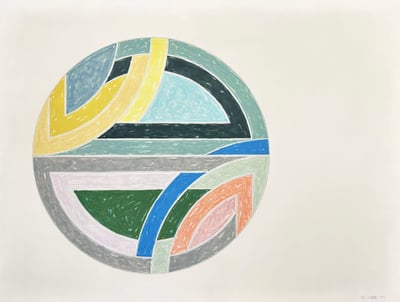
Frank Stella
Sinjerli Variation IIa, 1977
Limited Edition Print
Mixed Media
USD 18,500

Frank Stella
Eskimo Curlew, 1977
Limited Edition Print
Mixed Media
USD 12,500

Ellsworth Kelly
Green/White, 1971
Limited Edition Print
Lithograph
Currently Not Available
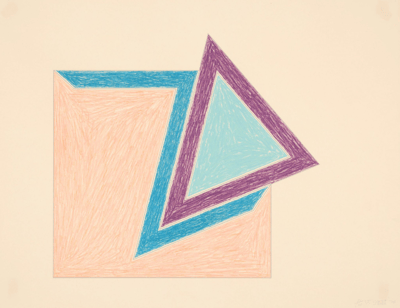
Frank Stella
Moultonboro, 1974
Limited Edition Print
Lithograph
USD 9,400

Ellsworth Kelly
Canigou - from the Third Curve series, 1973-1976
Limited Edition Print
Lithograph
USD 6,600

Sol LeWitt
Plate #1 (from Complex Forms), 1989
Limited Edition Print
Etching and Aquatint
Inquire For Price

Sol LeWitt
Plate #2 (from Complex Forms), 1989
Limited Edition Print
Etching and Aquatint
USD 3,600

Sol LeWitt
Plate #3 (from Complex Forms),, 1989
Limited Edition Print
Etching and Aquatint
USD 3,600

Sol LeWitt
Plate #4 (from Complex Forms), 1989
Limited Edition Print
Etching and Aquatint
USD 3,600

Sol LeWitt
Plate #5 (from Complex Forms), 1989
Limited Edition Print
Etching and Aquatint
USD 3,600

Ellsworth Kelly
Colored Paper Image XVI (Blue/Yellow/Red), 1976
Limited Edition Print
Mixed Media
Inquire For Price

Bruce Nauman
Life fly Lifes Flies from the portfolio of Leo Castelli's 90th Birthday, 1997
Limited Edition Print
Etching
USD 3,750
Related Articles



ZERO was an art movement founded by Otto Piene and Heinz Mack, aiming to develop into a large international and cross-border movement. The name ZERO originated from a magazine founded by Heinz Mack in 1957, which became a platform for the group's ideas. The magazine was published for several years before ceasing in 1967. The ZERO movement sought to create a new beginning in art, emphasizing light, space, and movement, and became influential in post-war European art.

Clay is a natural material formed when rocks break down over time due to weathering. Water carries the fine particles of earth, which accumulate as a soft, sticky substance called muck. This muck is collected, cleaned, and refined by removing impurities like rocks and adding sand to improve its texture, resulting in usable clay.
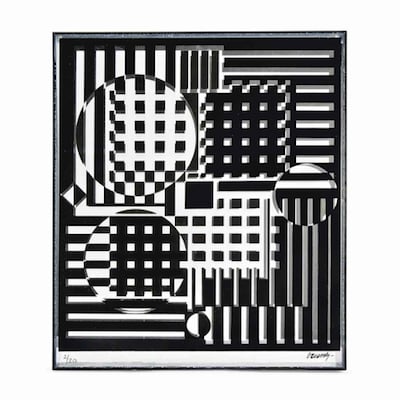
Op Art is a visual art style that uses optical illusions to create the impression of movement, vibrating patterns, flashing, or hidden images. The works are typically abstract, with many well-known pieces in black and white. The roots of Op Art can be traced back to earlier movements like Futurism, Constructivism, Dada, and Neo-Impressionism, particularly in their use of color effects and graphic design.
Can't find your Answer?
Thank you! Your question has been sent — we'll get back to you shortly.
