

What is pop-art?
- Show All
- Established
- Discoveries
- Show All
Artworks Related to Pop art
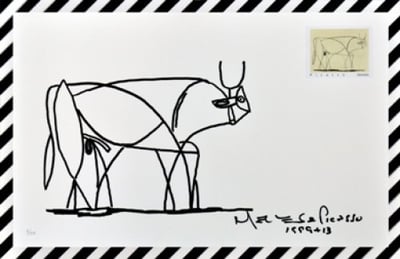
Nelson Leirner
Cartas a...2 , 2012
Limited Edition Print
Mixed Media
EUR 1,500
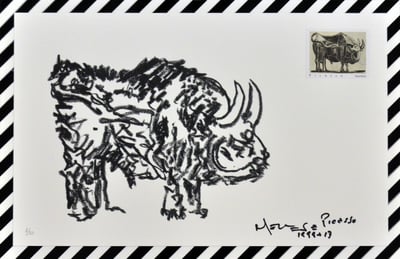
Nelson Leirner
Cartas a...1 , 2012
Limited Edition Print
Mixed Media
EUR 1,500

Nelson Leirner
Sotheby's V , 2011
Sculpture / Object
Mixed Media
Currently Not Available

Nelson Leirner
Sotheby's IV , 2011
Sculpture / Object
Mixed Media
EUR 1,600

Nelson Leirner
Uma carta nao recebida , 2008
Limited Edition Print
Lithograph
EUR 1,250

Nelson Leirner
Mona Mona , 2008
Limited Edition Print
Lithograph
EUR 1,250
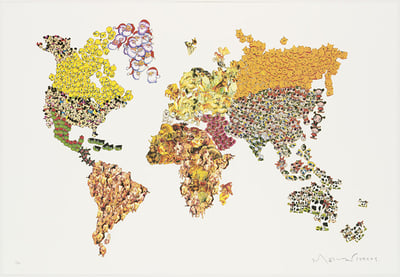
Nelson Leirner
Assim é se lhe parece , 2008
Limited Edition Print
Lithograph
EUR 1,250

Nelson Leirner
Time is money , 2008
Limited Edition Print
Lithograph
EUR 1,250

Nelson Leirner
Dow Jones , 2008
Limited Edition Print
Lithograph
EUR 1,250

Nelson Leirner
Sotheby's 4 , 2008
Sculpture / Object
Mixed Media
Currently Not Available

Nelson Leirner
Rio 2016 - Fútbol, 2013
Sculpture / Object
Mixed Media
EUR 2,000

David Diao
Without title, 2019
Limited Edition Print
Lithograph
Currently Not Available

David Diao
Berlin-Chair Unassembled 1, 2019
Limited Edition Print
Lithograph
Currently Not Available

Gabriele de Santis
Manifesto 2017, 2017
Limited Edition Print
Lithograph
EUR 2,000
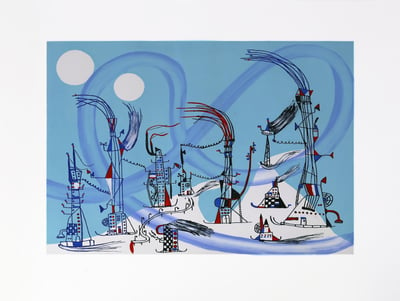
Nathan Carter
A super cell arctic vortex ripped........, 2014
Limited Edition Print
Mixed Media
EUR 1,400

Olaf Breuning
Random thoughts about life 10, 2018
Limited Edition Print
Lithograph
EUR 500
Related Articles


Wax is a solid material derived from plant, animal, and petroleum sources. It is used to protect paints from wear, create sculptures, make wax crayons and colored pencils, and for encaustic painting. In encaustic painting, colored beeswax is shaped with special tools to create textured, raised surfaces.

Animation is the process of displaying a sequence of static images in rapid succession to create the illusion of movement. Each image, or frame, is slightly altered from the previous one, particularly in the moving parts, so when shown together, they form a continuous motion. Traditionally, illustrators drew each frame by hand to produce this effect.

Situationism is a psychological theory that gained prominence in 1968, following the publication of a monograph by Walter Mischel that sparked the Person-situation debate. This theory argues that behavior is primarily influenced by external situational factors rather than internal traits or motivations, challenging the ideas of trait theorists like Raymond B. Cattell and Hans Eysenck, who emphasized stable personality traits. It is important not to confuse this with the Situationist International movement, an artistic and political movement founded by Asger Jorn, which focused on the critique of modern consumer society and the influence of environments on human behavior.
Can't find your Answer?
Thank you! Your question has been sent — we'll get back to you shortly.
