

What is pop-art?
- Show All
- Established
- Discoveries
- Show All
Artworks Related to Pop art
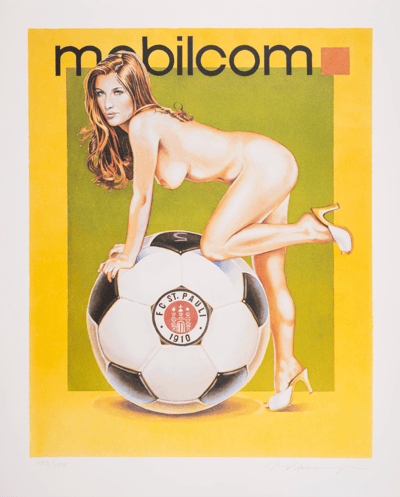
Mel Ramos
Mobilcom FC St. Pauli, 2003
Limited Edition Print
Offset Print
Currently Not Available

Tom Wesselmann
Study For Sunset Nude With Choker, 2004
Drawing / Watercolor
Pen and ink
Inquire For Price
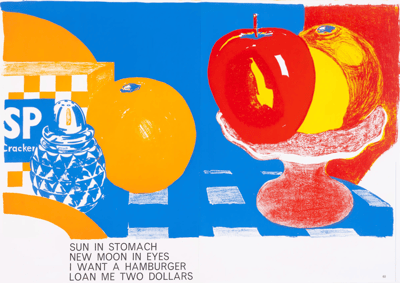
Tom Wesselmann
Apples and Oranges, from the One Cent Life portfolio, 1964
Limited Edition Print
Lithograph
USD 650

Roy Lichtenstein
Entablature V (Corlett 142), 1976
Limited Edition Print
Collage
USD 12,570

David Hockney
Hockney's Alphabet (The book), 1991
Limited Edition Print
Mixed Media
Inquire For Price
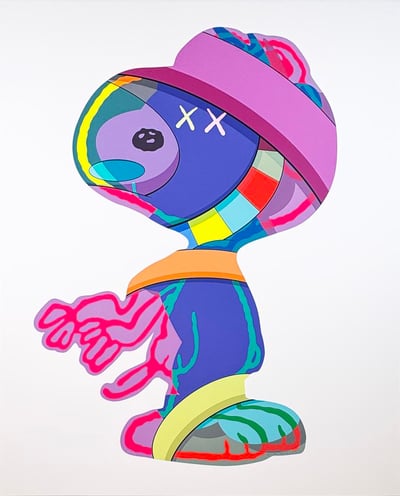
KAWS
The Things That Comfort, 2015
Limited Edition Print
Screen-print
USD 30,000 - 40,000
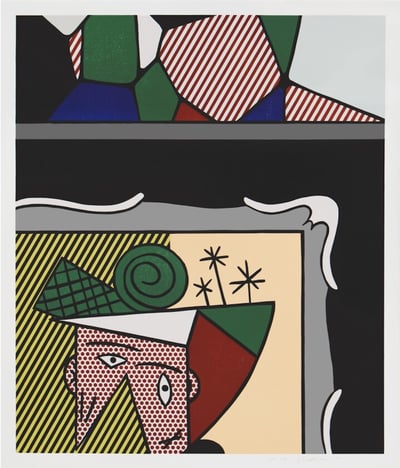
Roy Lichtenstein
Two Paintings, from the Paintings series, 1984
Limited Edition Print
Mixed Media
USD 50,000 - 60,000

Kenny Scharf
Untitled (Grinning Whimsy), 2002
Limited Edition Print
Archival Print
Inquire For Price
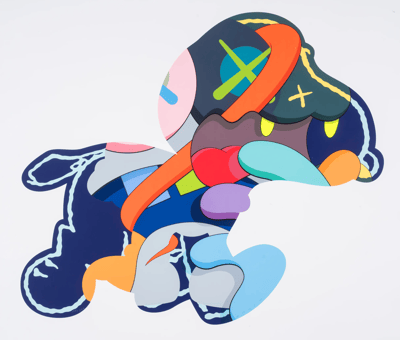
KAWS
Stay Steady, 2015
Limited Edition Print
Screen-print
USD 10,750
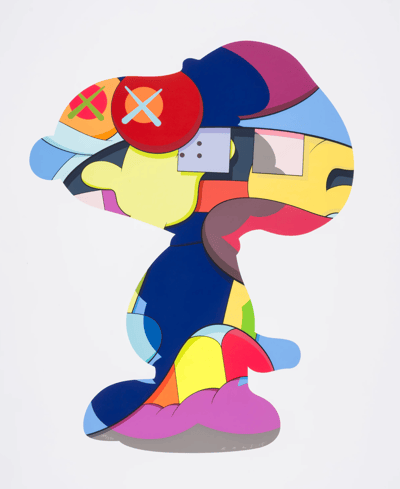
KAWS
No One's Home, 2015
Limited Edition Print
Screen-print
USD 10,750

Jim Dine
Double Venus Woodcut II, 1984
Limited Edition Print
Woodcut
USD 3,060

Jim Dine
Left Panel, from The Three Sydney Close Woodcuts, 1983
Limited Edition Print
Woodcut
Inquire For Price

Roy Lichtenstein
Illustration for 'Une Fenêtre ouverte sur Chicago' (Corlett 271), 1992
Limited Edition Print
Etching and Aquatint
USD 13,250

David Hockney
China Diary (MCA Tokyo 254), 1982
Limited Edition Print
Lithograph
USD 4,690

Andy Warhol
Mao (F & S II.94), 1972
Limited Edition Print
Screen-print
USD 45,000 - 55,000

Katherine Bernhardt
Panther Panther Rosa Rosa, 2020
Sculpture / Object
Wood
GBP 5,400
Related Articles


Browser art is a form of renegade art where artists use computers to transform code, website structures, and server links into visual material. These artists, often called net artists or net writers, manipulate computer code to create artworks that transform web pages into entirely different images or experiences.

Situationism is a psychological theory that gained prominence in 1968, following the publication of a monograph by Walter Mischel that sparked the Person-situation debate. This theory argues that behavior is primarily influenced by external situational factors rather than internal traits or motivations, challenging the ideas of trait theorists like Raymond B. Cattell and Hans Eysenck, who emphasized stable personality traits. It is important not to confuse this with the Situationist International movement, an artistic and political movement founded by Asger Jorn, which focused on the critique of modern consumer society and the influence of environments on human behavior.

Sand consists of loose grains of material primarily made up of minerals like quartz, mica, and feldspar, as well as small fragments of rocks. Sand paintings are created by pouring colored sand into intricate designs, often for cultural rituals or special celebrations. These designs can take many days to complete and are traditionally brushed away after the ceremony, emphasizing the impermanence of the artwork.
Can't find your Answer?
Thank you! Your question has been sent — we'll get back to you shortly.
