

What is pop-art?
- Show All
- Established
- Discoveries
- Show All
Artworks Related to Pop art
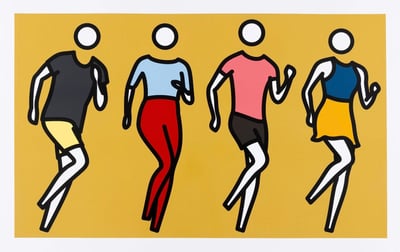
Julian Opie
Dance Synced 3, 2024
Limited Edition Print
Screen-print
USD 14,850
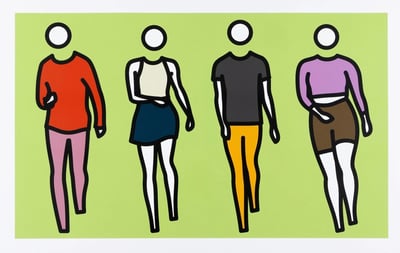
Julian Opie
Dance Synced 2, 2024
Limited Edition Print
Screen-print
USD 14,850
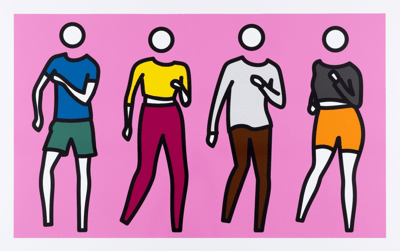
Julian Opie
Dance Synced 1, 2024
Limited Edition Print
Screen-print
USD 14,850
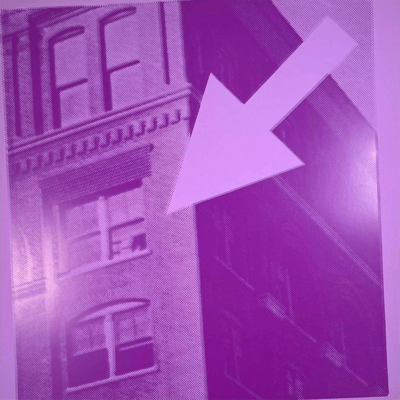
Andy Warhol
Flash - November 22, 1963, II.39, 1968
Limited Edition Print
Screen-print
USD 10,800

Andy Warhol
Flash - November 22, 1963, II.37, 1968
Limited Edition Print
Screen-print
USD 9,600
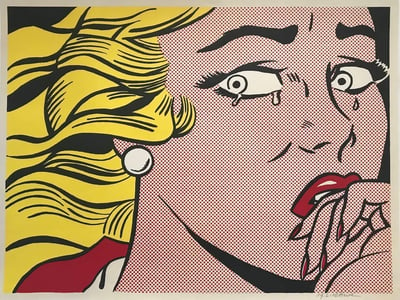
Roy Lichtenstein
Crying Girl, 1963
Limited Edition Print
Offset Print
Currently Not Available

Andy Warhol
The Witch (F. & S. II.261), 1981
Limited Edition Print
Screen-print
USD 50,000 - 60,000

Andy Warhol
Open this end (Paper dress), 1962-1964
Limited Edition Print
Mixed Media
Inquire For Price
Jim Dine
Private Listing
Drawing / Watercolor
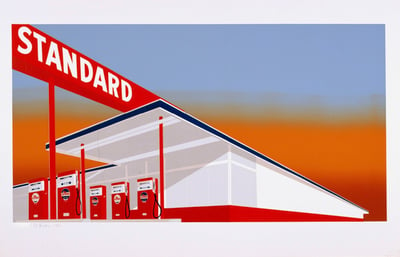
Ed Ruscha
Standard Station, 1966
Limited Edition Print
Screen-print
Currently Not Available
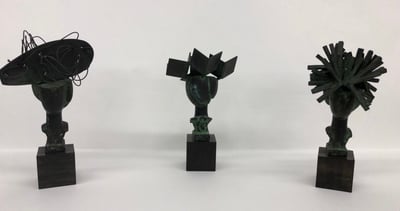
Manolo Valdés
Las Damas De Barajas, 2006
Sculpture / Object
Bronze
EUR 23,890
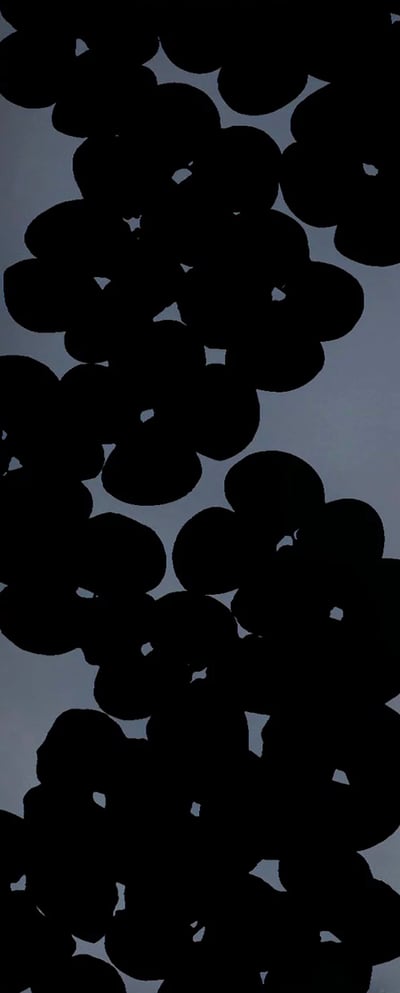
Donald Sultan
Wallflowers (black on grey), 2018
Limited Edition Print
Screen-print
USD 9,000 - 12,000
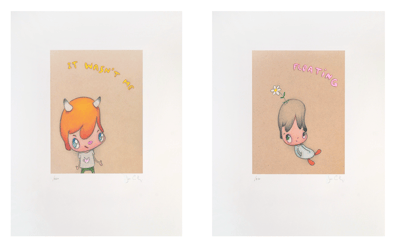
Javier Calleja
It wasn't me & Floating (Diptych), 2024
Limited Edition Print
Etching
EUR 4,800
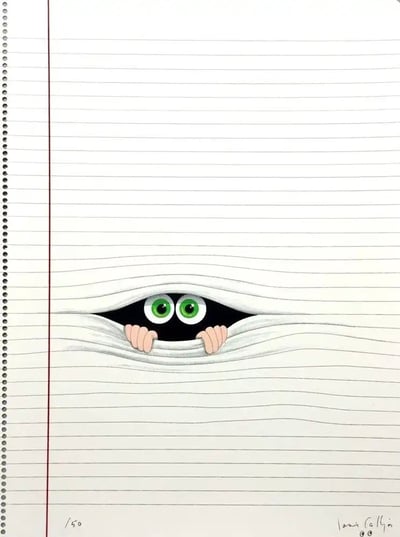
Javier Calleja
Between The Lines , 2016
Limited Edition Print
Silkscreen
USD 21,300
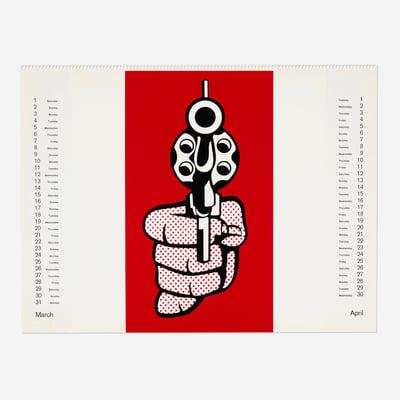
Roy Lichtenstein
Pistol (from Banner, Multiples Calendar, 1968
Limited Edition Print
Screen-print
USD 4,600

Robert Rauschenberg
Pre-Morocco, 1983
Limited Edition Print
Lithograph
USD 2,750
Related Articles



Transavanguardia is the Italian version of Neo-Expressionism, referring to an art movement that emerged in Italy and other parts of Western Europe during the 1970s and 1980s. The term translates to beyond the avant-garde. Transavanguardia arose as a reaction against the dominance of conceptual art, reintroducing emotion and reviving painting as a primary medium. The movement marked a return to mythic imagery and figurative art, celebrating a rediscovery of traditional forms and themes in a contemporary context.

In the 1960s, Funk Art emerged as a reactive movement against Abstract Expressionism. It was widely known as an anti-establishment movement, with the name derived from the jazz term funky. This term carried both positive and negative connotations: in the jazz world, it described passion, quirkiness, and sensuality, but it could also refer to a foul odor. Funk Art was particularly popular in the California Bay Area. While the artists of the Funk Art era shared similar attitudes and styles, they did not see themselves as part of a formal group or movement.

New Topographics is a term coined in 1975 by curator William Jenkins to describe a group of photographers whose work focused on formal black-and-white images of urban and industrial landscapes. Jenkins initially described their aesthetic as banal, but the photographers themselves argued that their compositions were as significant as those of natural landscapes, emphasizing the beauty in everyday, man-made environments.
Can't find your Answer?
Thank you! Your question has been sent — we'll get back to you shortly.
