

Slice of salami on two cardboards in red and blue mounted together in plastic bag .
- Signed, dated and numbered.
- Edition Dieter Roth, Düsseldorf.
- With traces of age due to material.
- Dobke Druckgraphik 97
Dieter Roth’s Middle Sunset is an unconventional mixed-media print incorporating organic material—specifically, a slice of salami—mounted between two cardboard sheets, one red and one blue, sealed in a plastic bag. Measuring 70 x 50 cm, the work was created as part of an edition of 30, signed, dated, and numbered by the artist. Roth, known for his experimental approach to materials, frequently incorporated perishable items in his artworks, challenging traditional notions of permanence and decay in art.
The salami, now aged and discolored, interacts with the surrounding materials, creating organic stains and marks that evolve over time. This ephemeral quality reinforces Roth’s conceptual exploration of transformation, decomposition, and the passage of time. Part of his Dobke Druckgraphik series, this piece exemplifies Roth’s radical approach to printmaking and mixed-media work, blurring the boundaries between fine art, process, and material experimentation.
Artwork Copyright © Dieter RothDieter Roth (Switzerland, 1930–1998) was a multifaceted artist known for his innovative use of materials, including decaying food, in sculptures and installations. His work often explored themes of transformation and impermanence, challenging traditional art boundaries. Roth's contributions significantly influenced contemporary art practices.
Artwork Copyright © Dieter RothMiddle sunset
Form
Medium
Size
- Inches
- Centimeters
Edition
Price
- USD
- EUR
- GBP
- CHF
- Authenticity Guaranteed
- Insured Shipping
- Online Since 2005
●Inventory 15512
●Signed
●Comes with gallery invoice and certificate
●Sell Us a Similar Artwork. Learn more.
Slice of salami on two cardboards in red and blue mounted together in plastic bag .
- Signed, dated and numbered.
- Edition Dieter Roth, Düsseldorf.
- With traces of age due to material.
- Dobke Druckgraphik 97
Dieter Roth’s Middle Sunset is an unconventional mixed-media print incorporating organic material—specifically, a slice of salami—mounted between two cardboard sheets, one red and one blue, sealed in a plastic bag. Measuring 70 x 50 cm, the work was created as part of an edition of 30, signed, dated, and numbered by the artist. Roth, known for his experimental approach to materials, frequently incorporated perishable items in his artworks, challenging traditional notions of permanence and decay in art.
The salami, now aged and discolored, interacts with the surrounding materials, creating organic stains and marks that evolve over time. This ephemeral quality reinforces Roth’s conceptual exploration of transformation, decomposition, and the passage of time. Part of his Dobke Druckgraphik series, this piece exemplifies Roth’s radical approach to printmaking and mixed-media work, blurring the boundaries between fine art, process, and material experimentation.
Artwork Copyright © Dieter RothDieter Roth (Switzerland, 1930–1998) was a multifaceted artist known for his innovative use of materials, including decaying food, in sculptures and installations. His work often explored themes of transformation and impermanence, challenging traditional art boundaries. Roth's contributions significantly influenced contemporary art practices.
Artwork Copyright © Dieter RothAvailability
Price
Size
Form
Medium
SORT BY
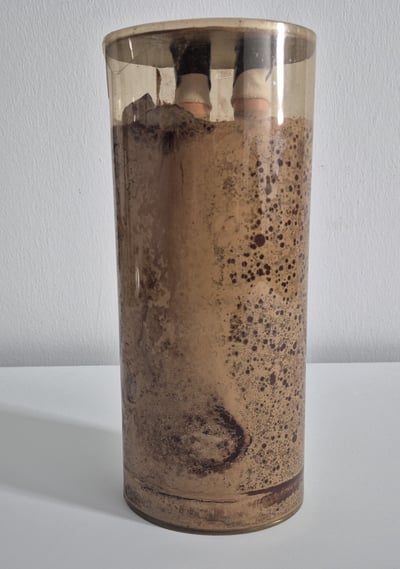
Dieter Roth
Untitled (Puppe in Schokolade), 1969
Sculpture / Object
Mixed Media
EUR 3,600
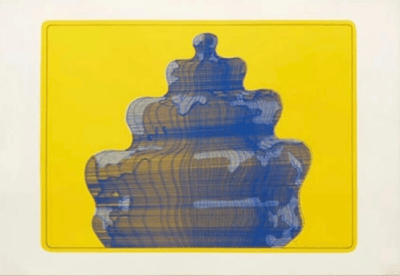
Dieter Roth
Torte in der Sonne (Fancy-Cake in the Sun), 1970
Limited Edition Print
Screen-print
GBP 4,200
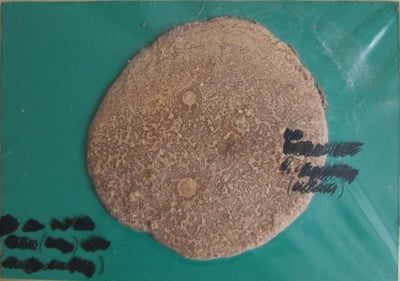
Dieter Roth
Self-portrait, 1969
Limited Edition Print
Mixed Media
EUR 3,000

Dieter Roth
Selbstbildnis als Loch, 1972
Limited Edition Print
Screen-print
EUR 3,100

Dieter Roth
Middle sunset
Limited Edition Print
Mixed Media
EUR 5,400

Dieter Roth
Stamp images, 1968
Limited Edition Print
Mixed Media
EUR 1,350
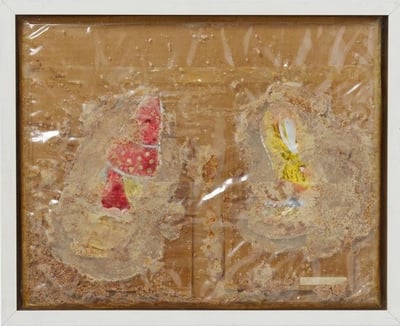
Dieter Roth
Lauf der Welt, 1970
Limited Edition Print
Mixed Media
EUR 3,000

Dieter Roth
Steep Potplant, 1975
Limited Edition Print
Drypoint
USD 2,200
Related Artists

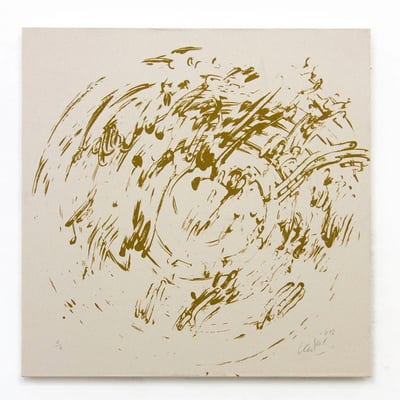

Artwork by Hans Hartung
What is automatism?
Automatism refers to a technique in the creative process that accesses material from the unconscious or subconscious mind. It is based on Sigmund Freud’s psychoanalytic method of free association. Artists value this process for its ability to inspire creative thought and spontaneous creation.


Dieter Roth
Middle sunset
70 x 50 cm


