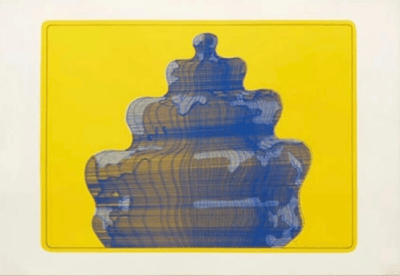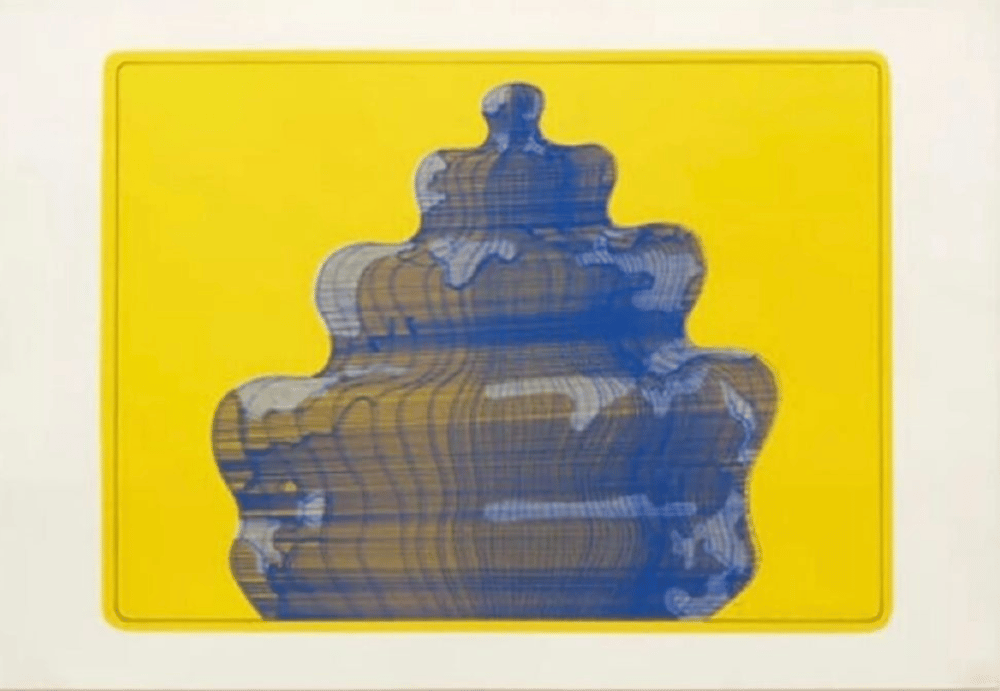
Screen printing (5 colours, 4 printing formes) on white paper, photomechanical reproduction of a drawing.
Hand-signed and numbered.
Torte in der Sonne (Fancy-Cake in the Sun) by Dieter Roth (1970) is a striking screenprint that transforms an ordinary cake into an object of surreal contemplation. Set against a vibrant yellow backdrop, the cake form—resembling an ornate, tiered pastry—is rendered in a translucent blue mesh-like pattern, distorting its contours and adding a sense of optical depth. The work merges mechanical reproduction with hand-drawn texture, reflecting Roth's experimental approach to printmaking. Both humorous and meditative, the image blurs the line between object and abstraction, inviting playful yet critical interpretation.
Dieter Roth (Switzerland, 1930–1998) was a multifaceted artist known for his innovative use of materials, including decaying food, in sculptures and installations. His work often explored themes of transformation and impermanence, challenging traditional art boundaries. Roth's contributions significantly influenced contemporary art practices.
Screen-print Screen printing is a technique where ink is transferred through a mesh onto a substrate, with areas blocked by a stencil to prevent ink from passing through. This method, also known as serigraphy or silkscreen printing, is commonly used to produce prints on posters, T-shirts, vinyl, stickers, wood, and other materials. The process is a type of stencil printing, allowing for vibrant, detailed designs on various surfaces.
Screen printing (5 colours, 4 printing formes) on white paper, photomechanical reproduction of a drawing.
Hand-signed and numbered.
Torte in der Sonne (Fancy-Cake in the Sun) by Dieter Roth (1970) is a striking screenprint that transforms an ordinary cake into an object of surreal contemplation. Set against a vibrant yellow backdrop, the cake form—resembling an ornate, tiered pastry—is rendered in a translucent blue mesh-like pattern, distorting its contours and adding a sense of optical depth. The work merges mechanical reproduction with hand-drawn texture, reflecting Roth's experimental approach to printmaking. Both humorous and meditative, the image blurs the line between object and abstraction, inviting playful yet critical interpretation.
Dieter Roth (Switzerland, 1930–1998) was a multifaceted artist known for his innovative use of materials, including decaying food, in sculptures and installations. His work often explored themes of transformation and impermanence, challenging traditional art boundaries. Roth's contributions significantly influenced contemporary art practices.
An eyewitness account is evidence that an artist has proposed a work of art.
- Dieter Roth
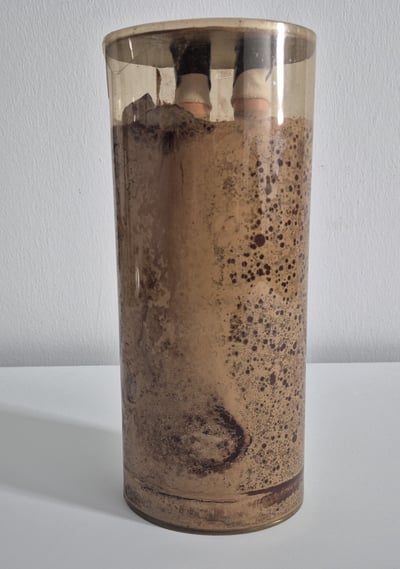
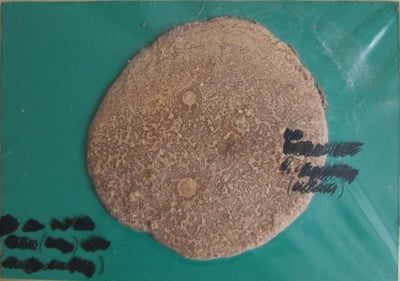
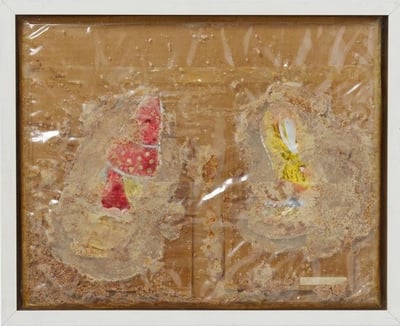
Dieter Roth, also known as Dieter Rot and Diter Rot, was a German-born Icelandic artist most known for his artist’s books, sculptures, and installations, although he worked in drawing and painting as well. He worked with the Concrete, Fluxus, Op, and Maximalism art movements, though he was not fully committed to any specific movement. Much of Dieter Roth's early career was spent in Iceland, which was isolated from most of the European modernist movements, so Dieter Roth had the opportunity to develop a unique aesthetic. Dieter Roth’s work used a wide variety of unconventional mediums, including found material, biodegradable material, and food. Sculpture material included chocolate, banana, cheese, and rabbit excrement. Dieter Roth’s major contribution was creating the modern artist’s book. A key work is Literaturwurst (Literature Sausage, 1961 – 1964), which was made by processing and binding published text as sausage, and affixing the cover of the book to the sausage wrapper. These sausage books were the forerunner to later pieces that used food as the medium, often rotting food. The most well-known was the Staple Cheese (A Chase) exhibition, a series featuring suitcases filled with cheese along with cheese mounted on the gallery walls. The cheese would rot and degrade over time. Dieter Roth focused on large installations in the 1980s and 90s. His most famous work of this period was Gartenskulptor (Garden Sculpture), which was a constantly evolving installation featuring various diverse art pieces mounted on trellises. The installation was assembled and re-assembled in various gardens, and later indoors.
Automatism refers to a technique in the creative process that accesses material from the unconscious or subconscious mind. It is based on Sigmund Freud’s psychoanalytic method of free association. Artists value this process for its ability to inspire creative thought and spontaneous creation.