


Doll in Chocolate.
Hand-signed by Dieter Roth.
Catalogue Raisonné Dobke 30.
Untitled (Puppe in Schokolade) by Dieter Roth, created in 1969, is a provocative sculptural work featuring a doll encased in a cylindrical block of solid chocolate. Measuring 32 x 13.5 x 9.5 cm, this piece is part of an edition of 50 and is hand-signed by the artist. Roth, known for incorporating organic and perishable materials into his art, challenges the boundaries between sculpture, decay, and consumption. The chocolate gradually alters over time, introducing rot and transformation as intrinsic elements of the piece. This work reflects Roth’s conceptual rigor and his subversive commentary on permanence and materiality. Listed in Dobke catalogue raisonné no. 30.
Artwork Copyright © Dieter RothDieter Roth (Switzerland, 1930–1998) was a multifaceted artist known for his innovative use of materials, including decaying food, in sculptures and installations. His work often explored themes of transformation and impermanence, challenging traditional art boundaries. Roth's contributions significantly influenced contemporary art practices.
Artwork Copyright © Dieter RothUntitled (Puppe in Schokolade), 1969
Form
Medium
Size
- Inches
- Centimeters
Edition
Price
- USD
- EUR
- GBP
- CHF
- Authenticity Guaranteed
- Insured Shipping
- Online Since 2005
●Inventory 16377
●Hand signed
●Comes with gallery invoice and certificate
●Sell Us a Similar Artwork. Learn more.
Doll in Chocolate.
Hand-signed by Dieter Roth.
Catalogue Raisonné Dobke 30.
Untitled (Puppe in Schokolade) by Dieter Roth, created in 1969, is a provocative sculptural work featuring a doll encased in a cylindrical block of solid chocolate. Measuring 32 x 13.5 x 9.5 cm, this piece is part of an edition of 50 and is hand-signed by the artist. Roth, known for incorporating organic and perishable materials into his art, challenges the boundaries between sculpture, decay, and consumption. The chocolate gradually alters over time, introducing rot and transformation as intrinsic elements of the piece. This work reflects Roth’s conceptual rigor and his subversive commentary on permanence and materiality. Listed in Dobke catalogue raisonné no. 30.
Artwork Copyright © Dieter RothDieter Roth (Switzerland, 1930–1998) was a multifaceted artist known for his innovative use of materials, including decaying food, in sculptures and installations. His work often explored themes of transformation and impermanence, challenging traditional art boundaries. Roth's contributions significantly influenced contemporary art practices.
Artwork Copyright © Dieter RothAvailability
Price
Size
Form
Medium
SORT BY
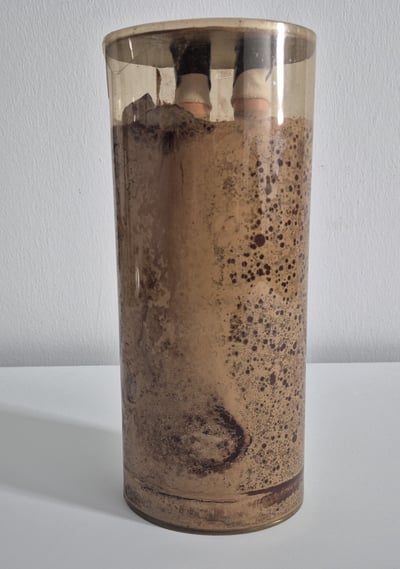
Dieter Roth
Untitled (Puppe in Schokolade), 1969
Sculpture / Object
Mixed Media
EUR 3,600
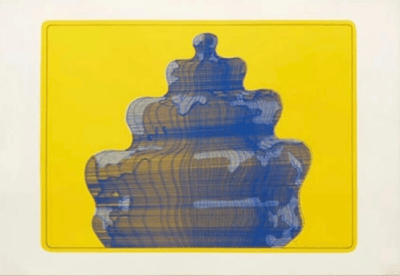
Dieter Roth
Torte in der Sonne (Fancy-Cake in the Sun), 1970
Limited Edition Print
Screen-print
GBP 4,200
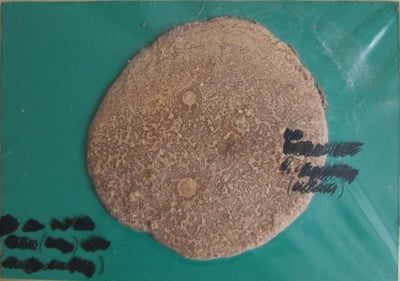
Dieter Roth
Self-portrait, 1969
Limited Edition Print
Mixed Media
EUR 3,000

Dieter Roth
Selbstbildnis als Loch, 1972
Limited Edition Print
Screen-print
EUR 3,100

Dieter Roth
Middle sunset
Limited Edition Print
Mixed Media
EUR 5,400

Dieter Roth
Stamp images, 1968
Limited Edition Print
Mixed Media
EUR 1,350
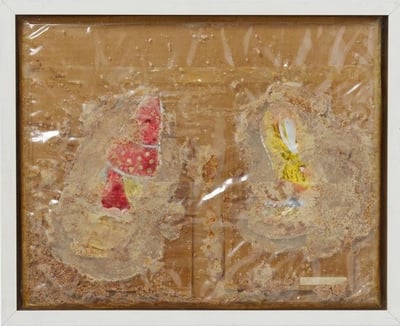
Dieter Roth
Lauf der Welt, 1970
Limited Edition Print
Mixed Media
EUR 3,000

Dieter Roth
Steep Potplant, 1975
Limited Edition Print
Drypoint
USD 2,200
Related Artists

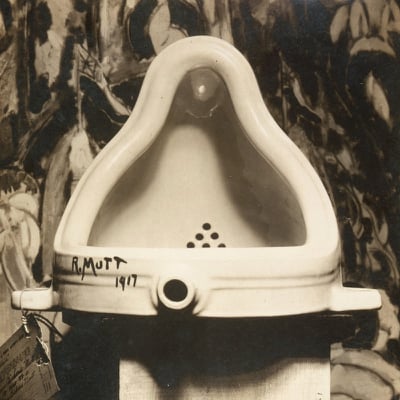
Artwork by Marcel Duchamp
What is Found Object?
A found object is a term used to describe a man-made or natural object, or a fragment of one, that an artist discovers or purchases and keeps for inspiration or as a work of art. The artist may also modify the object or incorporate it into a collage or assemblage, transforming it into a new piece of art.



