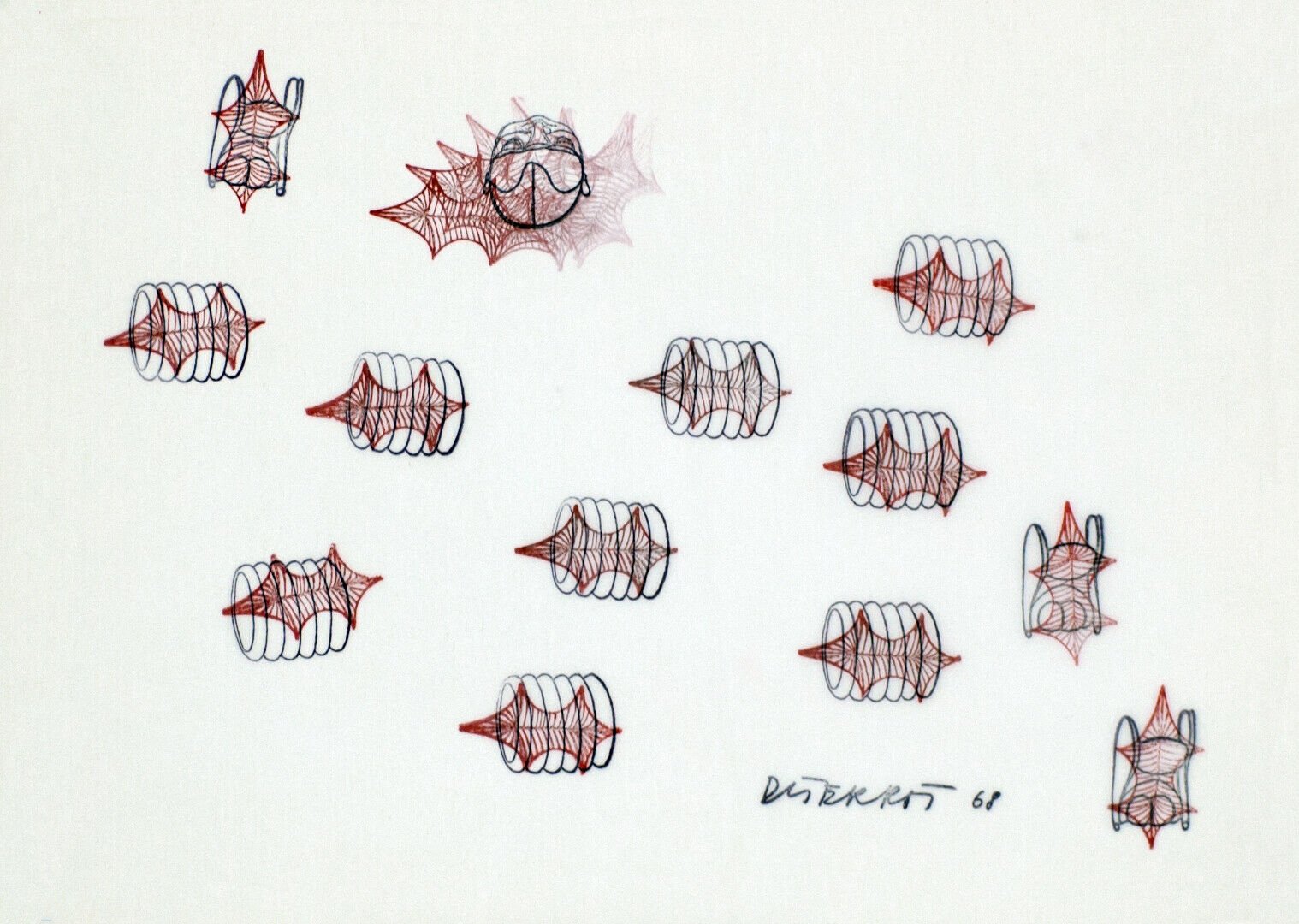
Printed by Galerie Zwirner Köln - Published by Verein Progressiver Kunsthänderl Köln (WVZ Dobke 094) - Two colors on transparent paper 150 unique pieces, stamp signed
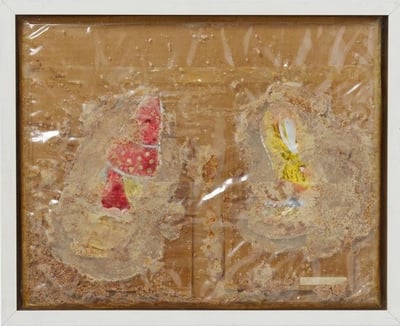
Stamp Images by Dieter Roth is a unique mixed media print from 1968, produced in an edition of 150, each piece distinct. This work features a series of abstract, stamp-like forms in red and black, scattered across a field of transparent paper. Each shape appears like a blend of organic and mechanical elements, with a repetitive, almost hypnotic quality. Roth’s use of two colors gives the forms a layered depth, adding complexity to the seemingly simple arrangement. Known for his experimental approach to materials and techniques, Roth’s Stamp Images blurs the boundaries between printmaking and drawing, presenting a dynamic and playful exploration of pattern and form.
Dieter Roth (Switzerland, 1930–1998) was a multifaceted artist known for his innovative use of materials, including decaying food, in sculptures and installations. His work often explored themes of transformation and impermanence, challenging traditional art boundaries. Roth's contributions significantly influenced contemporary art practices.
Mixed MediaMixed media refers to artwork that incorporates more than one medium within a single piece. Unlike multimedia art, which combines distinct forms of visual art and often includes elements like sound, video, or digital media, mixed media focuses on combining traditional art materials, such as paint, ink, and collage. Mixed media art allows artists to achieve a wide range of effects and textures by layering and blending different materials.
Printed by Galerie Zwirner Köln - Published by Verein Progressiver Kunsthänderl Köln (WVZ Dobke 094) - Two colors on transparent paper 150 unique pieces, stamp signed
Stamp Images by Dieter Roth is a unique mixed media print from 1968, produced in an edition of 150, each piece distinct. This work features a series of abstract, stamp-like forms in red and black, scattered across a field of transparent paper. Each shape appears like a blend of organic and mechanical elements, with a repetitive, almost hypnotic quality. Roth’s use of two colors gives the forms a layered depth, adding complexity to the seemingly simple arrangement. Known for his experimental approach to materials and techniques, Roth’s Stamp Images blurs the boundaries between printmaking and drawing, presenting a dynamic and playful exploration of pattern and form.
Dieter Roth (Switzerland, 1930–1998) was a multifaceted artist known for his innovative use of materials, including decaying food, in sculptures and installations. His work often explored themes of transformation and impermanence, challenging traditional art boundaries. Roth's contributions significantly influenced contemporary art practices.
An eyewitness account is evidence that an artist has proposed a work of art.
- Dieter Roth
Dieter Roth, also known as Dieter Rot and Diter Rot, was a German-born Icelandic artist most known for his artist’s books, sculptures, and installations, although he worked in drawing and painting as well. He worked with the Concrete, Fluxus, Op, and Maximalism art movements, though he was not fully committed to any specific movement. Much of Dieter Roth's early career was spent in Iceland, which was isolated from most of the European modernist movements, so Dieter Roth had the opportunity to develop a unique aesthetic. Dieter Roth’s work used a wide variety of unconventional mediums, including found material, biodegradable material, and food. Sculpture material included chocolate, banana, cheese, and rabbit excrement. Dieter Roth’s major contribution was creating the modern artist’s book. A key work is Literaturwurst (Literature Sausage, 1961 – 1964), which was made by processing and binding published text as sausage, and affixing the cover of the book to the sausage wrapper. These sausage books were the forerunner to later pieces that used food as the medium, often rotting food. The most well-known was the Staple Cheese (A Chase) exhibition, a series featuring suitcases filled with cheese along with cheese mounted on the gallery walls. The cheese would rot and degrade over time. Dieter Roth focused on large installations in the 1980s and 90s. His most famous work of this period was Gartenskulptor (Garden Sculpture), which was a constantly evolving installation featuring various diverse art pieces mounted on trellises. The installation was assembled and re-assembled in various gardens, and later indoors.
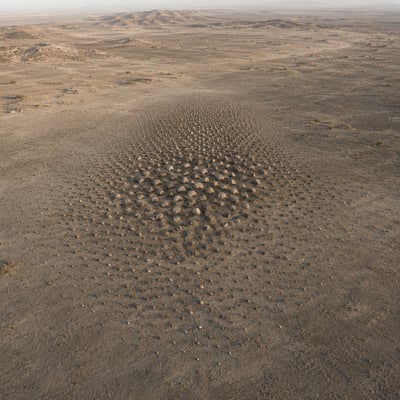
Earth art, also known as Land Art, emerged in the 1960s and 70s as part of the conceptual art movement. It involves creating artworks by sculpting the land or constructing structures in the landscape using natural materials like earth, rocks, or twigs. These works are often large-scale and emphasize the relationship between art and nature.