

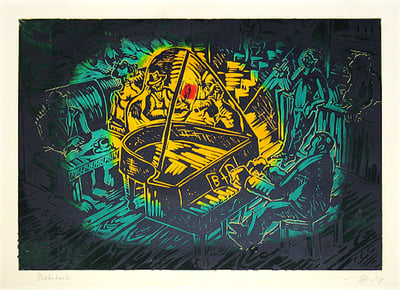
Ständchen für B und D, 1991/2003
Form
Medium
Size
- Inches
- Centimeters
Edition
Price
- Authenticity Guaranteed
- Insured Shipping
- Online Since 2005
Jorg Immendorf
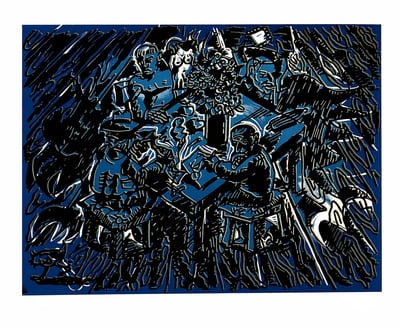
Söhne der Sonne I, 1997/2003
Limited Edition Print
Linocut
EUR 2,100
Jorg Immendorf
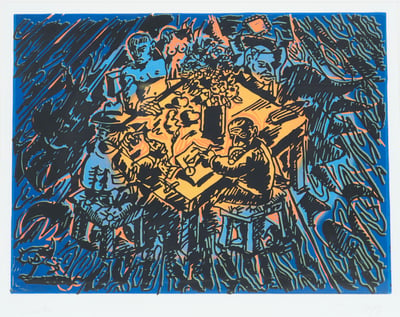
Söhne der Sonne II, 1997/2003
Limited Edition Print
Linocut
EUR 2,100

Jorg Immendorf
Surrealistisches Tribunal, 1998
Limited Edition Print
Linocut
EUR 2,300

Jorg Immendorf
Wir kommen, 2001
Limited Edition Print
Silkscreen
EUR 2,100

Jorg Immendorf
Lästerzungen
Limited Edition Print
Screen-print
EUR 2,300

Jorg Immendorf
Nase 2
Limited Edition Print
Silkscreen
EUR 1,600

Jorg Immendorf
Schwarzes Schaf
Limited Edition Print
Silkscreen
EUR 1,900

Jorg Immendorf
Malerwald
Limited Edition Print
Silkscreen
EUR 2,300

Jorg Immendorf
AT-Aquarell, 2000
Limited Edition Print
Silkscreen
EUR 2,100

Jorg Immendorf
no title (Red Man), 2006
Limited Edition Print
Silkscreen
EUR 2,300

Jorg Immendorf
Ohne Titel / AT-Spiegelgrafik
Limited Edition Print
Silkscreen
EUR 2,300

Jorg Immendorf
Dialog - Gertrude, 2001
Limited Edition Print
Silkscreen
EUR 2,300
Jorg Immendorf
Ständchen für B und D, 1991/2003
Limited Edition Print
Linocut
Currently Not Available
Available works by Jorg Immendorf
See all →Jorg Immendorf
Söhne der Sonne I, 1997/2003
Limited Edition Print
Linocut
EUR 2,100
Jorg Immendorf
Söhne der Sonne II, 1997/2003
Limited Edition Print
Linocut
EUR 2,100
Jorg Immendorf
Surrealistisches Tribunal, 1998
Limited Edition Print
Linocut
EUR 2,300
Jorg Immendorf
Wir kommen, 2001
Limited Edition Print
Silkscreen
EUR 2,100
Jorg Immendorf
Lästerzungen
Limited Edition Print
Screen-print
EUR 2,300
Jorg Immendorf
Nase 2
Limited Edition Print
Silkscreen
EUR 1,600
Related Artists


What is Lettrism?
Lettrism is an art form that uses letters, words, and symbols to create artwork. The movement was established in Paris in the 1940s and later gained popularity in the 1950s in America. Lettrisme is the French spelling of the movement's name, derived from the French word for letter.

Jorg Immendorf
Ständchen für B und D, 1991/2003
60 x 80 cm


