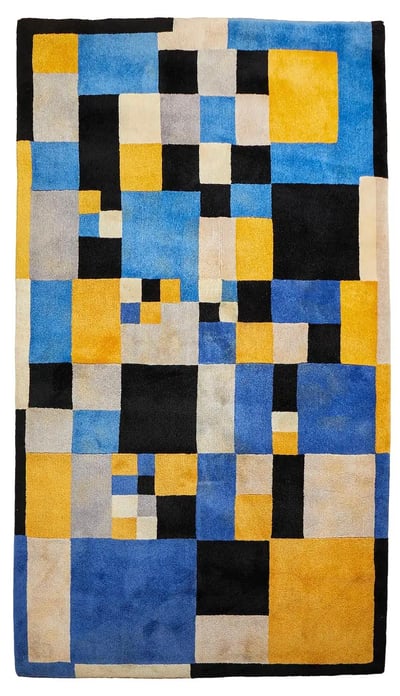
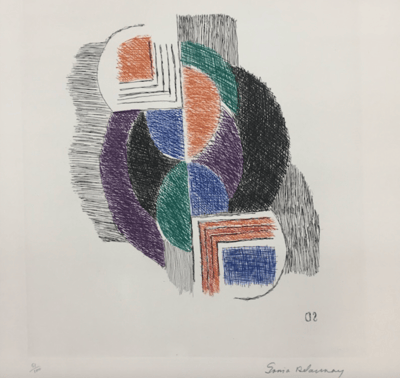
Labyrinthe by Sonia Delaunay is a hand-knotted wool rug designed in 1929 and reissued in 1980 in a limited edition of 150. Measuring 220 x 245 cm, the work exemplifies Delaunay’s exploration of simultaneity—a theory of dynamic color and rhythm co-developed with Robert Delaunay. The composition bursts with geometric forms and vibrant hues—reds, blues, ochres, blacks—creating a visual rhythm that suggests movement and depth. More than a functional object, this rug embodies the fusion of fine art and design that defined Delaunay’s legacy in textile art.
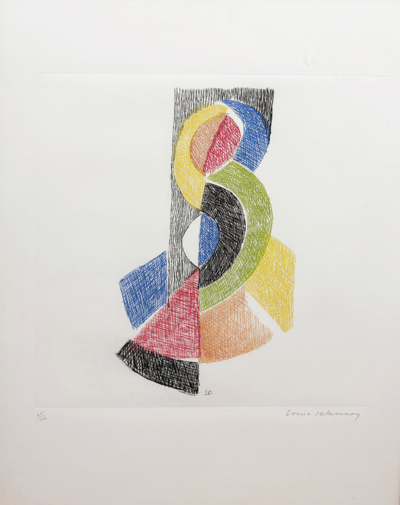
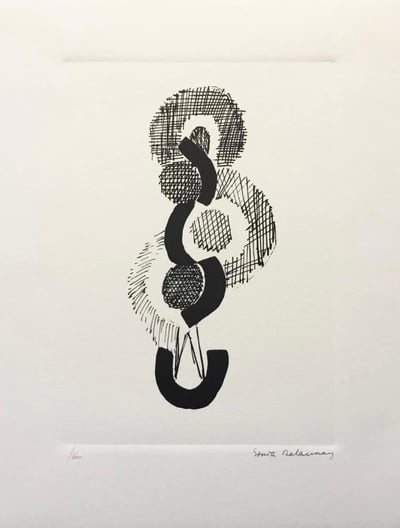
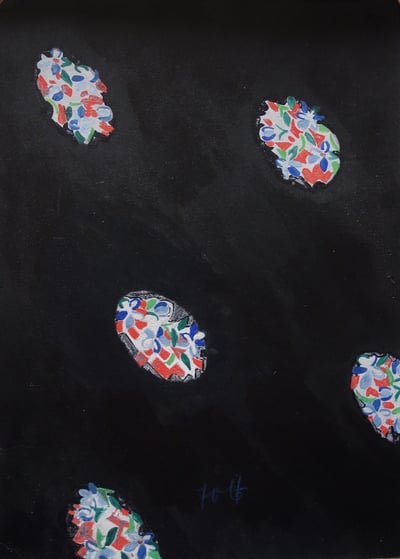
Sonia Delaunay (Ukraine/France, 1885–1979) was a pioneering artist and designer, celebrated for her vibrant abstract works and use of color. A key figure in the Orphism movement, she applied her innovative style to painting, textiles, and fashion. Delaunay’s legacy bridges fine art and design, influencing modern aesthetics profoundly.
Tapestry Tapestry is a heavy, handwoven textile featuring intricate designs or images woven directly into the fabric. Created by skilled weavers using materials like wool, linen, cotton, silk, and sometimes silver and gold threads, tapestries have historically served as art pieces, decorations, insulation, and symbols of authority.
Labyrinthe by Sonia Delaunay is a hand-knotted wool rug designed in 1929 and reissued in 1980 in a limited edition of 150. Measuring 220 x 245 cm, the work exemplifies Delaunay’s exploration of simultaneity—a theory of dynamic color and rhythm co-developed with Robert Delaunay. The composition bursts with geometric forms and vibrant hues—reds, blues, ochres, blacks—creating a visual rhythm that suggests movement and depth. More than a functional object, this rug embodies the fusion of fine art and design that defined Delaunay’s legacy in textile art.
Sonia Delaunay (Ukraine/France, 1885–1979) was a pioneering artist and designer, celebrated for her vibrant abstract works and use of color. A key figure in the Orphism movement, she applied her innovative style to painting, textiles, and fashion. Delaunay’s legacy bridges fine art and design, influencing modern aesthetics profoundly.
Sonia Delaunay was a French artist who helped found France's Orphism art movement. This particular style makes use of geometric figures and bold colors. She was a painter who also delved into textile and stage set design, and was known for employing geometric abstraction in her work. This is exemplified in "Rythme", an oil painting created by Delaunay in 1938 that features circles and curves of vibrant color. Delaunay often collaborated with her husband, artist Robert Delaunay, and they shared a similar style of painting. They both worked on decorating the pavilions at the Exposition Internationale des Arts et Techniques dans la Vie Moderne in 1937. In addition to her paintings, Delaunay designed a range of fabrics, wall coverings, furniture, and clothing. Much like her paintings, Sonia's textiles and modern design pieces featured geometric abstraction. In 1964, Sonia Delaunay became the first woman to have her work shown at a retrospective exhibition at the Louvre while still living. She received the privilege of being named an officer of France's Legion of Honor in 1975.
Cubism is an art movement that aimed to depict multiple perspectives of objects or figures within a single picture. Artists Georges Braque and Pablo Picasso pioneered this style around 1907. The name Cubism emerged from their use of geometric shapes and outlines that often resembled cubes, breaking objects down into abstracted forms.