Image: 53 x 39 - cm Sheet: 65 x 50,5 cm
A tiny hole in the top and bottom margins and a few tiny snags on the design. Otherwise in very good condition.
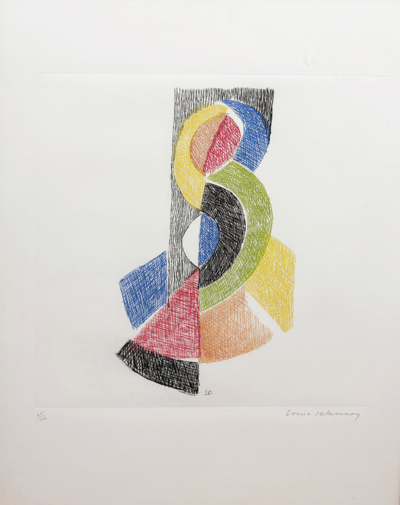
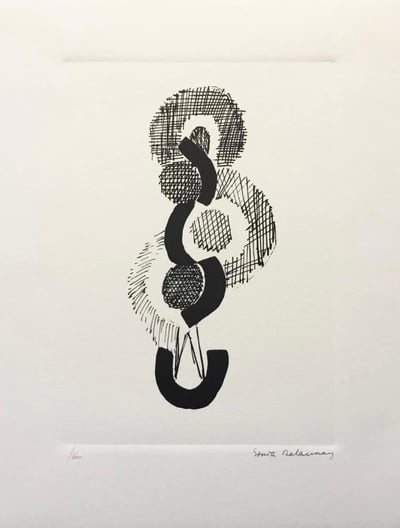
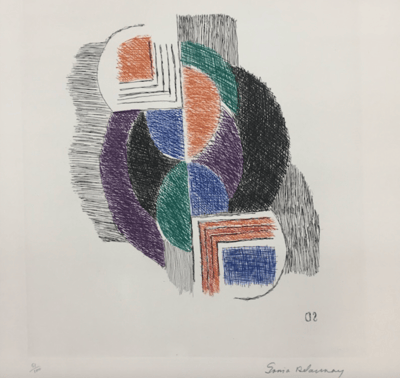
Totem by Sonia Delaunay, created in 1970, is a lithograph that showcases her signature style of bold geometric abstraction and vibrant color harmonies. The composition is built from overlapping circular and angular shapes, creating a rhythmic, almost musical arrangement. Delaunay’s use of color—reds, yellows, blues, and blacks—interacts dynamically, giving a sense of depth and movement. The piece's title, Totem, suggests a cultural or symbolic reference, and the stacked forms evoke a vertical structure that resembles totemic figures or pillars. Delaunay, a pioneer in abstraction, uses these geometric forms not only as visual elements but as expressions of energy and balance. This limited edition lithograph exemplifies her exploration of color and form, celebrating abstraction’s capacity to convey emotion and rhythm.
Sonia Delaunay (Ukraine/France, 1885–1979) was a pioneering artist and designer, celebrated for her vibrant abstract works and use of color. A key figure in the Orphism movement, she applied her innovative style to painting, textiles, and fashion. Delaunay’s legacy bridges fine art and design, influencing modern aesthetics profoundly.
Lithograph Lithography is a printing method based on the principle that water and oil do not mix. It can be used to print artwork or text onto paper or other suitable materials. Traditionally, an image was drawn with wax, fat, or oil onto a lithographic limestone surface or plate. Today, metal plates and other surfaces are also used in lithographic printing.
Image: 53 x 39 - cm Sheet: 65 x 50,5 cm
A tiny hole in the top and bottom margins and a few tiny snags on the design. Otherwise in very good condition.
Totem by Sonia Delaunay, created in 1970, is a lithograph that showcases her signature style of bold geometric abstraction and vibrant color harmonies. The composition is built from overlapping circular and angular shapes, creating a rhythmic, almost musical arrangement. Delaunay’s use of color—reds, yellows, blues, and blacks—interacts dynamically, giving a sense of depth and movement. The piece's title, Totem, suggests a cultural or symbolic reference, and the stacked forms evoke a vertical structure that resembles totemic figures or pillars. Delaunay, a pioneer in abstraction, uses these geometric forms not only as visual elements but as expressions of energy and balance. This limited edition lithograph exemplifies her exploration of color and form, celebrating abstraction’s capacity to convey emotion and rhythm.
Sonia Delaunay (Ukraine/France, 1885–1979) was a pioneering artist and designer, celebrated for her vibrant abstract works and use of color. A key figure in the Orphism movement, she applied her innovative style to painting, textiles, and fashion. Delaunay’s legacy bridges fine art and design, influencing modern aesthetics profoundly.
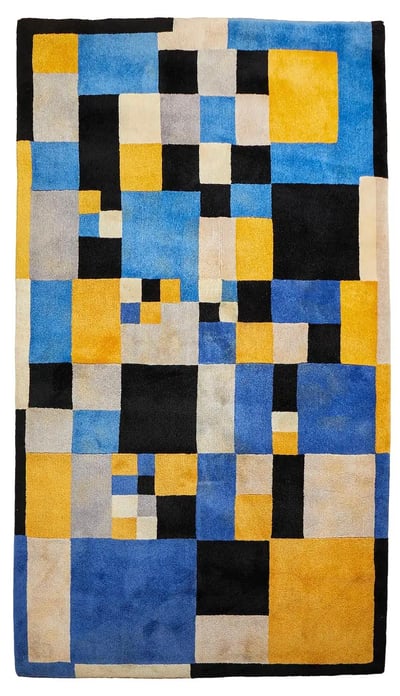
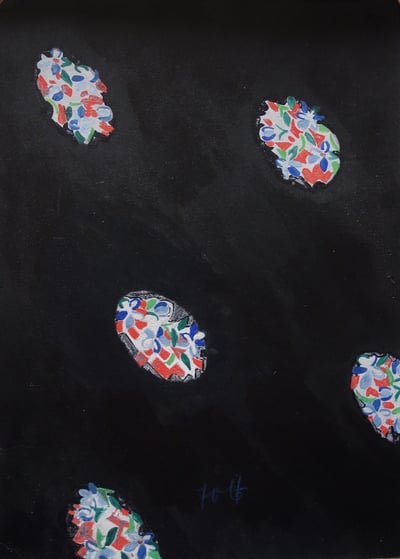
Sonia Delaunay was a French artist who helped found France's Orphism art movement. This particular style makes use of geometric figures and bold colors. She was a painter who also delved into textile and stage set design, and was known for employing geometric abstraction in her work. This is exemplified in "Rythme", an oil painting created by Delaunay in 1938 that features circles and curves of vibrant color. Delaunay often collaborated with her husband, artist Robert Delaunay, and they shared a similar style of painting. They both worked on decorating the pavilions at the Exposition Internationale des Arts et Techniques dans la Vie Moderne in 1937. In addition to her paintings, Delaunay designed a range of fabrics, wall coverings, furniture, and clothing. Much like her paintings, Sonia's textiles and modern design pieces featured geometric abstraction. In 1964, Sonia Delaunay became the first woman to have her work shown at a retrospective exhibition at the Louvre while still living. She received the privilege of being named an officer of France's Legion of Honor in 1975.
Orphism is an abstract style of painting influenced by Cubism, developed by Sonia and Robert Delaunay. The term was coined around 1912 by French poet Guillaume Apollinaire to differentiate the Delaunays' work from Cubism, emphasizing their focus on vibrant color and light. The name Orphism is inspired by the Greek musician Orpheus, symbolizing the movement's lyrical and harmonious qualities.