

United States
The contemporary art scene in the United States is a dynamic fusion of diverse traditions and avant-garde explorations, resonating across the global art spectrum. Institutions like the Museum of Modern Art in New York and the Los Angeles County Museum of Art are central to this discourse, spotlighting artists from different backgrounds and mediums. Notable figures such as Jeff Koons, known for his monumental public sculptures, and Kara Walker, recognized for her poignant silhouettes and murals, contribute to the vibrant US artistic landscape. Major events like Art Basel Miami further underline the country's role as a nexus of contemporary art. Dive into the robust and compelling art scene of the United States on Composition Gallery's website.
- Show All
- Established
- Discoveries
- Show All
Artworks Related to United States

Red Grooms
Los Aficionados , 1990
Sculpture / Object
Mixed Media
USD 5,800

Adolph Gottlieb
Green Ground Blue Disc, 1966
Limited Edition Print
Serigraph
Currently Not Available

Raymond Pettibon
The World Came into the Church, 1991
Limited Edition Print
Screen-print
USD 2,950

Allan D'Arcangelo
Super Highway, 1969
Limited Edition Print
Silkscreen
USD 1,800

Sam Francis
Metal Line, 1971
Limited Edition Print
Lithograph
USD 8,500

John Chamberlain
Kent, 1979
Limited Edition Print
Lithograph
USD 5,500
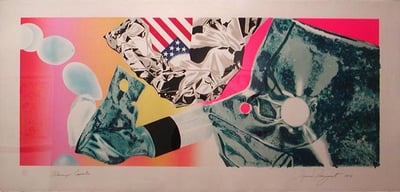
James Rosenquist
Flamingo Capsule, 1973
Limited Edition Print
Screen-print
USD 18,500

Claes Oldenburg
Mermaid
Limited Edition Print
Etching
EUR 2,400

James Rosenquist
High Pool, 1966
Limited Edition Print
Lithograph
USD 6,700

James Rosenquist
Circles of Confusion, 1965
Limited Edition Print
Screen-print
EUR 2,500

James Rosenquist
Gravity Feed, 1978
Limited Edition Print
Aquatint
USD 2,350
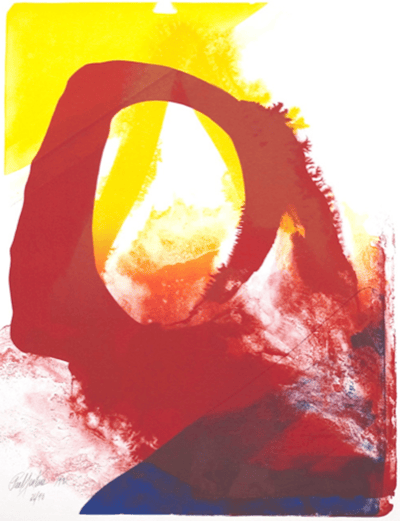
Paul Jenkins
Aspects d’Amadeus et les Autres, 1992
Limited Edition Print
Lithograph
USD 1,350

Larry Rivers
Make Believe Ballroom, 1989
Limited Edition Print
Mixed Media
Currently Not Available

Jasper Johns
Untitled (Faces on purple), 1988
Limited Edition Print
Carborundum
USD 21,000 - 30,000
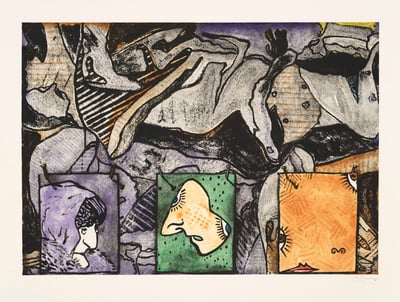
Jasper Johns
Untitled - Faces (ULAE 243), 1988
Limited Edition Print
Carborundum
USD 41,000 - 45,000

Adolph Gottlieb
Levitation, 1969
Limited Edition Print
Serigraph
Currently Not Available
Related Articles

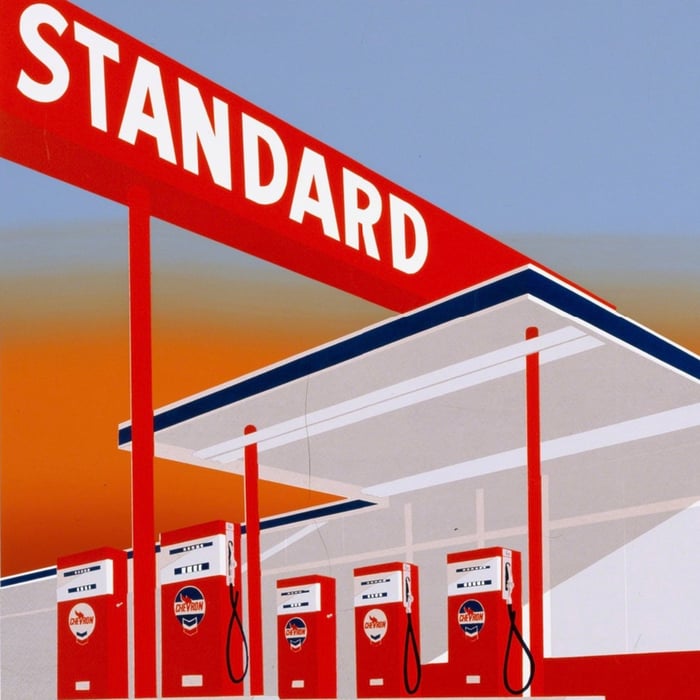

A plate is a broad, primarily flat vessel used for serving food, but it can also serve ceremonial or decorative purposes. Plates are typically circular, though they can be any shape and made from various water-resistant materials. Most plates have raised edges, either by curving upward or featuring a wider lip. Vessels without a raised edge or with a more rounded profile are often considered bowls or dishes, while very large, plate-shaped vessels might also be classified as dishes.
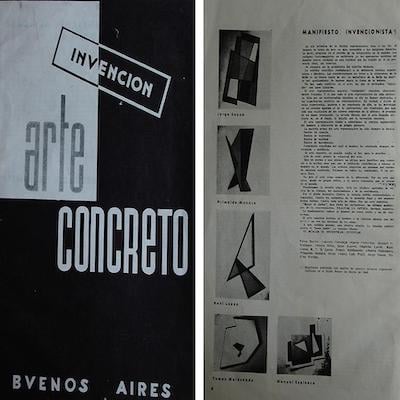
The Manifesto Invencionista was published in 1946, marking the beginning of the concrete art movement in Buenos Aires, Argentina. Written by artist Tomás Maldonado and published by the Asociación Arte Concreto-Invención, the manifesto announced the principles of Concrete Art. Concrete art is purely abstract, with no reference to visual reality, emphasizing geometric forms and the materiality of the artwork itself.
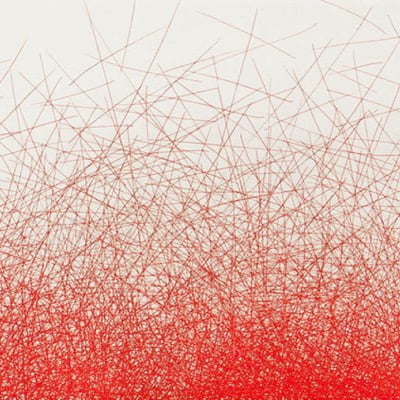
Tansaekhwa, also known as monochrome painting, is a movement in Korean art that began in the mid-1970s. These artworks are characterized by the manipulation of painting materials, such as pushing paint, soaking the canvas, ripping paper, or other techniques that alter the medium. Tansaekhwa emphasizes texture, materiality, and the physical process of creating the artwork.
Can't find your Answer?
Thank you! Your question has been sent — we'll get back to you shortly.
