
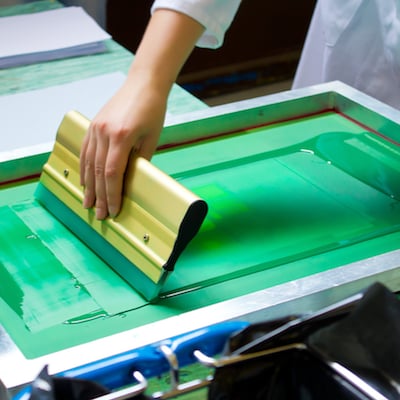
What is a screen-print?
- Show All
- Established
- Discoveries
- Show All
Artworks Related to Screen-print

Julian Opie
Woman taking off man's shirt, 2003
Limited Edition Print
Screen-print
USD 1,950
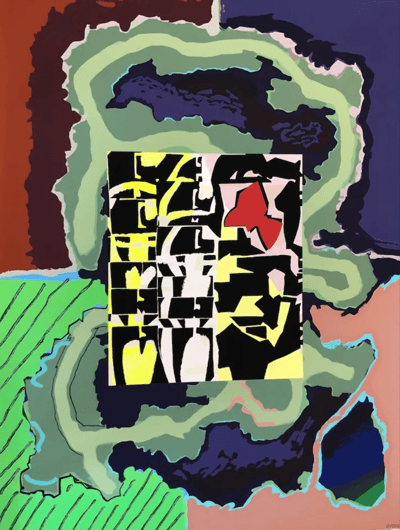
Luis Gordillo
Untitled (Chromatic Core), 2012
Limited Edition Print
Screen-print
EUR 7,200

Gunther Uecker
Sarajewo 6, 2005
Limited Edition Print
Screen-print
EUR 1,280
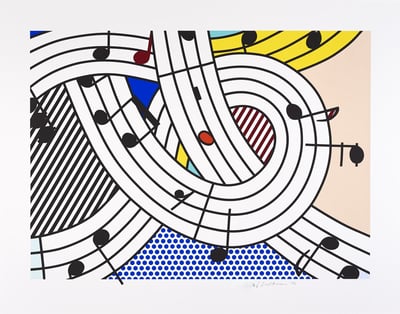
Roy Lichtenstein
Composition II, 1996
Limited Edition Print
Screen-print
USD 80,000 - 90,000

Andy Warhol
Tomato Soup, II.46 from Campbell's Soup I, 1968
Limited Edition Print
Screen-print
USD 150,000 - 170,000

Andy Warhol
$ (9), II.285, 1982
Limited Edition Print
Screen-print
USD 200,000 - 250,000

Andy Warhol
Cowboys and Indians: Northwest Coast Mask, II.380, 1986
Limited Edition Print
Screen-print
USD 39,700

Andy Warhol
Mao (F & S II.96), 1972
Limited Edition Print
Screen-print
USD 45,000 - 55,000

Andy Warhol
Merce Cunningham, 1974
Limited Edition Print
Screen-print
USD 14,000
Roy Lichtenstein
Private Listing
Limited Edition Print
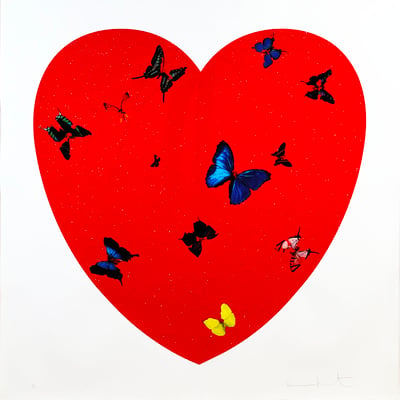
Damien Hirst
All You Need Is Love Love Love, 2010
Limited Edition Print
Screen-print
Inquire For Price

Andy Warhol
Albert Einstein (FS.II 229), 1980
Limited Edition Print
Screen-print
Inquire For Price

Andy Warhol
George Gershwin, F. & S. IIB.231 (TP), c. 1980
Limited Edition Print
Screen-print
USD 39,000 - 50,000

David Shrigley
I Will Not Allow The Dark Skies To Affect Me, 2025
Limited Edition Print
Screen-print
GBP 2,880

Dieter Roth
Selbstbildnis als Loch, 1972
Limited Edition Print
Screen-print
EUR 3,100

Andy Warhol
Hot Dog Bean (from Campbell's Soup II), 1969
Limited Edition Print
Screen-print
Inquire For Price
Related Articles


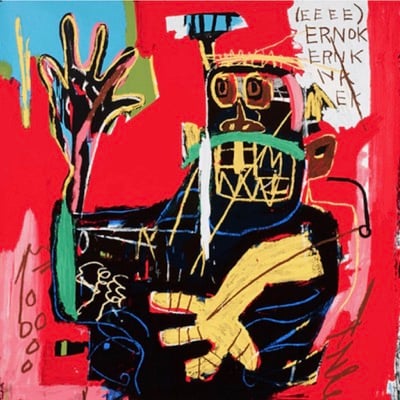
In 1981, Patti Astor opened the first art gallery in New York City's East Village, helping to launch the careers of various artists and musicians. The gallery started small but quickly gained popularity, contributing to the emergence of art movements such as Neo-Expressionism and Street Art in the area. The East Village became a hub for these new artistic expressions. However, the gallery closed in 1985 due to waning interest.

An object in art refers to any tangible thing that exists and can be depicted in a work of art. Sometimes, the object becomes the focal point of a painting, drawing, or sculpture, meaning it is the most important element in the composition. An object can be anything that can be seen or touched, and it is often used to convey meaning or emphasize certain aspects of the artwork.

Gouache is an opaque watercolor paint that allows artists to layer from light to dark. Unlike traditional transparent watercolors, gouache is used for creating solid, vibrant colors. It belongs to the water-media category and is made of pigment, a binding agent, and an inert material, specifically designed for opaque painting.
Can't find your Answer?
Thank you! Your question has been sent — we'll get back to you shortly.
