
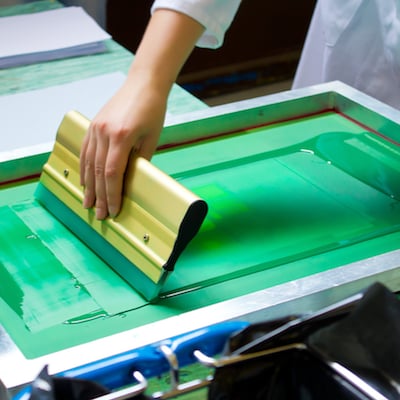
What is a screen-print?
- Show All
- Established
- Discoveries
- Show All
Artworks Related to Screen-print
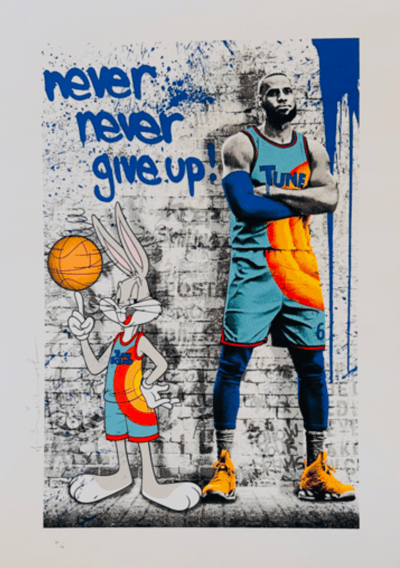
Mr. Brainwash
Tune Squad, 2021
Limited Edition Print
Screen-print
EUR 3,800
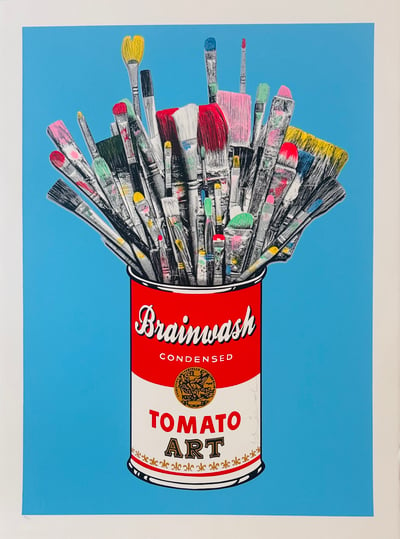
Mr. Brainwash
Tomato Pop (Blue), 2023
Limited Edition Print
Screen-print
EUR 3,500
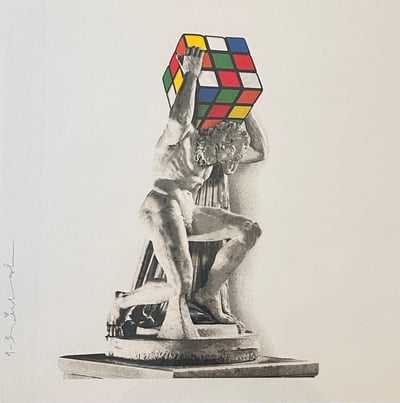
Mr. Brainwash
Rubik's Atlas, 2021
Limited Edition Print
Screen-print
EUR 1,800

Andy Warhol
Queen Ntombi Twala of Swaziland, 1985
Limited Edition Print
Screen-print
EUR 23,500

Andy Warhol
Vegetarian Vegetable, II.56 from Campbell's Soup II, 1969
Limited Edition Print
Screen-print
USD 70,000 - 80,000
Andy Warhol
Private Listing
Limited Edition Print

André Butzer
Untitled 1–3 (Suite of 3), 2021
Limited Edition Print
Screen-print
USD 10,800

Andy Warhol
Campbell's Soup Can (Tomato), 1966
Limited Edition Print
Screen-print
USD 4,125

Helen Frankenthaler
Solar Imp, 2001
Limited Edition Print
Screen-print
Currently Not Available

Andy Warhol
Golden Mushroom (from Campbell's Soup II), 1969
Limited Edition Print
Screen-print
USD 50,000 - 60,000

Nicolas Party
Purple Peaches, 2024
Limited Edition Print
Screen-print
GBP 6,000 - 10,000
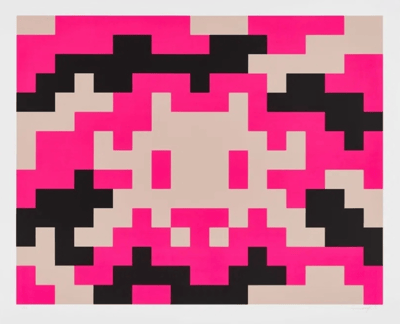
Invader
CAMO XXL-3C-M1, 2024
Limited Edition Print
Screen-print
GBP 16,000 - 20,000

Gerhard Richter
Seascape, 1968
Limited Edition Print
Screen-print
GBP 12,000 - 17,000

Karel Appel
A Group of 3 Screenprints, 1975 / 1978
Limited Edition Print
Screen-print
USD 2,810

Keith Haring
The Story of Red and Blue #5, 1989–90
Limited Edition Print
Screen-print
USD 4,500

Keith Haring
The Story of Red and Blue #2, 1989-1990
Limited Edition Print
Screen-print
USD 4,500
Related Articles


Constructivism is an architectural and artistic philosophy of Russian origin that emerged as a rejection of the idea of autonomous art. The movement advocated for art to serve practical social purposes. Since its inception in 1919, Constructivism has evolved and significantly impacted 20th-century art movements, influencing major trends such as De Stijl and Bauhaus.
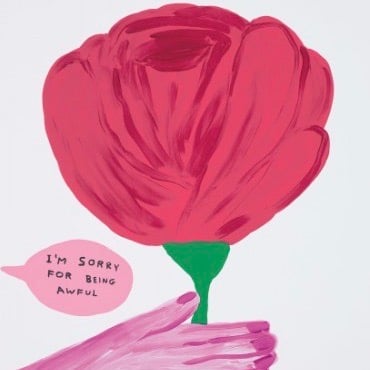
Naïve art describes a style of artwork that is simple and unsophisticated, often created by artists without formal training in an academy or art school. The style is characterized by a lack of advanced techniques, giving it a childlike appearance. Naïve art often features bright colors, simple shapes, and a straightforward approach to subject matter, reflecting the artist's untrained perspective.

Plaster is a mixture of heat-treated powdered gypsum combined with water to create a workable material. It can be used to make solid sculptures, cast in molds, carved, modeled, or attached to other materials. Artists have used plaster for both working models and finished artworks for centuries due to its versatility.
Can't find your Answer?
Thank you! Your question has been sent — we'll get back to you shortly.
