

What is late modernism?
- Show All
- Established
- Discoveries
- Show All
Artworks Related to Late modernism

Joan Miró
Femme dans la nuit, Plate IX, 1959
Limited Edition Print
Lithograph
USD 3,800

Joan Miró
Untitled from Tracé sur l'Eau, 1963
Limited Edition Print
Etching and Aquatint
USD 5,250

Joan Miró
Miranda et La Spirale, 1979
Limited Edition Print
Etching
USD 5,100

Joan Miró
Préparatifs D'Oiseaux II, 1963
Limited Edition Print
Aquatint
USD 5,490

Alexander Calder
One Plate from The Sacrilege of Alan Kent, 1976
Limited Edition Print
Aquatint
USD 4,600

Alexander Calder
Rain, 1972
Limited Edition Print
Lithograph
USD 5,800
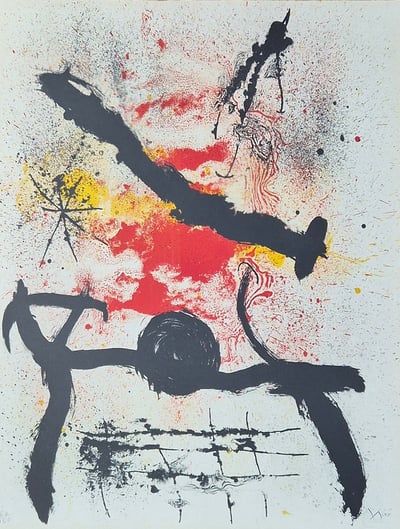
Joan Miró
Untitled from Graphikmappe Hochschule St. Gallen, 1964
Limited Edition Print
Lithograph
USD 6,800

Joan Miró
Composition for from XXe Siecle, No. 16, 1961
Limited Edition Print
Lithograph
USD 7,500

Joan Miró
Arlequin Circonscrit, 1973
Limited Edition Print
Lithograph
USD 8,450

Joan Miró
L'Hypnotiseur (orange), 1969
Limited Edition Print
Lithograph
USD 8,800

Joan Miró
Obra Gràfica, 1980
Limited Edition Print
Lithograph
USD 9,900
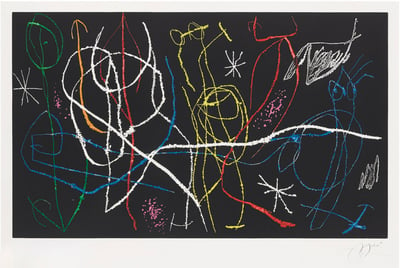
Joan Miró
Sunday Guest III (L'Invitée du Dimanche), 1969
Limited Edition Print
Etching
USD 10,900
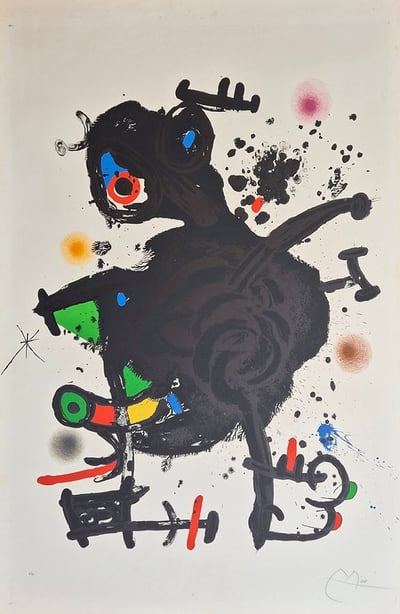
Joan Miró
Le gourou déployé, 1971
Limited Edition Print
Lithograph
USD 23,000

Frank Stella
Sharpesville, from Multicolored Squares I, 1972
Limited Edition Print
Lithograph
USD 7,000
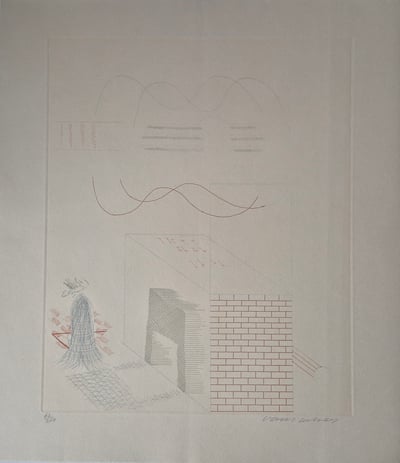
David Hockney
Buzzing of the Blue Guitar, 1977
Limited Edition Print
Etching
EUR 5,400

Joan Miró
Poster for the exhibition '100 sculptures', 1978
Limited Edition Print
Lithograph
USD 4,950
Related Articles


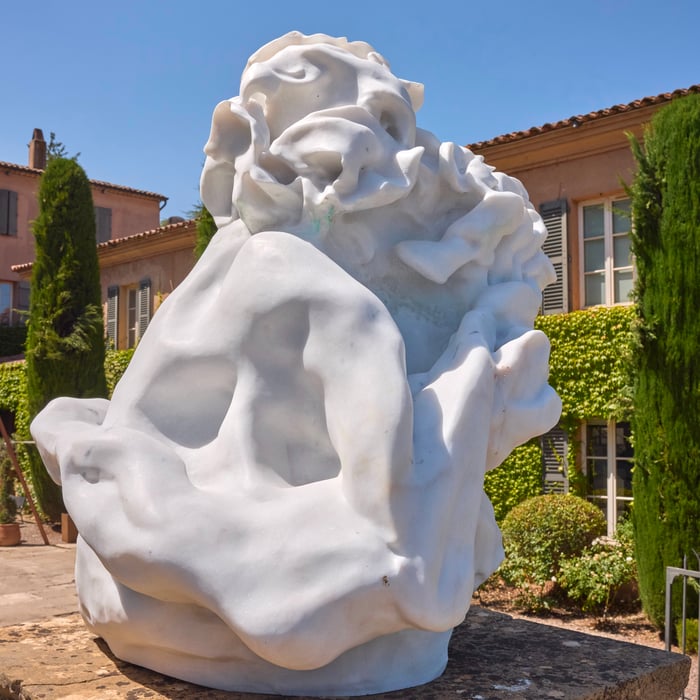

Entropy, in a broader sense, refers to the inevitable deterioration or decline of a society or system. In art, the concept was popularized by artist Robert Smithson in the 1960s. He used the term to critique what he saw as the static and overly simplified nature of contemporary minimalist art. Smithson's work often explored the idea of entropy as a force of chaos and decay, contrasting with the perceived order and purity of minimalist works.
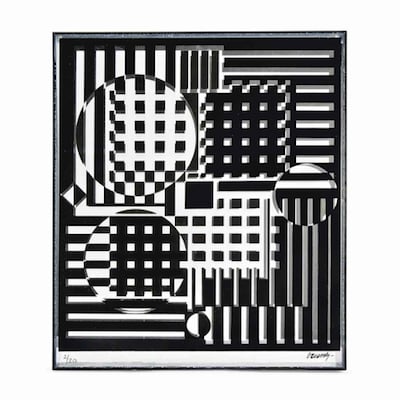
Op Art is a visual art style that uses optical illusions to create the impression of movement, vibrating patterns, flashing, or hidden images. The works are typically abstract, with many well-known pieces in black and white. The roots of Op Art can be traced back to earlier movements like Futurism, Constructivism, Dada, and Neo-Impressionism, particularly in their use of color effects and graphic design.
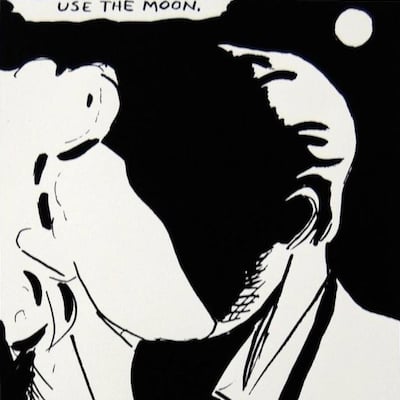
Comic strip art refers to artwork that utilizes the subject matter and commercial printing techniques found in comic strips. In the 1960s, a group of artists began creating paintings that incorporated Ben-Day dots—commonly used in comics and advertising—to produce highly graphic designs in bright colors, using traditional art media.
Can't find your Answer?
Thank you! Your question has been sent — we'll get back to you shortly.
