

What is late modernism?
- Show All
- Established
- Discoveries
- Show All
Artworks Related to Late modernism

Antonio Saura
Toda persona tiene derecho a la libertad de reunion y de asociacion pacificas, 1984
Limited Edition Print
Lithograph
EUR 1,250

Antonio Saura
India, 1983
Limited Edition Print
Mixed Media
EUR 2,000

Antonio Saura
Cocktail party, 1982
Limited Edition Print
Mixed Media
EUR 2,000
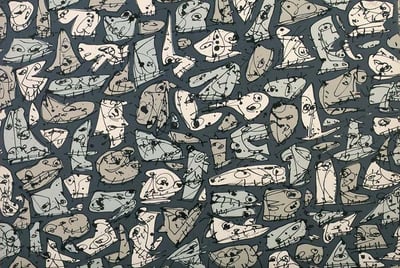
Antonio Saura
Diada I, 1977
Limited Edition Print
Mixed Media
EUR 2,000

Antonio Saura
Les dangers de la liaison, 1984
Limited Edition Print
Mixed Media
EUR 3,390

Antonio Saura
Serie abierta, 1989
Limited Edition Print
Mixed Media
EUR 2,000
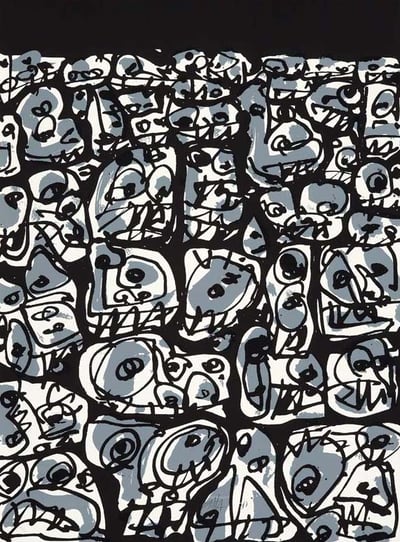
Antonio Saura
Multitud, 1993
Limited Edition Print
Screen-print
EUR 1,650

Antonio Saura
Melanchton III, 1988
Limited Edition Print
Lithograph
EUR 1,650

Antonio Saura
Melanchton II, 1988
Limited Edition Print
Lithograph
EUR 1,650

Antonio Saura
Don, 1988
Limited Edition Print
Lithograph
EUR 1,650

Antonio Saura
Philippe II, 1988
Limited Edition Print
Lithograph
EUR 1,650

Antonio Saura
Melanchton I, 1988
Limited Edition Print
Lithograph
EUR 1,650

Antonio Saura
El caballero, 1996
Limited Edition Print
Mixed Media
EUR 1,750

Antonio Saura
Foule, 1989
Limited Edition Print
Lithograph
EUR 2,200

Antonio Saura
Felipe II, 1971
Limited Edition Print
Serigraph
EUR 3,000

Antonio Saura
Remembrandt, 1973
Limited Edition Print
Serigraph
EUR 1,350
Related Articles



Lowbrow is a derogatory term that refers to certain forms of popular culture. It describes an art movement that began in Los Angeles in the 1970s. The term lowbrow originally refers to a person with little intellectual or refined taste. The Lowbrow art movement, also known as Pop Surrealism, blends elements of underground comics, punk music, hot rod culture, and other subcultures, often with a sense of humor and irony.

Systems Art refers to a group of artists who, during the late 1960s and early 1970s, used the frameworks of conceptualism and minimalism to create art that was responsive to its environment. Rejecting traditional art themes, they embraced aesthetic systems and experimented with diverse media. Systems Art often connected with contemporary political movements of the time, emphasizing the interrelationship between the artwork, its context, and the broader social and political environment.

Ceramic is a term used to describe objects made from clay or other inorganic materials. These objects can be either decorative or functional and have been created since at least 4,000 B.C. Ceramic art involves making, decorating, and firing these objects in a kiln, a special high-temperature oven.
Can't find your Answer?
Thank you! Your question has been sent — we'll get back to you shortly.
