

What is late modernism?
- Show All
- Established
- Discoveries
- Show All
Artworks Related to Late modernism

Joan Miró
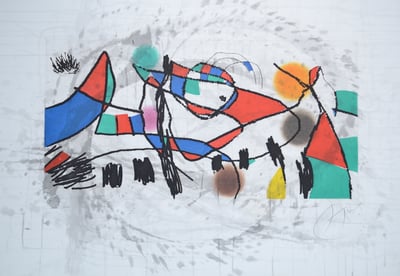
Paroles Peintres III - D446, 1967
Limited Edition Print
Etching and Aquatint
USD 5,000
Joan Miró
Gravure Pour Un Exposition - D606, 1973
Limited Edition Print
Etching
USD 6,200

Joan Miró
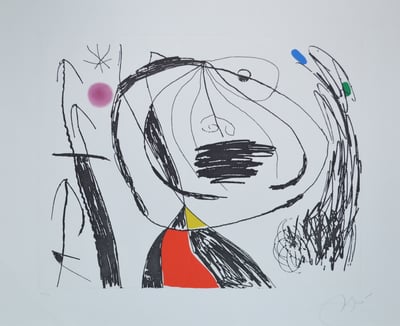
Serie Mallorca - D618, 1973
Limited Edition Print
Etching and Aquatint
USD 6,200
Joan Miró
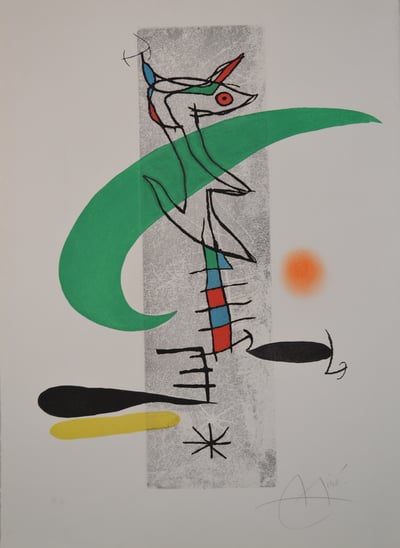
Série Mallorca 5 - D615, 1973
Limited Edition Print
Etching and Aquatint
USD 6,500
Joan Miró
Translunaire - D659, 1974
Limited Edition Print
Etching and Aquatint
USD 7,200

Joan Miró
Demi Mondaine A Sa Fenetre - D742, 1975
Limited Edition Print
Etching and Aquatint
USD 7,200

Joan Miró
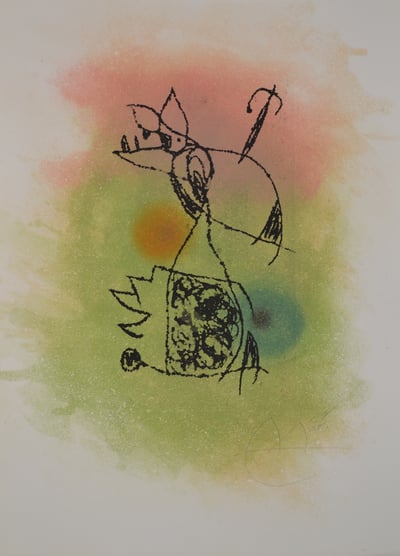
Vega - D1006, 1978
Limited Edition Print
Etching
USD 6,200
Joan Miró
Le Criquet - D1021, 1978
Limited Edition Print
Etching and Aquatint
USD 6,500

Joan Miró
Le Souriceau - D1026, 1978
Limited Edition Print
Etching
USD 6,300

Joan Miró
Grand Duc II (Grand Duke II) - D395, 1965
Limited Edition Print
Etching
USD 6,250

Joan Miró
L'Invention Du Feu - D284, 1960
Limited Edition Print
Aquatint
USD 5,250

Joan Miró
Series II - Rouge et Vert - M288, 1961
Limited Edition Print
Lithograph
USD 4,375
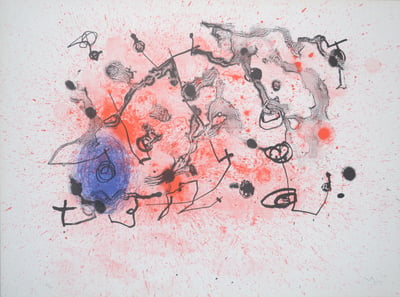
Joan Miró
Series II, Blue and Red - M291, 1961
Limited Edition Print
Lithograph
USD 4,375
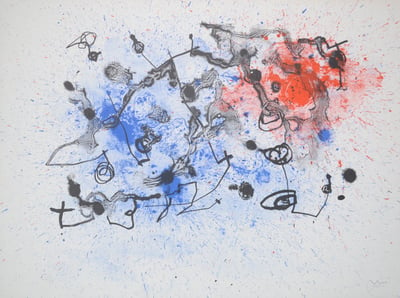
Joan Miró
Series II - Blue And Red - M290, 1961
Limited Edition Print
Lithograph
USD 4,375

Joan Miró
Series II Blue Red And Green - M294, 1961
Limited Edition Print
Lithograph
USD 4,375
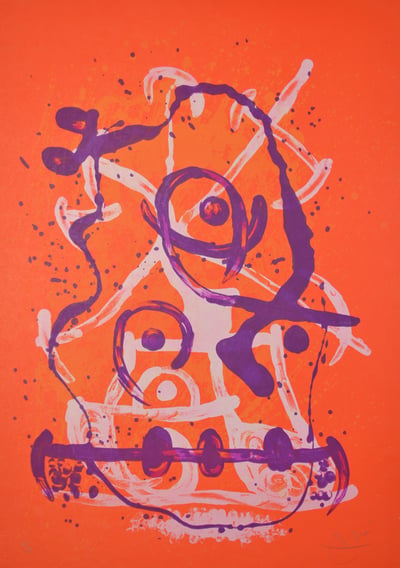
Joan Miró
Chevauchee Rouge Et Violet - M610, 1969
Limited Edition Print
Lithograph
USD 6,500
Related Articles


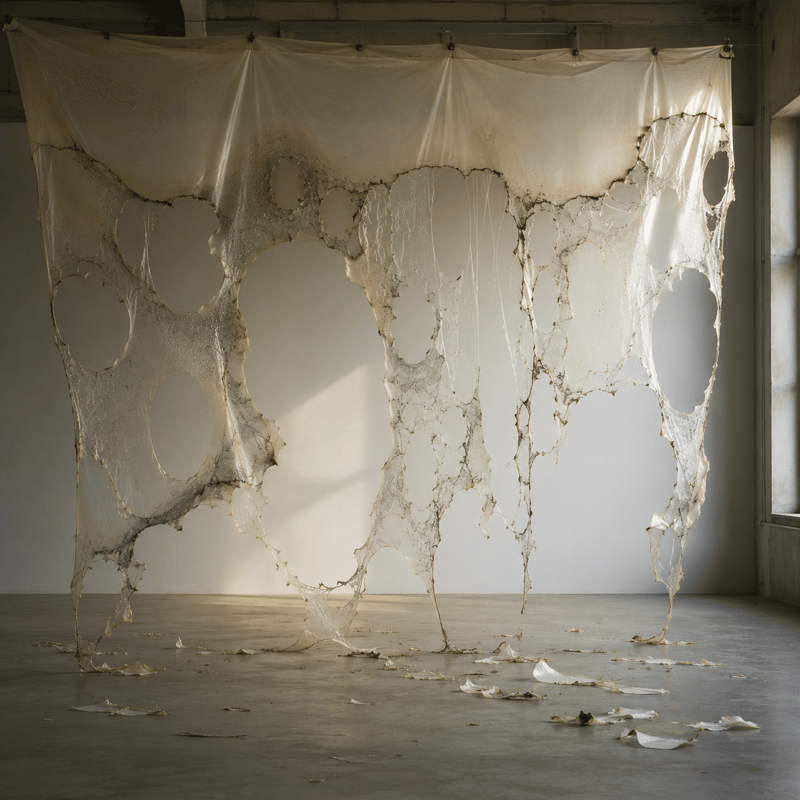
A term coined to describe artworks that are designed to be destroyed during their creation. Gustav Metzger, who developed this concept, outlined key principles: the artwork must disintegrate within 20 years, be self-completing, and involve public participation.
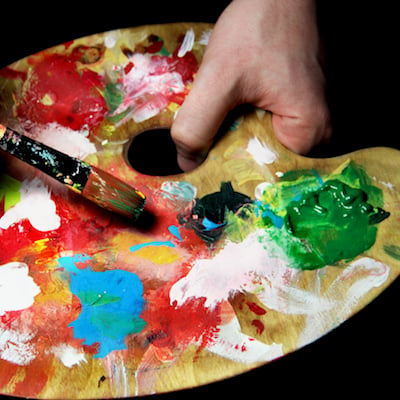
Oil on board is a painting technique where oil paint is applied to either wood panels that have been sanded and primed or high-density cardboard covered with canvas. These surfaces offer the advantage of being more compact for storage compared to traditional stretched canvas on frames, while still providing a stable surface for painting.

Acrylic paint is a fast-drying paint made from pigment suspended in an acrylic polymer emulsion. It is water-soluble when wet but becomes water-resistant once dry. Acrylic paints offer unique characteristics that are not easily achieved with other media, allowing for effects similar to both oil and watercolor paintings while providing their own distinct qualities.
Can't find your Answer?
Thank you! Your question has been sent — we'll get back to you shortly.
