

What is late modernism?
- Show All
- Established
- Discoveries
- Show All
Artworks Related to Late modernism

Henry Moore
Ideas for sculptures C. 365
Limited Edition Print
Lithograph
USD 3,750

Henry Moore
Group in industrial landscape C. 418, 1975
Limited Edition Print
Lithograph
USD 3,750
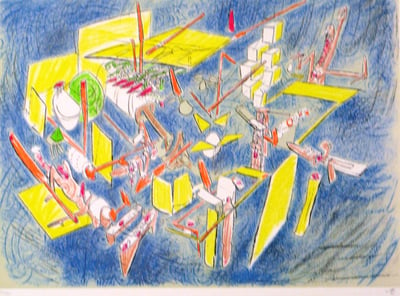
Roberto Matta
Octravi, 1974–1975
Limited Edition Print
Lithograph
USD 1,550
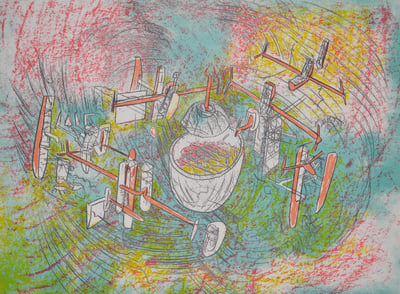
Roberto Matta
Espace de l'Espece - Interrogation Humaine
Limited Edition Print
Lithograph
Currently Not Available
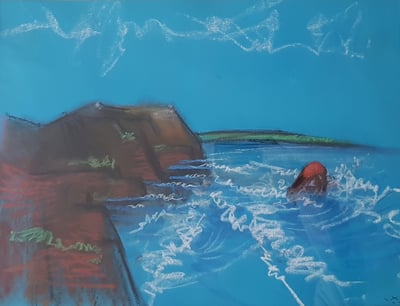
Roberto Matta
Homenaje aux Pyrenees, 1976
Drawing / Watercolor
Pastel
Make Your Offer

Chu Teh-Chun
Untitled
Limited Edition Print
Lithograph
Currently Not Available

Andy Warhol
Carter Burden, 1977
Limited Edition Print
Silkscreen
EUR 29,000

Yves Klein
Table d’Or, 1961/1963
Sculpture / Object
Mixed Media
EUR 24,800

Yves Klein
Table Rose, 1961/1963
Sculpture / Object
Mixed Media
EUR 22,500

Roy Lichtenstein
Paris Review, 1967
Limited Edition Print
Silkscreen
USD 22,850

Julian Schnabel
A Boy from Naples Year, 1986
Limited Edition Print
Mixed Media
Currently Not Available

Robert Whitman
Untitled (Red Sphere in Cityscape), 1973
Limited Edition Print
Silkscreen
EUR 1,700

Albert Ràfols-Casamada
Barcelona-1 , 1981
Limited Edition Print
Etching
EUR 700

Albert Ràfols-Casamada
Estels-5, 1991
Limited Edition Print
Mixed Media
EUR 650

Albert Ràfols-Casamada
Estels-4 , 1991
Limited Edition Print
Mixed Media
EUR 650

Albert Ràfols-Casamada
Estels-2 , 1991
Limited Edition Print
Mixed Media
EUR 650
Related Articles



Interactive art is a form of art where the spectator is actively involved by the artist to achieve the artwork's purpose. This involvement can include allowing the visitor to walk around, in, or on the art installation, or even becoming a part of the artwork itself. Works in this category often feature computers, sensors, and interfaces that respond to various inputs such as meteorological changes, heat, motion, or other types of data programmed by the artist.
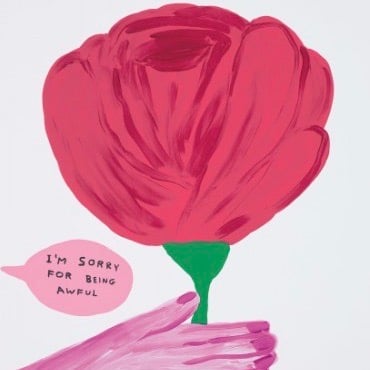
Naïve art describes a style of artwork that is simple and unsophisticated, often created by artists without formal training in an academy or art school. The style is characterized by a lack of advanced techniques, giving it a childlike appearance. Naïve art often features bright colors, simple shapes, and a straightforward approach to subject matter, reflecting the artist's untrained perspective.

De Stijl, meaning The Style, was a group of Dutch artists who created abstract art based on strict adherence to vertical and horizontal geometry. The group was founded by Piet Mondrian and Theo van Doesburg in 1917. Mondrian eventually left De Stijl when Van Doesburg began incorporating diagonal geometry into his work, which Mondrian felt deviated from the group's principles.
Can't find your Answer?
Thank you! Your question has been sent — we'll get back to you shortly.
