

What is pop-art?
- Show All
- Established
- Discoveries
- Show All
Artworks Related to Pop art
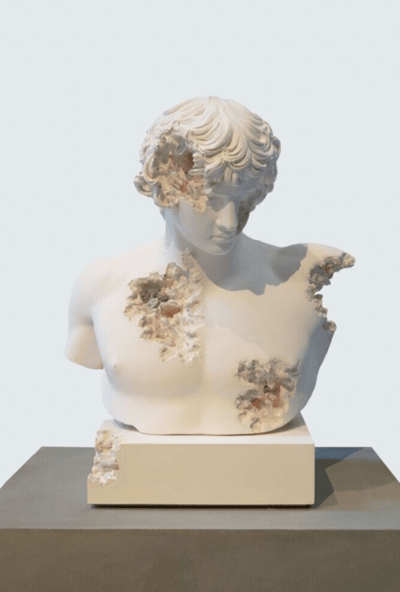
Daniel Arsham
Rose Quartz Eroded Bust of Antinous, 2021
Sculpture / Object
Mixed Media
Inquire For Price

Cy Twombly
Studio Lexington, 2008
Limited Edition Print
Drypoint
EUR 4,800

Tom Sachs
Shop Chair, 2018
Sculpture / Object
Mixed Media
GBP 9,500 - 12,000

Gavin Turk
Boot, 2009
Painting
Acrylic on paper
Inquire For Price

Andy Warhol
Salade de alf Landon (Wild Raspberries IV.128A), 1959
Limited Edition Print
Offset Print
Inquire For Price

Damien Hirst
Spin Painting, Requiem at the Pinchuk Art Centre, Ukraine, 2009
Limited Edition Print
Acrylic on paper
USD 4,690

Andy Warhol
Wild Raspberries IV.136A (Roast Iguana), 1959
Limited Edition Print
Offset Print
Inquire For Price
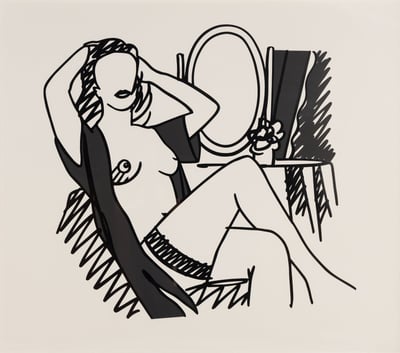
Tom Wesselmann
Nude and Mirror, 1990
Limited Edition Print
Screen-print
USD 12,000
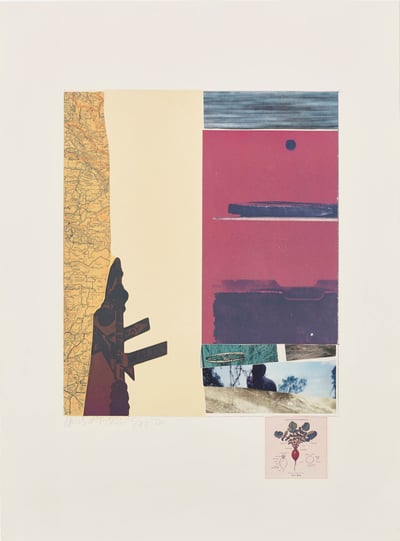
Robert Rauschenberg
XI (from Horsefeathers Thirteen), 1972
Limited Edition Print
Mixed Media
Inquire For Price

Julian Opie
Mechanic (from Walking in London II), 2014
Limited Edition Print
Mixed Media
GBP 10,000 - 15,000

Tom Wesselmann
Helen Nude, 1981
Limited Edition Print
Screen-print
USD 10,000 - 12,000

Julian Opie
Apartment 8, 2021
Limited Edition Print
Woodcut
USD 1,950

Julian Opie
Apartment 4, 2021
Limited Edition Print
Woodcut
USD 1,950

Damien Hirst
Savoy H5-8, 2018
Limited Edition Print
Giclée printing
Currently Not Available
Tom Wesselmann
Private Listing
Sculpture / Object

Allan D'Arcangelo
Smoke Dreams, 1980
Limited Edition Print
Screen-print
Inquire For Price
Related Articles


Emulation is the process of recreating digital art to ensure it remains accessible and functional, even when the original technology used to create it becomes obsolete. This is done by using newer technology to replicate the experience and functionality of the original artwork, preserving art made with early cameras, software, and computers.
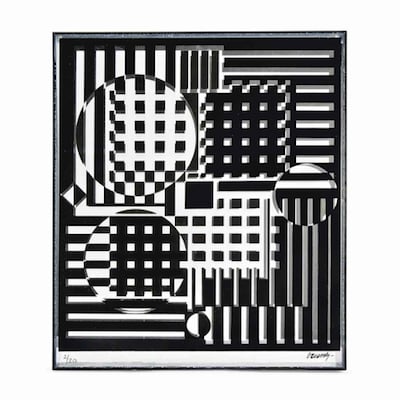
Op Art is a visual art style that uses optical illusions to create the impression of movement, vibrating patterns, flashing, or hidden images. The works are typically abstract, with many well-known pieces in black and white. The roots of Op Art can be traced back to earlier movements like Futurism, Constructivism, Dada, and Neo-Impressionism, particularly in their use of color effects and graphic design.

New Topographics is a term coined in 1975 by curator William Jenkins to describe a group of photographers whose work focused on formal black-and-white images of urban and industrial landscapes. Jenkins initially described their aesthetic as banal, but the photographers themselves argued that their compositions were as significant as those of natural landscapes, emphasizing the beauty in everyday, man-made environments.
Can't find your Answer?
Thank you! Your question has been sent — we'll get back to you shortly.
