
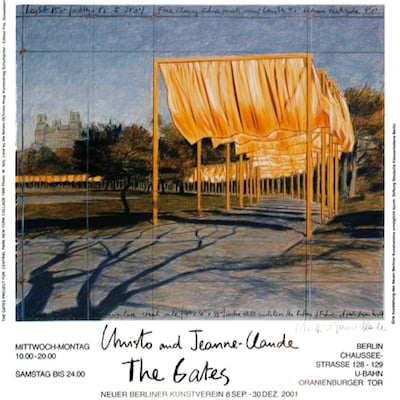
What is site specific art?
- Show All
- Established
- Discoveries
- Show All
Artworks Related to Site Specific Art
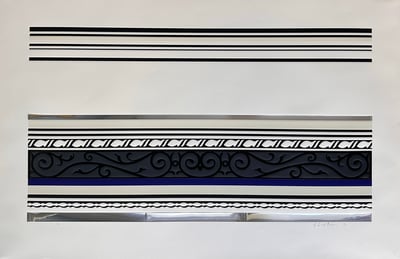
Roy Lichtenstein
Entablature IX (146), 1976
Limited Edition Print
Collage
EUR 20,000 - 25,000

Roy Lichtenstein
Entablature IV (141), 1976
Limited Edition Print
Collage
EUR 20,000 - 25,000

Roy Lichtenstein
Entablature III (140), 1976
Limited Edition Print
Collage
Inquire For Price
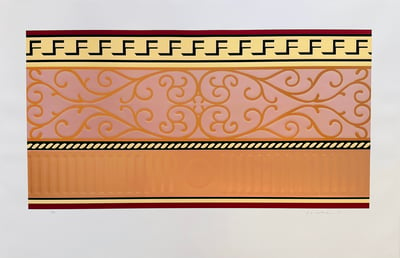
Roy Lichtenstein
Entablature II (139), 1976
Limited Edition Print
Collage
EUR 20,000 - 25,000

Roy Lichtenstein
Entablature I (138), 1976
Limited Edition Print
Collage
EUR 20,000 - 25,000
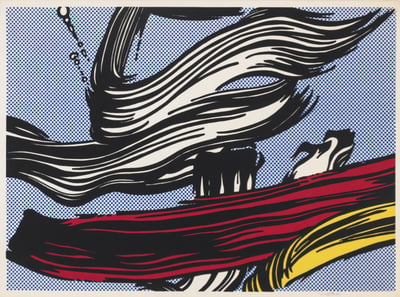
Roy Lichtenstein
Brushstrokes, 1967
Limited Edition Print
Screen-print
Inquire For Price

Jaume Plensa
Be the change you want to see in the world, 2022
Limited Edition Print
Relief printing
Inquire For Price
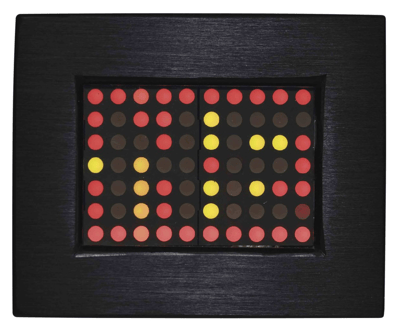
Jenny Holzer
War, 1992
Sculpture / Object
Mixed Media
USD 5,000 - 7,000

Jenny Holzer
Truism 4 (Mother & Child), 1990
Sculpture / Object
Mixed Media
USD 5,000 - 7,000

Jenny Holzer
Truism 2, 1977-79
Sculpture / Object
Mixed Media
USD 5,000 - 7,000

Jenny Holzer
Living 2, 1980-82
Sculpture / Object
Mixed Media
USD 5,000 - 7,000

Javacheff Christo
Running Fence Sunset RF-352, 1976
Limited Edition Print
Photograph
EUR 11,000

Javacheff Christo
The Gates II, 2005
Limited Edition Print
Photograph
EUR 8,900

Javacheff Christo
The Gates I, 2005
Limited Edition Print
Photograph
EUR 8,900

Javacheff Christo
The Gates IV, 2005
Photography
Photograph
EUR 4,500

Javacheff Christo
The Gates III, 2005
Photography
Photograph
Currently Not Available
Related Articles
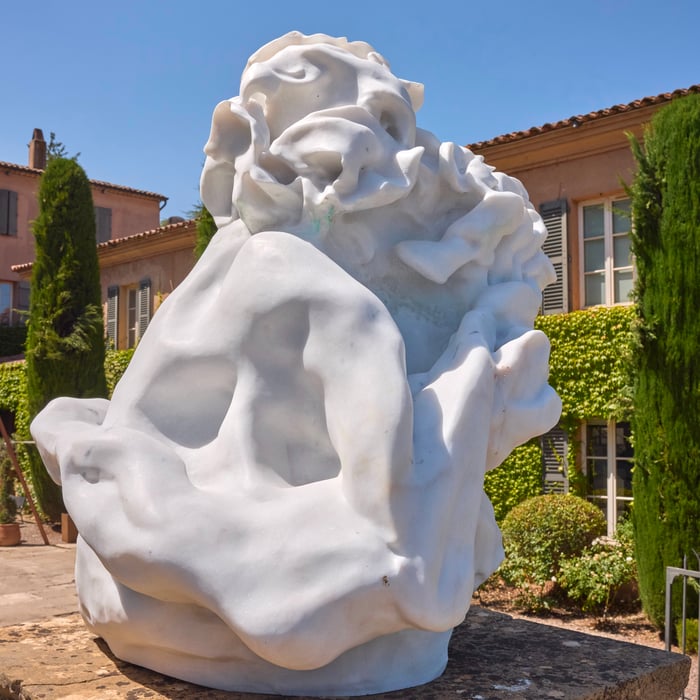

Hyperrealism is a genre of sculpture and painting that closely resembles high-resolution photographs. It is an evolution of Photorealism and is often applied to an independent art style or movement that became prominent in Europe and the United States in the early 2000s. Hyperrealist artists focus on extreme detail and precision, creating works that are often indistinguishable from real-life images.
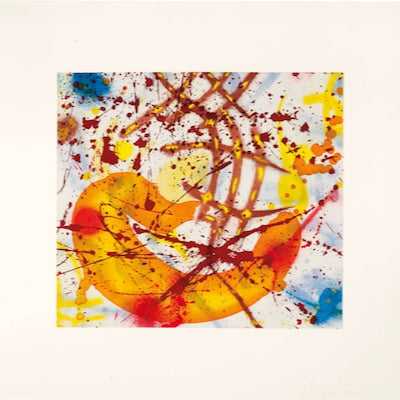
Action Painting is a style of painting where the physical act of creating art—such as gestural brushstrokes, splashing or dripping paint, or moving and dancing while applying paint—is considered essential to the artwork itself. This approach emphasizes the artist's movement and spontaneity as integral to the creative process.

Nouveau Réalisme is an artistic movement founded in 1960 by art critic Pierre Restany and painter Yves Klein during a collective exhibition at a gallery in Milan. Restany wrote the original manifesto in April 1960, proclaiming the movement. In October of that year, nine artists, including Martial Raysse, Yves Klein, Daniel Spoerri, Jean Tinguely, Arman, Pierre Restany, and three Ultra-Lettrists—Jacques de la Villeglé, François Dufrêne, and Raymond Hains—signed the declaration. In 1961, the movement expanded to include Mimmo Rotella, Niki de Saint Phalle, Gérard Deschamps, and César. The movement emphasized a return to reality in art, often incorporating everyday objects and exploring the boundaries between art and life.
Can't find your Answer?
Thank you! Your question has been sent — we'll get back to you shortly.
