

What is Surrealism?
- Show All
- Established
- Discoveries
- Show All
Artworks Related to Surrealism

Lucian Freud
Girl with a Kitten, 1947
Limited Edition Print
Archival Print
GBP 5,000 - 6,500
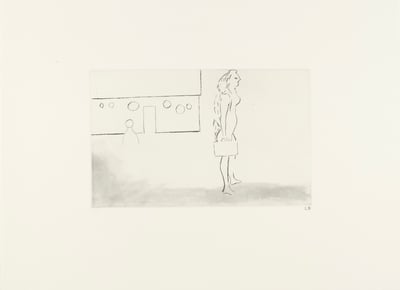
Louise Bourgeois
Autobiographical Series 13, 1994
Limited Edition Print
Etching
EUR 6,750

Louise Bourgeois
Autobiographical Series 10, 1994
Limited Edition Print
Etching
EUR 6,750
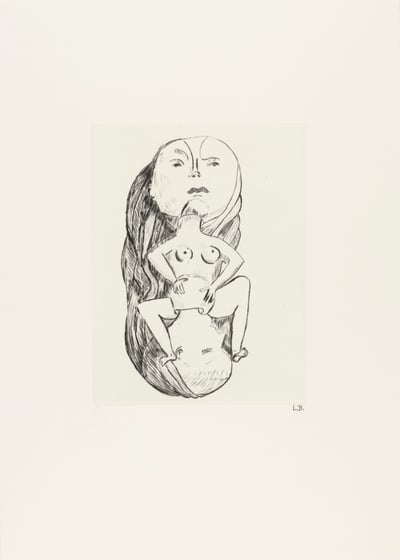
Louise Bourgeois
Autobiographical Series 9, 1994
Limited Edition Print
Etching
EUR 6,750
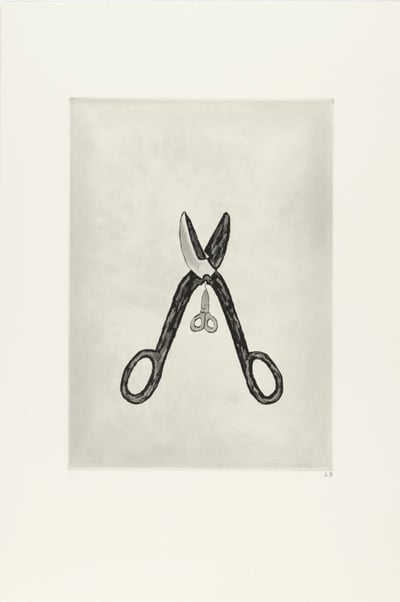
Louise Bourgeois
Autobiographical Series 1, 1994
Limited Edition Print
Etching
EUR 7,200

Alberto Giacometti
Small Standing Nude, 1959
Limited Edition Print
Etching
USD 9,000

Adolph Gottlieb
Germination, 1969
Limited Edition Print
Lithograph
USD 3,300

Pablo Picasso
Peintre peignant la nuque de son jeune modele, 1968
Limited Edition Print
Aquatint
USD 7,000

Pablo Picasso
Petit visage barbu (A.R. 557), 1968 - 1969
Sculpture / Object
Clay
USD 6,700

Pablo Picasso
Femme Profile (Marie-Therese Walter), 1982
Limited Edition Print
Lithograph
USD 6,700

Joan Miró
Femme dans la nuit, Plate IX, 1959
Limited Edition Print
Lithograph
USD 3,800

Joan Miró
Untitled from Tracé sur l'Eau, 1963
Limited Edition Print
Etching and Aquatint
USD 5,250

Joan Miró
Miranda et La Spirale, 1979
Limited Edition Print
Etching
USD 5,100

Joan Miró
Préparatifs D'Oiseaux II, 1963
Limited Edition Print
Aquatint
USD 5,490

Marc Chagall
Sacrifices Made to the Nymphs, from Daphnis and Chloe, 1961
Limited Edition Print
Lithograph
USD 4,400

Marc Chagall
Le repas chez Dryas, from Daphnis et Chloé, 1961
Limited Edition Print
Lithograph
USD 5,750
Related Articles



Plastic is a material made from synthetic or organic compounds that can be molded into various shapes. It became a popular medium for artwork in the 20th century. Plastics can be cut, shaped, assembled, and painted with acrylics, making them versatile for creating new objects and art forms.
Attribute can function as both a noun and a verb. As a noun, it refers to an object, symbol, or animal commonly associated with a specific person, often used in art to identify figures, such as a lion with St. Mark. As a verb, it means to assign a work of art to a particular artist, usually based on stylistic analysis or other evidence, such as attributing a painting to an artist based on its technique and composition.

Neo-Dada is a minor visual and audio art movement with intents similar to those of Dada artwork. While it revives some of Dada's objectives, Neo-Dada emphasizes the importance of the produced artwork rather than the concept behind it. The movement is considered the foundation of Pop Art, Nouveau Réalisme, and Fluxus. Neo-Dada is known for its use of absurdist contrasts, popular imagery, and modern materials, blending high and low culture in a way that challenges traditional artistic conventions.
Can't find your Answer?
Thank you! Your question has been sent — we'll get back to you shortly.
