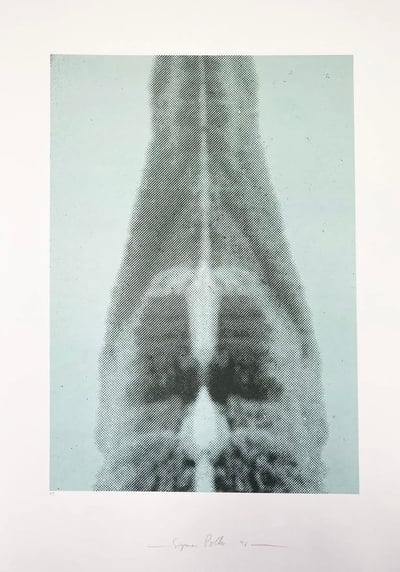
Aquatint etching, printed on Somerset white satin
- Image size 66.5 x 49.8 cm./ 26.2 x 19.6 inches
- paper size 86.5 x 63 cm / 34.1 x 24.8 inches
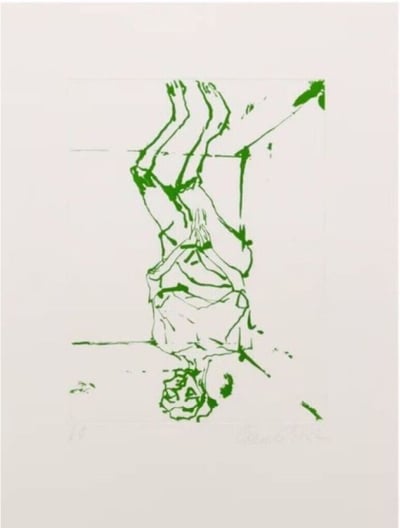
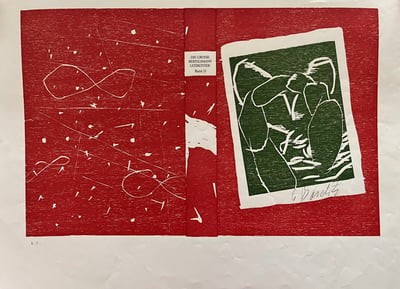
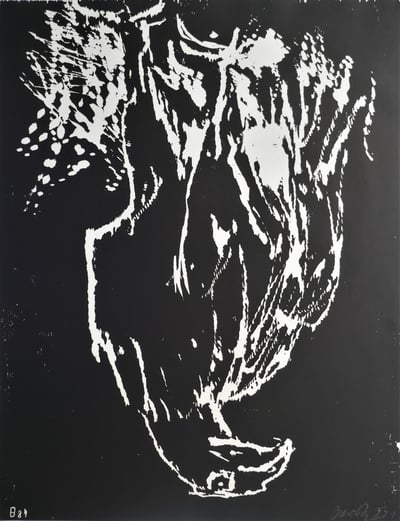
Hirsche by Georg Baselitz is a limited edition print from 2022 composed of four etched and aquatint panels, split between black and red ink variants. Known for his expressive and often inverted figures, Baselitz here channels raw, almost primitive energy into the linear forms of seated, antlered figures. The gestural lines verge on abstraction, yet convey a commanding, almost mythic presence. The repetition in red and black emphasizes contrasts of vitality and severity, as if alternating between blood and shadow. Produced in an edition of 50—half in red, half in black—the series reflects Baselitz’s enduring fascination with fragmentation, duality, and the visceral nature of mark-making.
Georg Baselitz (Germany, 1938–2026) was a groundbreaking painter, sculptor, and graphic artist, known for his Neo-Expressionist works. Renowned for inverting his subjects in 1969 to challenge artistic conventions, Baselitz explored themes of memory, identity, and national history. His provocative style profoundly shaped contemporary art.
Etching and AquatintEtching and aquatint are printmaking techniques. In aquatint, the printing plate is etched with a pattern of tiny pits and cracks to create a wide range of tonal gradations. This technique allows artists to replicate the broad, flat tones found in watercolor paintings and ink washes.
Aquatint etching, printed on Somerset white satin
- Image size 66.5 x 49.8 cm./ 26.2 x 19.6 inches
- paper size 86.5 x 63 cm / 34.1 x 24.8 inches
Hirsche by Georg Baselitz is a limited edition print from 2022 composed of four etched and aquatint panels, split between black and red ink variants. Known for his expressive and often inverted figures, Baselitz here channels raw, almost primitive energy into the linear forms of seated, antlered figures. The gestural lines verge on abstraction, yet convey a commanding, almost mythic presence. The repetition in red and black emphasizes contrasts of vitality and severity, as if alternating between blood and shadow. Produced in an edition of 50—half in red, half in black—the series reflects Baselitz’s enduring fascination with fragmentation, duality, and the visceral nature of mark-making.
Georg Baselitz (Germany, 1938–2026) was a groundbreaking painter, sculptor, and graphic artist, known for his Neo-Expressionist works. Renowned for inverting his subjects in 1969 to challenge artistic conventions, Baselitz explored themes of memory, identity, and national history. His provocative style profoundly shaped contemporary art.
I always feel attacked when I'm asked about my painting.
- Georg Baselitz
Renowned for his expressionistic, often grotesque figurative artwork, Georg Baselitz’s output spanned painting, wood sculpture, and printmaking. His most notable works often addressed questions surrounding Germany’s national identity in the aftermath of the Second World War. He was at the centre of significant controversy in 1980 when he represented Germany at the Venice Biennale, exhibiting a large wooden sculpture that appeared to reference a Nazi salute.
Among Baselitz’s early influences were Art Brut and Abstract Expressionism, as well as the work of artists such as Wassily Kandinsky and Edvard Munch. The exaggerated features present throughout his work were intended as symbolic devices, and one of his most recognised bodies of work is the Hero series, depicting wounded and scarred soldiers in the aftermath of war.
Towards the end of the 1960s, Baselitz began painting his subjects upside down as a deliberate strategy to shift focus away from representation and toward the act of painting itself. His Elke series stands among the most notable examples of this approach.
Sometimes known as Figurativism, figurative art refers to sculptures and paintings that are clearly or specifically derived from real objects, making them representational. The term figurative art is often used in contrast to abstract art. However, since the emergence of abstract art, figurative art has come to describe any form of modern art that has strong references to the real world or actual situations.