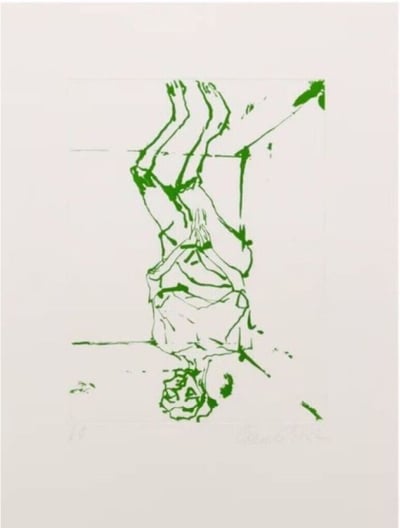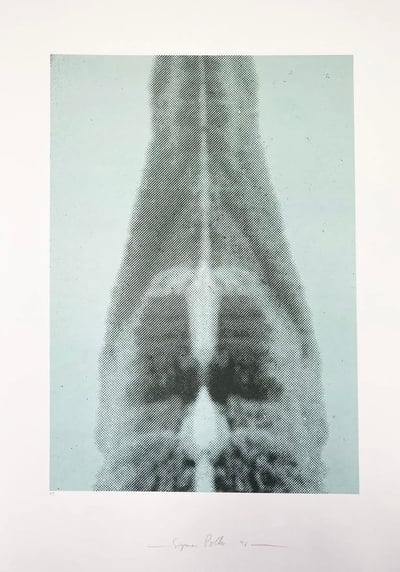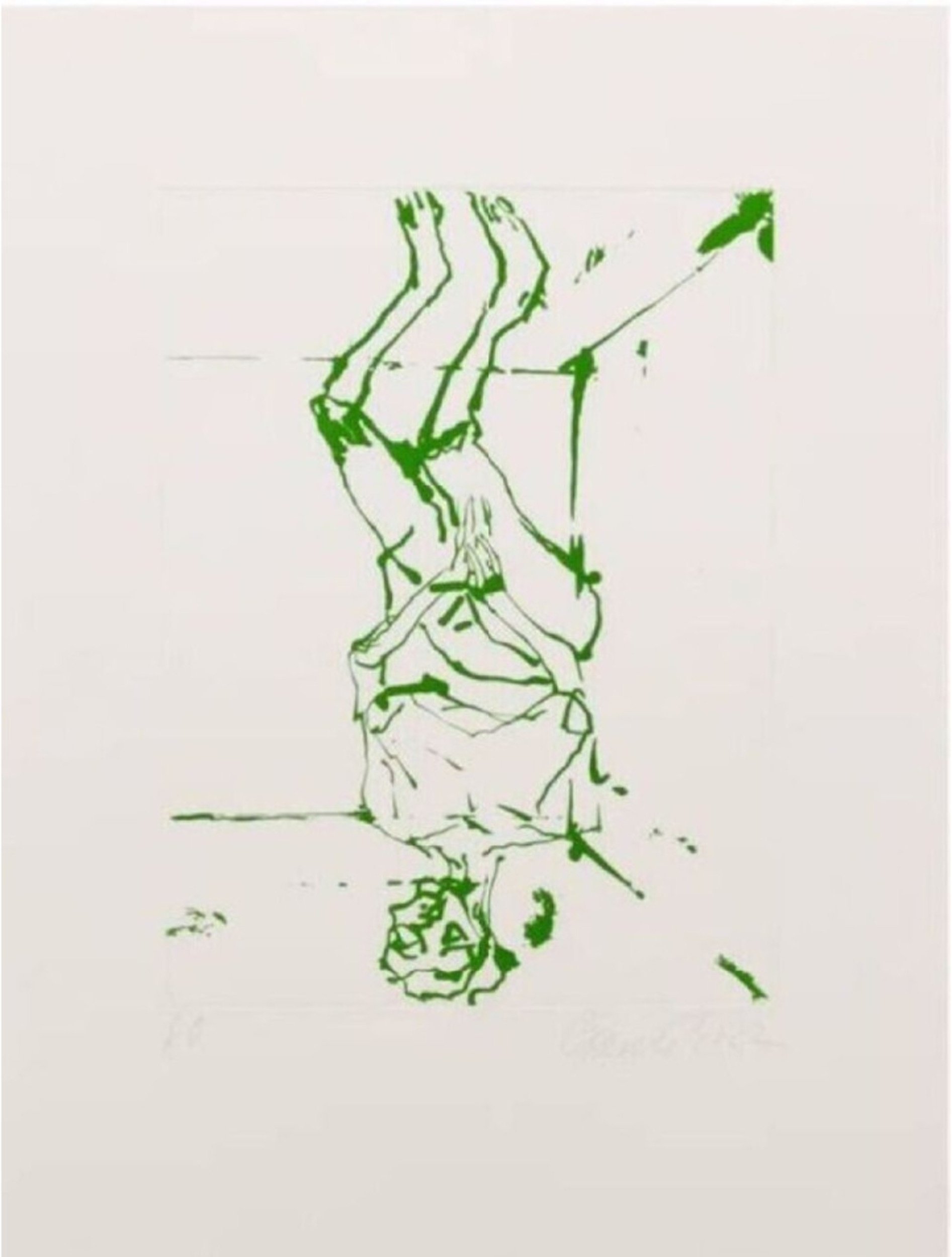
Etching with sugar lift aquatint on Somerset White Satin 300 gsm. Hand-signed by artist, Signed and numbered.
Printed in fluid green ink on Somerset White Satin 300gsm, Baselitz's signature inverted figure descends across the sheet: head and trailing hair at the bottom, legs splayed upward, a long dress draping across the body. The etching with sugar lift aquatint gives the line a living, calligraphic flow. Hand-signed and numbered in pencil. Serpentine - green is late Baselitz in his most concentrated graphic mode — the upside-down vocabulary that has anchored his entire painting practice since 1969, distilled to printmaking purity. A confident acquisition from the leading German Neo-Expressionist.
Georg Baselitz (Germany, 1938–2026) was a groundbreaking painter, sculptor, and graphic artist, known for his Neo-Expressionist works. Renowned for inverting his subjects in 1969 to challenge artistic conventions, Baselitz explored themes of memory, identity, and national history. His provocative style profoundly shaped contemporary art.
Etching and AquatintEtching and aquatint are printmaking techniques. In aquatint, the printing plate is etched with a pattern of tiny pits and cracks to create a wide range of tonal gradations. This technique allows artists to replicate the broad, flat tones found in watercolor paintings and ink washes.
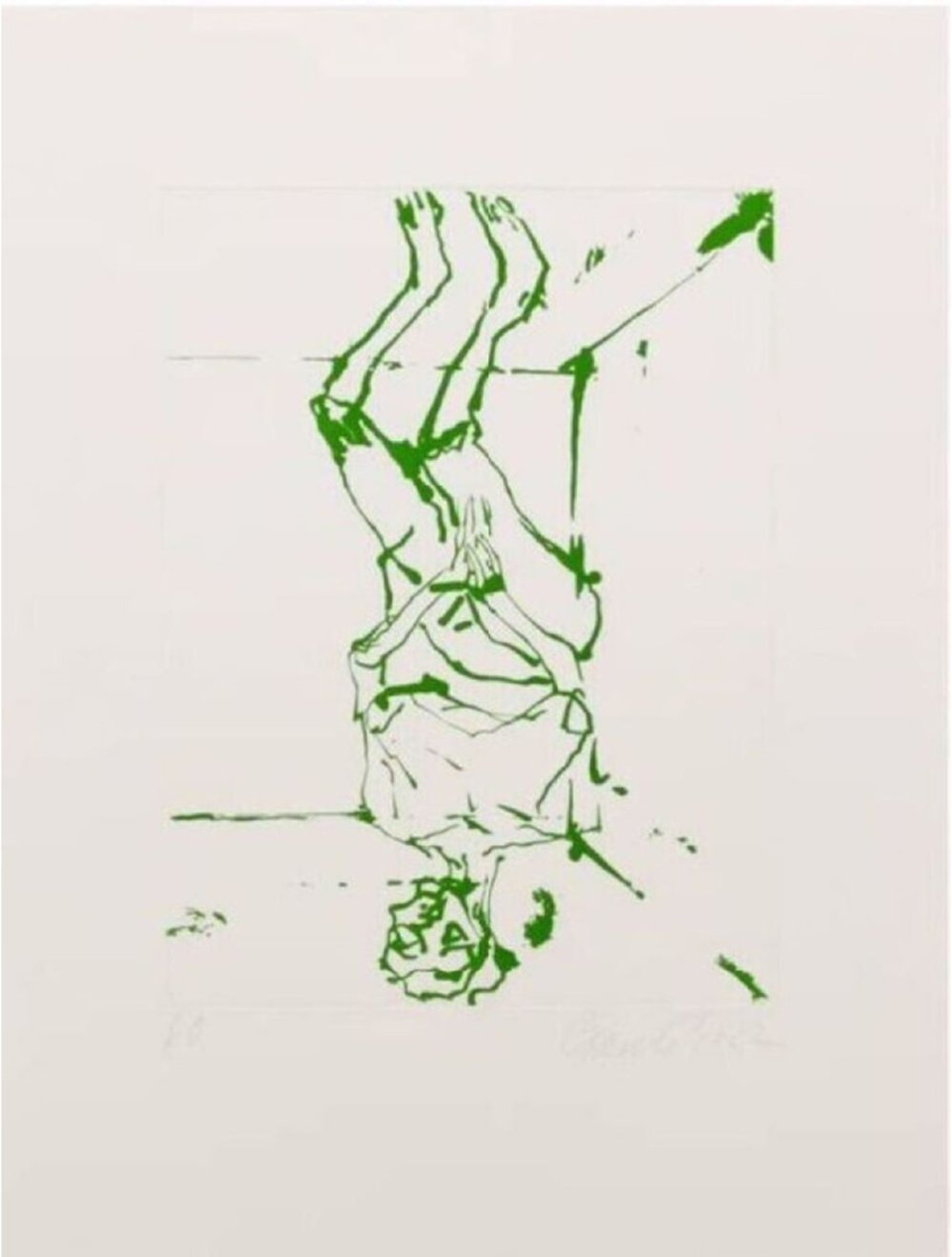
Etching with sugar lift aquatint on Somerset White Satin 300 gsm. Hand-signed by artist, Signed and numbered.
Printed in fluid green ink on Somerset White Satin 300gsm, Baselitz's signature inverted figure descends across the sheet: head and trailing hair at the bottom, legs splayed upward, a long dress draping across the body. The etching with sugar lift aquatint gives the line a living, calligraphic flow. Hand-signed and numbered in pencil. Serpentine - green is late Baselitz in his most concentrated graphic mode — the upside-down vocabulary that has anchored his entire painting practice since 1969, distilled to printmaking purity. A confident acquisition from the leading German Neo-Expressionist.
Georg Baselitz (Germany, 1938–2026) was a groundbreaking painter, sculptor, and graphic artist, known for his Neo-Expressionist works. Renowned for inverting his subjects in 1969 to challenge artistic conventions, Baselitz explored themes of memory, identity, and national history. His provocative style profoundly shaped contemporary art.
I always feel attacked when I'm asked about my painting.
- Georg Baselitz
Renowned for his expressionistic, often grotesque figurative artwork, Georg Baselitz’s output spanned painting, wood sculpture, and printmaking. His most notable works often addressed questions surrounding Germany’s national identity in the aftermath of the Second World War. He was at the centre of significant controversy in 1980 when he represented Germany at the Venice Biennale, exhibiting a large wooden sculpture that appeared to reference a Nazi salute.
Among Baselitz’s early influences were Art Brut and Abstract Expressionism, as well as the work of artists such as Wassily Kandinsky and Edvard Munch. The exaggerated features present throughout his work were intended as symbolic devices, and one of his most recognised bodies of work is the Hero series, depicting wounded and scarred soldiers in the aftermath of war.
Towards the end of the 1960s, Baselitz began painting his subjects upside down as a deliberate strategy to shift focus away from representation and toward the act of painting itself. His Elke series stands among the most notable examples of this approach.
Activist Art is a form of art created to address social and political issues. It often involves public engagement and works closely with communities to raise awareness or inspire change. While it can include elements of performance art, it is not limited to this form. Examples include creating and distributing social protest posters or organizing community-based art projects that highlight specific causes.