
What is a Lithograph?
- Show All
- Established
- Discoveries
- Show All
Artworks Related to Lithograph
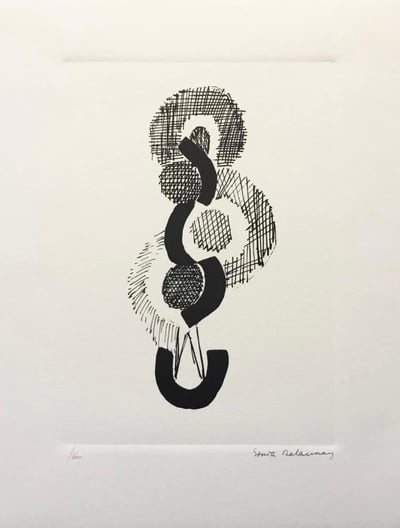
Sonia Delaunay
Dance Endless Rhythm (1923), 1994
Limited Edition Print
Lithograph
USD 720

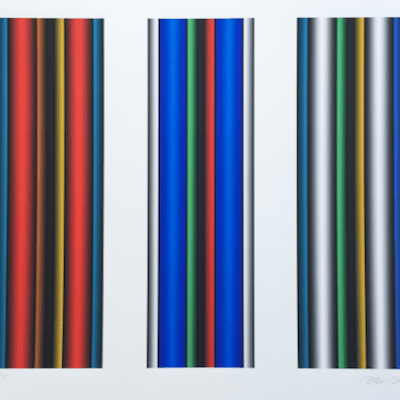
Victor Vasarely
Composition
Limited Edition Print
Lithograph
EUR 1,350
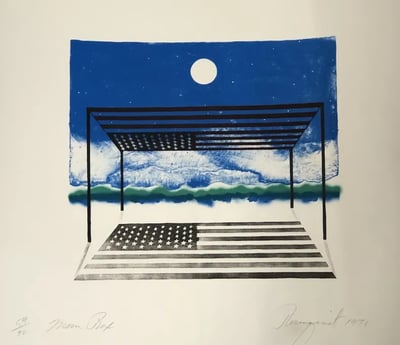
James Rosenquist
Moon box, 1971
Limited Edition Print
Lithograph
EUR 3,125

Jaume Plensa
Wilsis in black and white, 2022
Limited Edition Print
Lithograph
EUR 3,750
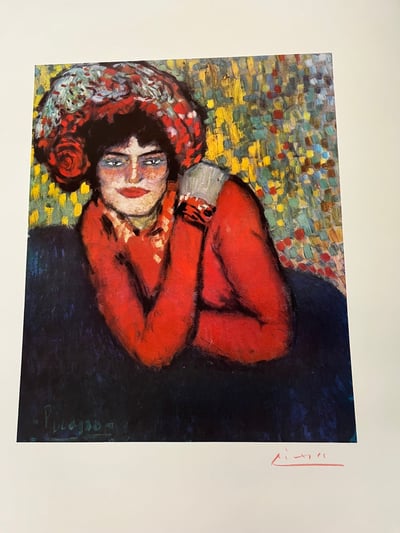
Pablo Picasso
L`Attente, 1966
Limited Edition Print
Lithograph
EUR 6,400

Henry Moore
Album internacional, 1973
Limited Edition Print
Lithograph
EUR 1,150

Joan Miró
El lagarto de las plumas de oro, 1971
Limited Edition Print
Lithograph
EUR 7,200
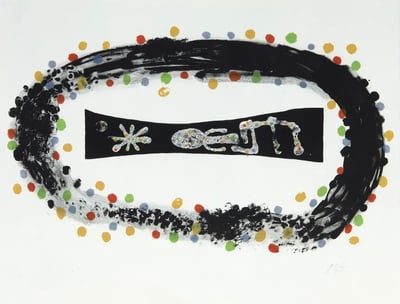
Joan Miró
Nebuleuse, 1958
Limited Edition Print
Lithograph
EUR 5,625

Wifredo Lam
Clairière (from Pleni Luna), 1974
Limited Edition Print
Lithograph
EUR 1,550
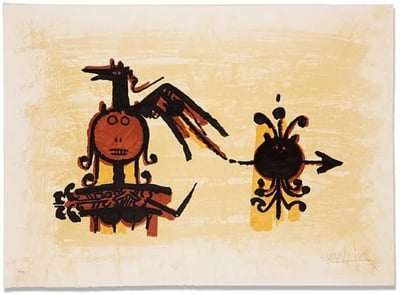
Wifredo Lam
The Last Voyage of the Ghost Ship 4, 1976
Limited Edition Print
Lithograph
EUR 1,350
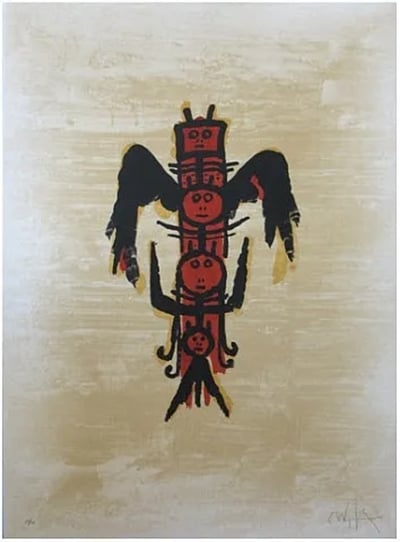
Wifredo Lam
The Last Voyage of the Ghost Ship 2, 1976
Limited Edition Print
Lithograph
EUR 1,350
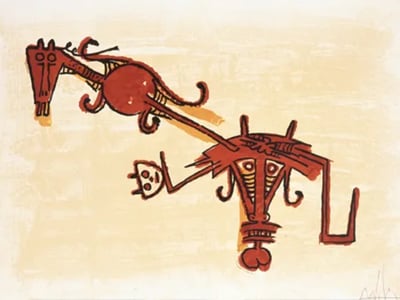
Wifredo Lam
The Last Voyage of the Ghost Ship 1, 1976
Limited Edition Print
Lithograph
EUR 1,350
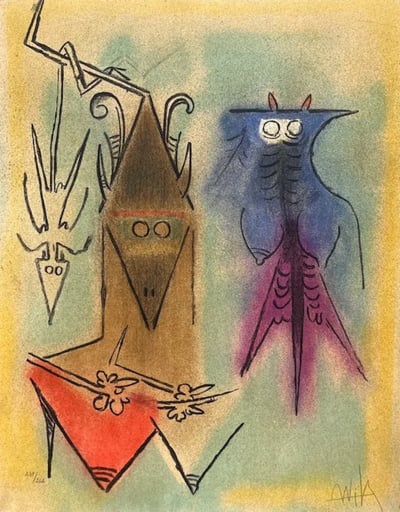
Wifredo Lam
Pleni Luna ( Demons familiers), 1974
Limited Edition Print
Lithograph
Currently Not Available

Alexander Calder
Sala Gaspar, 1973
Limited Edition Print
Lithograph
EUR 1,350

Georges Braque
La Charrue (The Plow), 1960
Limited Edition Print
Lithograph
EUR 3,900
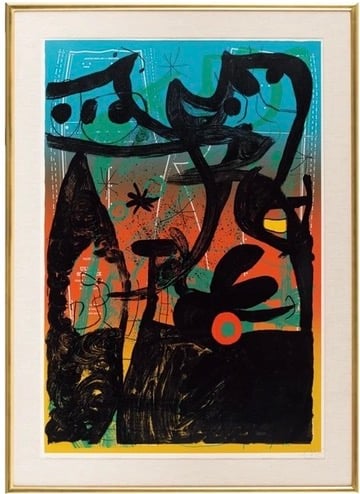
Joan Miró
Mannequin Parade in Bahia, 1969
Limited Edition Print
Lithograph
USD 40,500
Related Articles
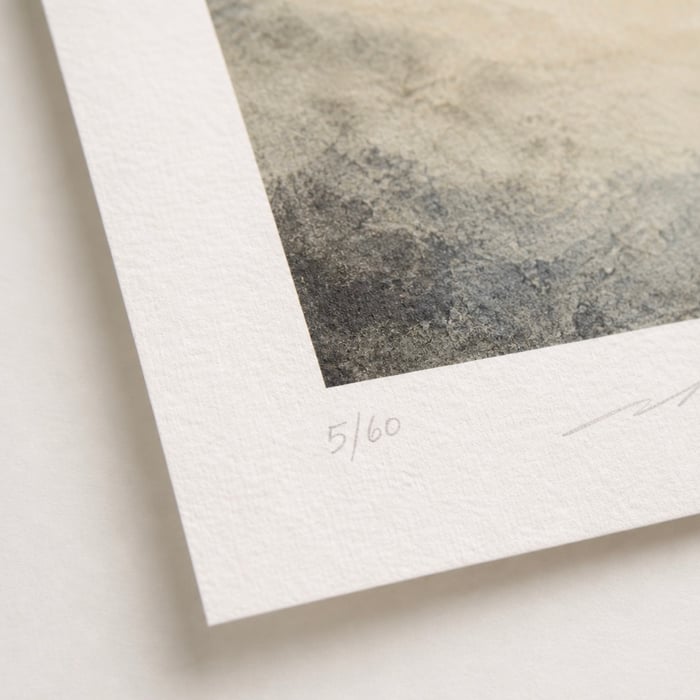


Acrylic paint is a fast-drying paint made from pigment suspended in an acrylic polymer emulsion. It is water-soluble when wet but becomes water-resistant once dry. Acrylic paints offer unique characteristics that are not easily achieved with other media, allowing for effects similar to both oil and watercolor paintings while providing their own distinct qualities.

Figuration Libre is an art movement that is equivalent to the French Bad Painting and Neo-Expressionism in Europe and America. The term was coined by Ben Vautier and the Fluxus movement. In 1981, Robert Combas, François Boisrond, Hervé Di Rosa, and Rémi Blanchard formed the Figuration Libre group. The term can be interpreted as free style art, emphasizing spontaneity, freedom, and a rejection of traditional artistic conventions.
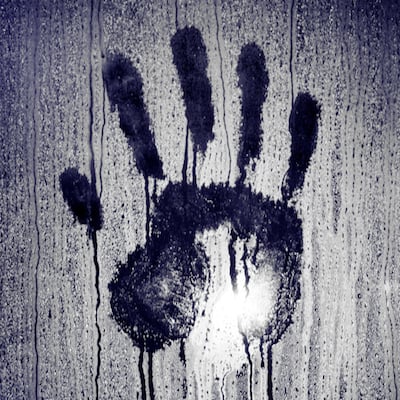
A body print is an art technique where the artist uses their body as a printing plate. This can be done by smearing grease, margarine, or oil on the skin, hair, and clothes, then pressing the body against a surface like paper. The oiled imprint is then dusted with pigment. Unlike a self-portrait, a body print explores two competing concepts of identity rather than capturing a likeness of the artist. The method emphasizes the physicality of the body while questioning the boundaries between self-representation and abstraction.
Can't find your Answer?
Thank you! Your question has been sent — we'll get back to you shortly.
