
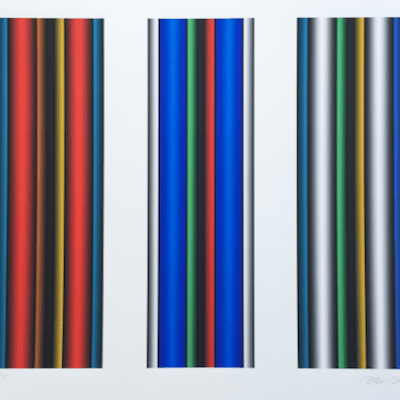
What is a Lithograph?
- Show All
- Established
- Discoveries
- Show All
Artworks Related to Lithograph
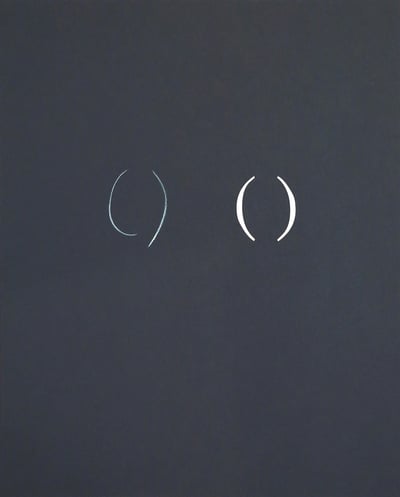
Antoni Muntadas
Puntuacions 15, 2017
Limited Edition Print
Lithograph
Currently Not Available

Jacob Kassay
Untitled 5/10 (Radikal), 2013
Limited Edition Print
Lithograph
EUR 5,500

Jacob Kassay
Untitled 1/10 (Radikal), 2013
Limited Edition Print
Lithograph
EUR 5,500

Jacob Kassay
Untitled 9/10 (Radikal), 2013
Limited Edition Print
Lithograph
EUR 5,500

Jacob Kassay
Untitled 8/10 (Radikal), 2013
Limited Edition Print
Lithograph
EUR 5,500

Jacob Kassay
Untitled 2/10 (Radikal), 2013
Limited Edition Print
Lithograph
EUR 5,500

Jacob Kassay
Untitled 10/10 (Radikal), 2013
Limited Edition Print
Lithograph
EUR 5,500

Jacob Kassay
Untitled 3/10 (Radikal), 2013
Limited Edition Print
Lithograph
EUR 5,500

Jacob Kassay
Untitled 3/7 (Le Monde), 2013
Limited Edition Print
Lithograph
EUR 5,500

Jacob Kassay
Untitled 5/8 (La Opinión), 2013
Limited Edition Print
Lithograph
EUR 5,500

Chris Burden
If You Fly, If You Drive (diptych), 1973
Limited Edition Print
Lithograph
USD 12,500

Katharina Grosse
Cokeypane (set of 2), 2011
Limited Edition Print
Lithograph
EUR 10,625

Robert Indiana
Wall: Four Stones I - One, 1990
Limited Edition Print
Lithograph
Inquire For Price

Massimo Vitali
Another Viaduct, Printed 2006
Limited Edition Print
Lithograph
Inquire For Price
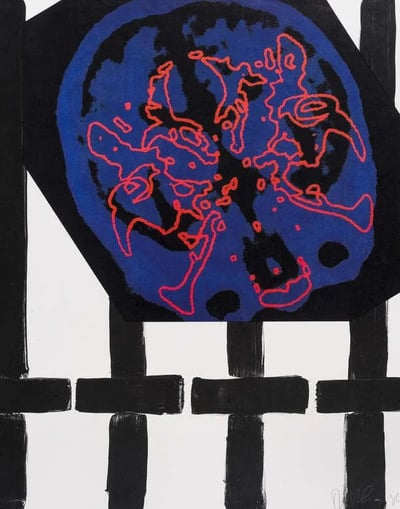
Robert Longo
Untitled (for Joseph Beuys), 1986
Limited Edition Print
Lithograph
USD 2,500
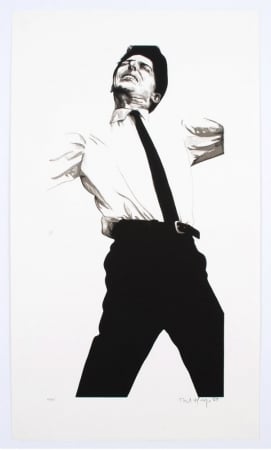
Robert Longo
Jules, 1982-83
Limited Edition Print
Lithograph
Currently Not Available
Related Articles


Provenance refers to the chronology of ownership, location, or custody of an artwork. Tracing an object's provenance helps establish its authenticity and historical context by documenting its ownership history, storage locations, and custody over time. This process often involves expert opinions, comparative analysis, and scientific testing to provide evidence of the artwork’s origin and history.

A Chinese term that describes performance art. This concept is relatively new and may be challenging to articulate unless people understand the intentions behind it. It is a flexible concept that emphasizes everyday, common, and community-focused elements. The art form is heightened, refined, and reflective of how people behave, move, and live.

Orphism is an abstract style of painting influenced by Cubism, developed by Sonia and Robert Delaunay. The term was coined around 1912 by French poet Guillaume Apollinaire to differentiate the Delaunays' work from Cubism, emphasizing their focus on vibrant color and light. The name Orphism is inspired by the Greek musician Orpheus, symbolizing the movement's lyrical and harmonious qualities.
Can't find your Answer?
Thank you! Your question has been sent — we'll get back to you shortly.
