

What is a screen-print?
- Show All
- Established
- Discoveries
- Show All
Artworks Related to Screen-print

Vija Celmins
Spider-web, 2009
Limited Edition Print
Screen-print
USD 6,500

Jurgen Klauke
The Big Sleep 3
Limited Edition Print
Screen-print
EUR 1,700

Robert Indiana
The American dream, 1997
Limited Edition Print
Screen-print
USD 1,650

Miles Aldridge
New Utopias#4, 2018
Limited Edition Print
Screen-print
EUR 7,000

Mr. Brainwash
Untitled (Paintbrush), 2014
Limited Edition Print
Screen-print
EUR 3,900

Christopher Wool
Untitled II, 2016
Limited Edition Print
Screen-print
EUR 2,250

Christopher Wool
Untitled I, 2016
Limited Edition Print
Screen-print
EUR 2,250

Imi Knoebel
ohne Titel (4), 1995
Limited Edition Print
Screen-print
EUR 1,800

Imi Knoebel
ohne Titel (3), 1995
Limited Edition Print
Screen-print
EUR 1,800

Imi Knoebel
ohne Titel (2), 1995
Limited Edition Print
Screen-print
EUR 1,800

Gunther Uecker
Ouroboros (natural sand), 2018
Limited Edition Print
Screen-print
EUR 22,000
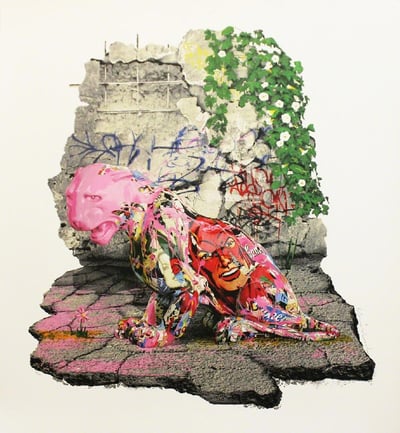
Mr. Brainwash
Nepal Relief Fundraiser, 2015
Limited Edition Print
Screen-print
Inquire For Price

Yaacov Agam
Geometric 3 Agam, c. 1975-1980
Limited Edition Print
Screen-print
EUR 2,900

Yaacov Agam
Star of Hope, Agamograph, 1975
Limited Edition Print
Screen-print
EUR 2,800

Nancy Graves
Vertigo, 1980
Limited Edition Print
Screen-print
USD 3,680
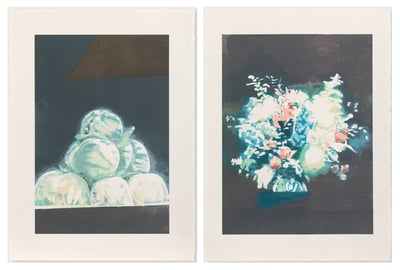
Luc Tuymans
Peaches and Technicolor , 2013
Limited Edition Print
Screen-print
Currently Not Available
Related Articles


Found objects (or objet trouvé in French) are everyday items that an artist finds and incorporates into a work of art. While collectors have displayed aesthetically pleasing objects for centuries, modern art often uses objects that originally had non-artistic functions, such as recycled or repurposed materials.

Known as Neo-Geo for short, this movement uses geometric objects and shapes to create abstract artwork as a metaphor for society. Inspired by various 20th-century art styles, including minimalism and pop art, Neo-Geo emerged in the 1980s as a response to the industrialization and commercialization of the modern world. The movement reflects on the impact of mass production, consumerism, and technology, often critiquing the superficiality of contemporary culture through its abstract, geometric compositions.

Minimalism is a style in music and visual arts characterized by pared-down designs and simplicity. It began in Western art after World War II, gaining prominence particularly in American visual arts. Minimalism draws heavily on aspects of modernism and is often viewed as a reaction against Abstract Expressionism, as well as a precursor to post-minimal art practices. Prominent minimalist artists include Agnes Martin, Donald Judd, Robert Morris, Frank Stella, and Dan Flavin.
Can't find your Answer?
Thank you! Your question has been sent — we'll get back to you shortly.
