
What is abstract expressionism?
- Show All
- Established
- Discoveries
- Show All
Artworks Related to Abstract expressionism

Roberto Matta
Damné Par L'Arc En Ciel, 1978
Limited Edition Print
Etching
EUR 1,875

Roberto Matta
Plusieurs Autres Vies, 1978
Limited Edition Print
Etching
EUR 1,875

Roberto Matta
Attire Le Gai Venin, 1978
Limited Edition Print
Etching
EUR 1,875
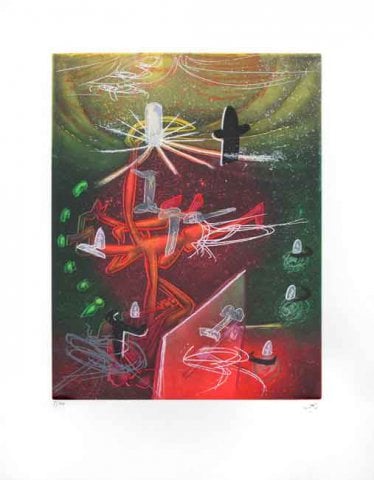
Roberto Matta
Je Fixe Des Vertiges, 1978
Limited Edition Print
Etching
EUR 1,875

Roberto Matta
Feu, Feu Sur Moi, 1978
Limited Edition Print
Etching
EUR 1,875

Roberto Matta
L'âme Est Une Inconnue, 1978
Limited Edition Print
Etching
EUR 1,875

Roberto Matta
Nous Ne Sommes Pas Au Monde, 1978
Limited Edition Print
Etching
EUR 1,875

Helena Vieira da Silva
Grottes, 1971
Limited Edition Print
Lithograph
Currently Not Available

Pierre Alechinsky
Sans titre, Unknown
Limited Edition Print
Lithograph
EUR 2,500

Robert Rauschenberg
Tribute 21 (Environment), 1994
Limited Edition Print
Lithograph
Inquire For Price

Louise Bourgeois
Untitled (Spider and Snake), 2003
Limited Edition Print
Mixed Media
EUR 23,600

Donald Sultan
Untitled IX, 2008
Limited Edition Print
Screen-print
Inquire For Price

Georg Baselitz
Adler (Eagle) 1, 1981
Limited Edition Print
Woodcut
Inquire For Price

Donald Sultan
Still Life with Peach, 1987
Limited Edition Print
Serigraph
Inquire For Price

Roberto Matta
Music Foot (portfolio), 1990
Limited Edition Print
Lithograph
EUR 2,750

Donald Sultan
Wallflowers (aqua on dark green), 2018
Limited Edition Print
Screen-print
USD 9,000 - 12,000
Related Articles


An object in art refers to any tangible thing that exists and can be depicted in a work of art. Sometimes, the object becomes the focal point of a painting, drawing, or sculpture, meaning it is the most important element in the composition. An object can be anything that can be seen or touched, and it is often used to convey meaning or emphasize certain aspects of the artwork.
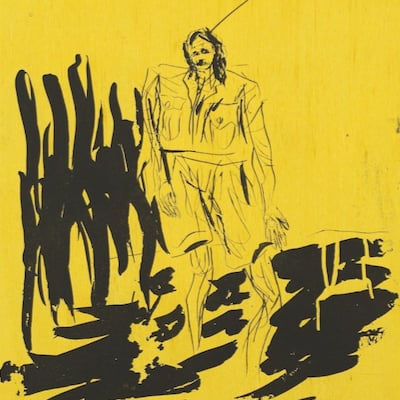
Neue Wilden is the term German artists used for Neo-Expressionism. In the 1970s and 80s, expressive painting re-emerged in Germany, with artists embracing intense colors and broad brushstrokes. The movement grew in opposition to minimal and conceptual art, favoring a return to raw, emotional expression through bold and dynamic painting techniques.

A triennial is a large-scale art exhibition that takes place every three years. These exhibitions often feature the latest artistic developments, works, and emerging artists on an international scale, involving major institutions from around the world. Triennials are significant events in the art world, offering a platform for contemporary art and fostering global cultural exchange.
Can't find your Answer?
Thank you! Your question has been sent — we'll get back to you shortly.
