

What is Lettrism?
- Show All
- Established
- Discoveries
- Show All
Artworks Related to Lettrism

Mr. Brainwash
Lichtenline, 2009
Limited Edition Print
Screen-print
USD 7,800

Robert Indiana
The Hartley Elegies: The Berlin Series- KvF IV, 1990
Limited Edition Print
Serigraph
USD 7,900

Robert Indiana
The Hartley Elegies: The Berlin Series - KvF III, 1990
Limited Edition Print
Serigraph
USD 7,900

Robert Indiana
The Hartley Elegies: The Berlin Series - KvF I, 1990
Limited Edition Print
Serigraph
USD 7,900
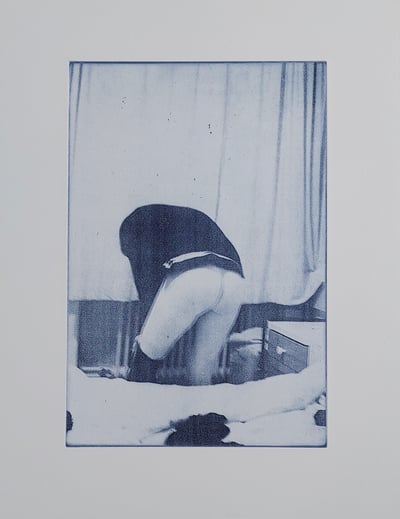
Christopher Wool
Untitled, 1994
Photography
Photogravure
Make Your Offer
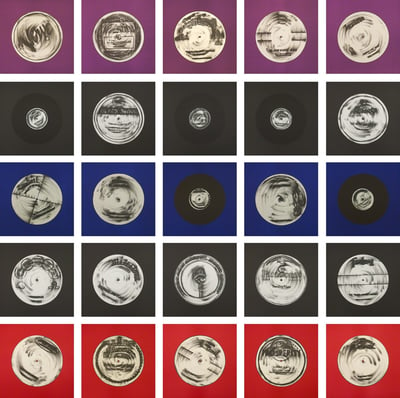
Gary Simmons
Lost Classics, 2012
Limited Edition Print
Lithograph
EUR 15,000
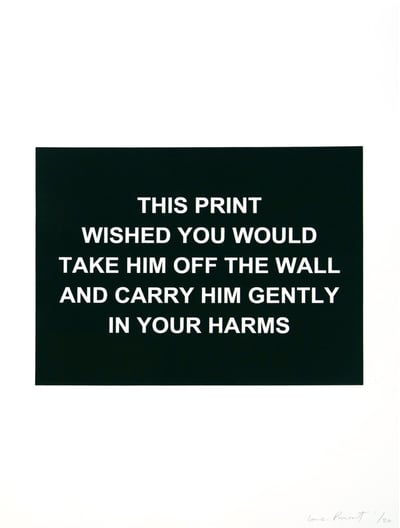
Laure Prouvost
This print wished you would...., 2015
Limited Edition Print
Etching
EUR 1,000

Laure Prouvost
It calms us both 3 , 2014
Limited Edition Print
Etching
EUR 1,200

Laure Prouvost
It calms us both 2 , 2014
Limited Edition Print
Etching
EUR 1,200

Laure Prouvost
It calms us both 1, 2014
Limited Edition Print
Etching
EUR 1,200
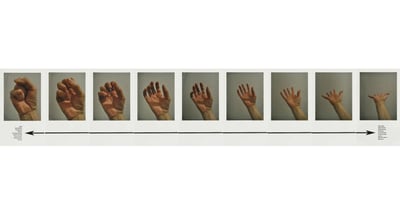
Adrian Piper
Mokshamudra Progression, 2012
Limited Edition Print
Digital Print on paper
EUR 27,000

Jonathan Monk
The idea of an empty sliding, 2015
Limited Edition Print
Monotype
EUR 3,000
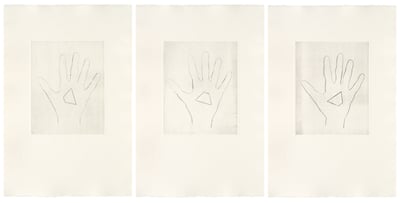
Jonathan Monk
My Left Hand Holding a Piece 3 , 2008
Limited Edition Print
Drypoint
Currently Not Available
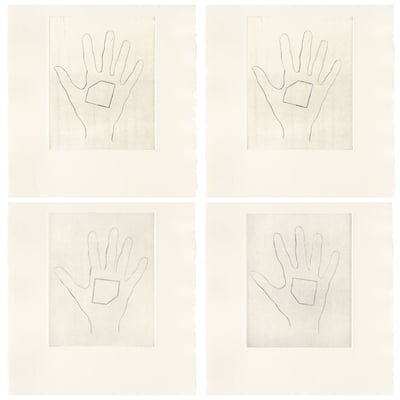
Jonathan Monk
My Left Hand Holding a Square 4, 2008
Limited Edition Print
Drypoint
EUR 3,000
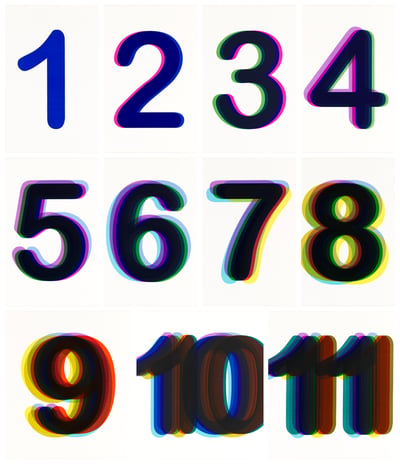
Jonathan Monk
COUNTING IN COLOUR, 2010
Limited Edition Print
Lithograph
EUR 3,200
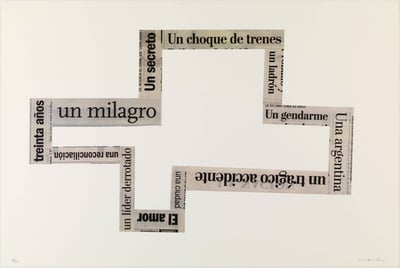
Jorge Macchi
El secreto, 2011
Limited Edition Print
Lithograph
EUR 1,200
Related Articles

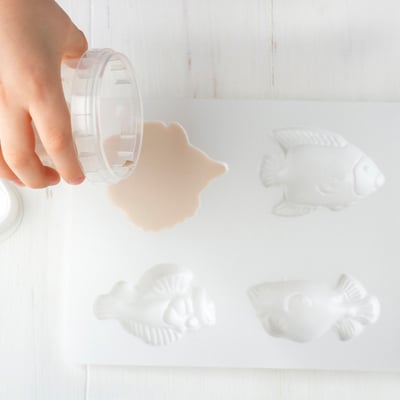
A cast is a form created by pouring a liquid material, such as plastic, plaster, acrylic, concrete, or mixed media, into a mold. Once the liquid cools and fully solidifies, the cast is removed from the mold, revealing the final shape. This process is widely used in sculpture, manufacturing, and various forms of art to replicate intricate designs and shapes.
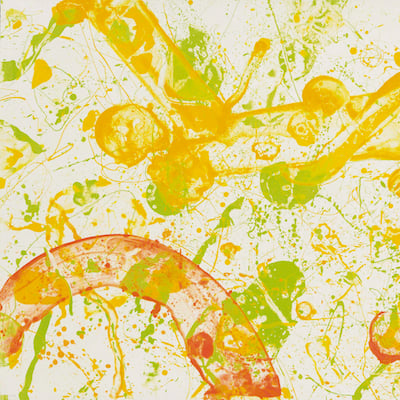
Tachisme is a French abstract painting style that gained popularity between 1940 and 1950, often seen as the European counterpart to Abstract Expressionism. However, there are stylistic differences between the two. Tachisme, which emerged from Art Informel, rejected geometric abstraction in favor of more intuitive and spontaneous expression. It was a reaction against the structured forms of Cubism and is closely related to Informalism. Tachisme emphasizes gestural brushwork, irregular forms, and a focus on the process of painting itself.
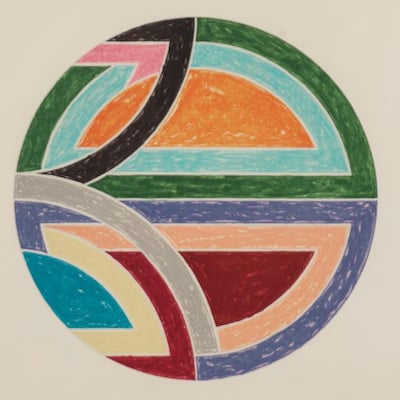
American Abstract Artists (AAA) is an organization founded in New York City in 1936 to promote abstract art and its appreciation in the United States. At a time when abstract art faced strong opposition from critics, the AAA provided crucial exhibition opportunities for abstract artists, helping to foster the growth and acceptance of the movement.
Can't find your Answer?
Thank you! Your question has been sent — we'll get back to you shortly.
