
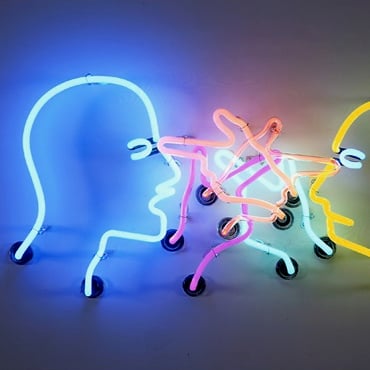
What is Process Art?
- Show All
- Established
- Discoveries
- Show All
Artworks Related to Process Art

Jacob Kassay
Untitled 10/10 (Radikal), 2013
Limited Edition Print
Lithograph
EUR 5,500

Jacob Kassay
Untitled 3/10 (Radikal), 2013
Limited Edition Print
Lithograph
EUR 5,500

Jacob Kassay
Untitled 3/7 (Le Monde), 2013
Limited Edition Print
Lithograph
EUR 5,500

Jacob Kassay
Untitled 5/8 (La Opinión), 2013
Limited Edition Print
Lithograph
EUR 5,500

Thomas Demand
Bullion, 2003
Limited Edition Print
Lambda print
EUR 4,250

Donald Sultan
Untitled IX, 2008
Limited Edition Print
Screen-print
Inquire For Price

Donald Sultan
Still Life with Peach, 1987
Limited Edition Print
Serigraph
Inquire For Price

Gerhard Richter
Ulrike Meinhof , 2015
Limited Edition Print
Pigment print
Currently Not Available

Donald Sultan
Wallflowers (aqua on dark green), 2018
Limited Edition Print
Screen-print
USD 9,000 - 12,000

Donald Sultan
Wallflowers (black on aqua), 2018
Limited Edition Print
Screen-print
USD 9,000 - 12,000
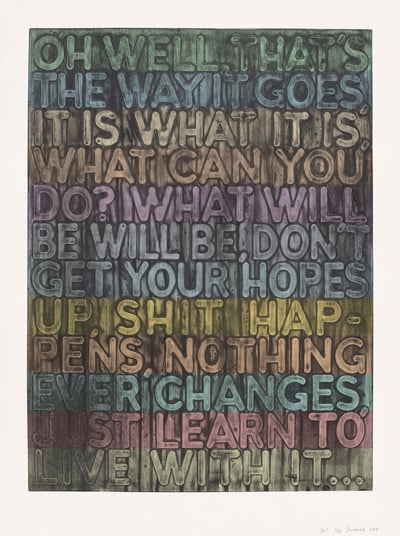
Mel Bochner
Oh Well, 2019
Limited Edition Print
Mixed Media
EUR 12,000
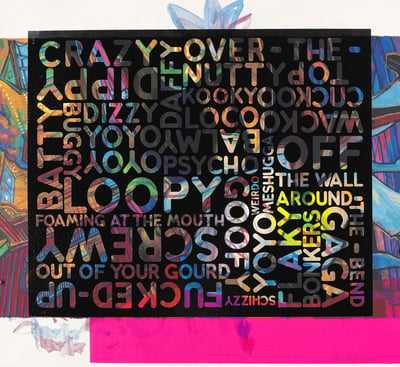
Mel Bochner
Crazy (With background Noise) , 2018
Limited Edition Print
Screen-print
EUR 9,000
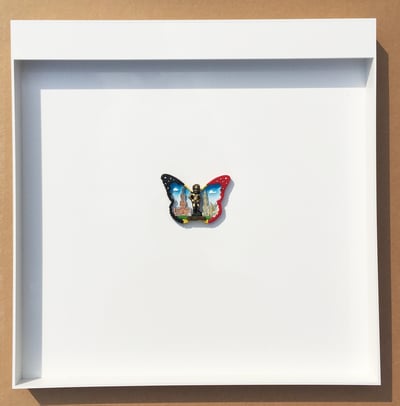
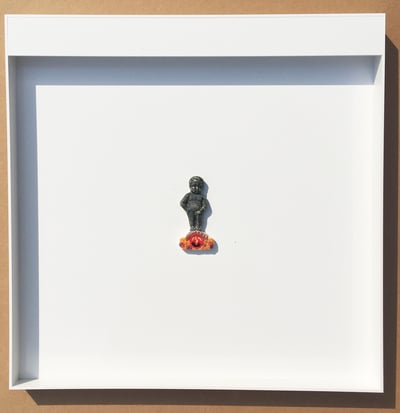
Jonathan Monk
Backside Brussels I, 2016
Sculpture / Object
Acrylic sculpture
EUR 800
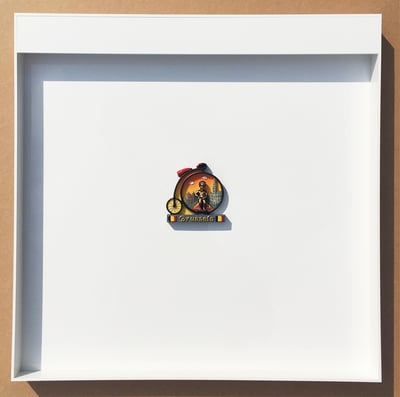
Jonathan Monk
Backside Brussels II, 2016
Sculpture / Object
Acrylic sculpture
EUR 800
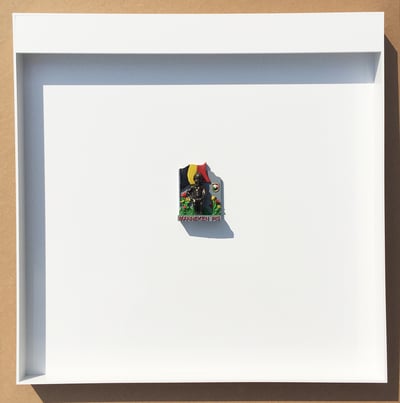
Jonathan Monk
Backside Brussels III, 2016
Sculpture / Object
Acrylic sculpture
EUR 800
Jonathan Monk
Backside Brussels IV, 2016
Sculpture / Object
Acrylic sculpture
EUR 800
Related Articles
Sound Art is an artistic discipline where sound is used as the primary medium. Like other contemporary art genres, Sound Art is inherently interdisciplinary, engaging with a variety of subjects including electronics, acoustics, noise music, psychoacoustics, audio media, video, film, and sculpture. Early examples of Sound Art include Luigi Russolo's noise intoners, as well as experimental works by Surrealists, Dadaists, and the Fluxus movement. These early pioneers helped establish sound as a legitimate medium for artistic expression.

A pigment is a material that changes the color of light by selectively absorbing certain wavelengths and reflecting others. Unlike phosphorescence or fluorescence, where materials emit light, pigments work by altering the light that passes through or is reflected from them. In art, pigments are chosen for their special properties, such as high tinting strength, making them ideal for coloring various materials.

Readymade is the term coined by French artist Marcel Duchamp to describe artworks created from manufactured objects. Duchamp selected ordinary, functional items that he felt had visual indifference, turning them into art simply by choosing and presenting them in a new context. This concept challenged traditional notions of art and continues to influence artists who adopt similar approaches today.
Can't find your Answer?
Thank you! Your question has been sent — we'll get back to you shortly.
