
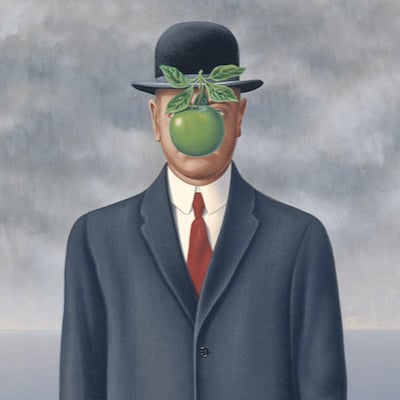
What is Surrealism?
- Show All
- Established
- Discoveries
- Show All
Artworks Related to Surrealism
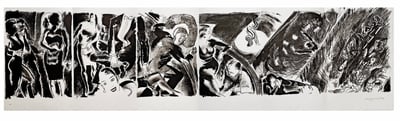
Allen Jones
Greasepaint, 1988
Limited Edition Print
Lithograph
USD 4,250

Dr Lakra
Untitled Blue, 2008
Limited Edition Print
Lithograph
USD 2,750

Dr Lakra
Untitled, #3, 2008
Limited Edition Print
Etching
USD 2,500

Dr Lakra
Untitled, #6, 2008
Limited Edition Print
Etching
USD 2,500

Dr Lakra
Untitled, #7, 2008
Limited Edition Print
Etching
USD 2,500

Dr Lakra
Untitled, #8, 2008
Limited Edition Print
Etching
USD 2,500

Dr Lakra
Untitled, #5, 2008
Limited Edition Print
Etching
USD 2,500

Dr Lakra
Untitled, #9, 2008
Limited Edition Print
Etching
USD 2,500

Dr Lakra
Untitled, #10, 2008
Limited Edition Print
Etching
USD 2,500

Dr Lakra
Untitled, #2, 2008
Limited Edition Print
Etching
USD 2,500

Dr Lakra
Untitled, #4, 2008
Limited Edition Print
Etching
USD 2,500

Dr Lakra
Untitled, #1, 2008
Limited Edition Print
Etching
USD 2,500

Dr Lakra
Untitled Green, 2008
Limited Edition Print
Lithograph
USD 2,500

Allan D'Arcangelo
Title Unknown, 1966
Limited Edition Print
Lithograph
USD 2,400

Olaf Breuning
Random thoughts about life 10, 2018
Limited Edition Print
Lithograph
EUR 500

Olaf Breuning
Random thoughts about life 9, 2018
Limited Edition Print
Lithograph
EUR 500
Related Articles

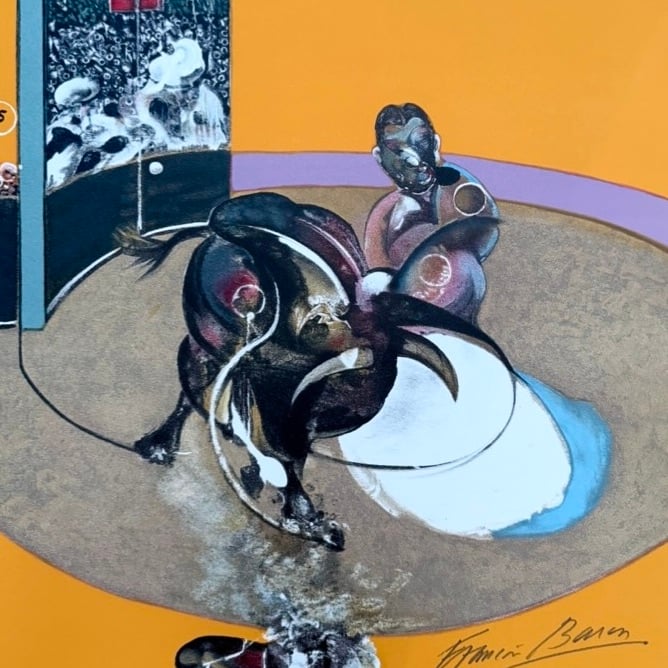


A Catalogue Raisonné is an annotated and comprehensive listing of all the known works of an artist. It includes detailed information that helps to identify and authenticate the artist's output across all media or within a specific medium. Typical details in a catalogue raisonné include the title, dimensions, date, medium, and current location of each work. This resource is essential for scholars, collectors, and art historians in tracking and verifying the complete body of work by an artist.

New Topographics is a term coined in 1975 by curator William Jenkins to describe a group of photographers whose work focused on formal black-and-white images of urban and industrial landscapes. Jenkins initially described their aesthetic as banal, but the photographers themselves argued that their compositions were as significant as those of natural landscapes, emphasizing the beauty in everyday, man-made environments.

Acrylic on canvas is a technique where acrylic paint is applied to a canvas surface using tools like brushes and palette knives. Acrylic paint is a synthetic medium made from liquid plastic, which can be thinned with water and dries quickly when exposed to air. This fast-drying quality makes it versatile for layering and various painting techniques.
Can't find your Answer?
Thank you! Your question has been sent — we'll get back to you shortly.
