

What is Surrealism?
- Show All
- Established
- Discoveries
- Show All
Artworks Related to Surrealism
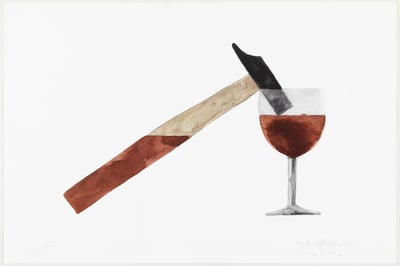
Jorge Macchi
Drunk, 2010
Limited Edition Print
Lithograph
EUR 1,200
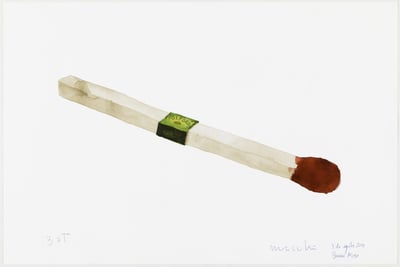
Jorge Macchi
Fósforo, 2010
Limited Edition Print
Lithograph
EUR 1,200
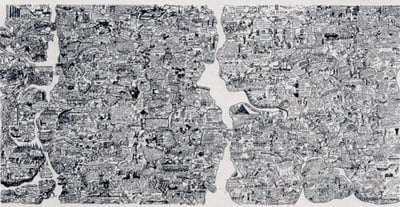
Oyvind Fahlstrom
World map, 1973
Limited Edition Print
Silkscreen
Currently Not Available
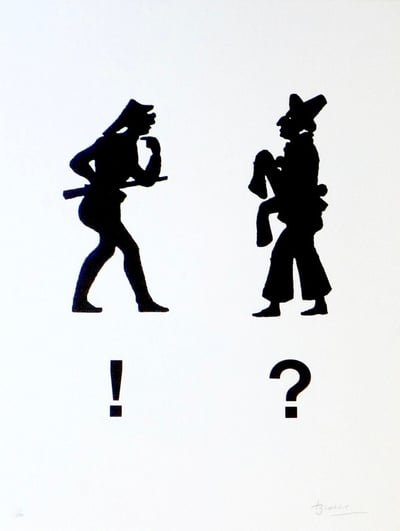
Joan Brossa
Diàleg, 1989
Limited Edition Print
Lithograph
EUR 1,000
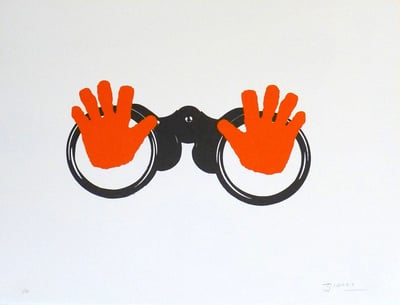
Joan Brossa
Poema visual 16, 1989
Limited Edition Print
Lithograph
EUR 1,000
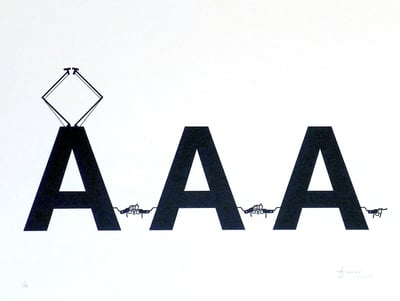
Joan Brossa
Comboi, 1989
Limited Edition Print
Lithograph
EUR 1,000

Joan Brossa
Poema visual 5, 1989
Limited Edition Print
Lithograph
EUR 1,000

Man Ray
Noire et Blanche, 1933/85
Limited Edition Print
Mixed Media
Currently Not Available
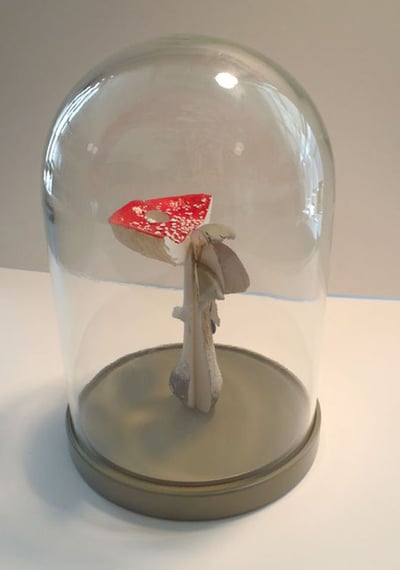
Carsten Holler
Multiple Mushroom Dome , 2012
Sculpture / Object
Mixed Media
Currently Not Available
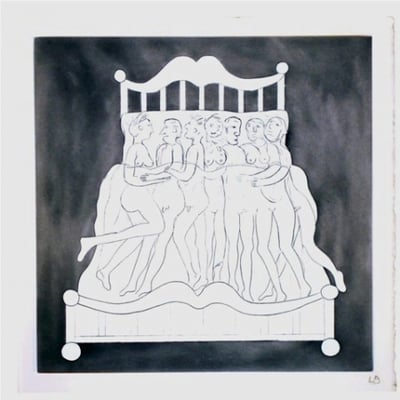
Louise Bourgeois
Metamorfosis V, 1999
Limited Edition Print
Etching
Currently Not Available
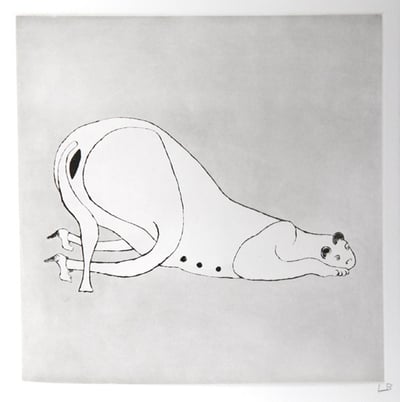
Louise Bourgeois
Metamorfosis I , 1999
Limited Edition Print
Etching
Currently Not Available

Roger Ballen
The hanging pig, 2001
Photography
Gelatin Silver Print
EUR 4,750
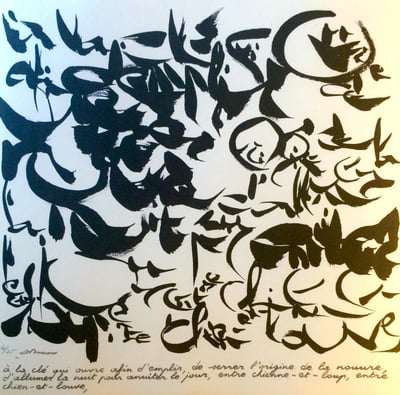
Christian Dotremont
A la clé qui ouvre…, 1978
Limited Edition Print
Lithograph
Currently Not Available

Man Ray
Erotique Voilée, 1933/85
Photography
Photograph
Currently Not Available

Kiki Smith
Moment B, 2006
Limited Edition Print
Lithograph
Currently Not Available

Gregory Crewdson
Brightview, 2005
Photography
C-Print
Currently Not Available
Related Articles



Neo-Dada is a minor visual and audio art movement with intents similar to those of Dada artwork. While it revives some of Dada's objectives, Neo-Dada emphasizes the importance of the produced artwork rather than the concept behind it. The movement is considered the foundation of Pop Art, Nouveau Réalisme, and Fluxus. Neo-Dada is known for its use of absurdist contrasts, popular imagery, and modern materials, blending high and low culture in a way that challenges traditional artistic conventions.

Spatialism is an art movement that originated in Italy in 1947, founded by Lucio Fontana with the intention of synthesizing sound, color, movement, and space into a new form of art. The movement's central ideas were outlined in Fontana's first manifesto, published in 1947, where he introduced the concept of spatial art to capture the spirit of the post-war era. His ideas were further developed in five subsequent manifestos. Although Fontana's ideas were sometimes considered vague, his influence was significant, as he was one of the first European artists to emphasize art as a performance and gesture.

Offset lithography is a printing technique where the inked image is first transferred (offset) from a plate to a rubber blanket and then to the printing surface. This method combines the lithographic process, which relies on the repulsion of water and oil, to keep non-printing areas ink-free by attracting a water-based film. Offset lithography was originally developed to reduce costs in reproducing artwork and is widely used for high-volume printing due to its efficiency and ability to produce sharp, consistent images.
Can't find your Answer?
Thank you! Your question has been sent — we'll get back to you shortly.
