

What is Tapestry?
Tapestry is a heavy, handwoven textile featuring intricate designs or images woven directly into the fabric. Created by skilled weavers using materials like wool, linen, cotton, silk, and sometimes silver and gold threads, tapestries have historically served as art pieces, decorations, insulation, and symbols of authority.
Show All
- Show All
- Established
- Discoveries
Show All
- Show All
Artworks Related to Tapestry

Koen Vanmechelen
Janus, 2005
Tapestry
Tapestry
EUR 1,900
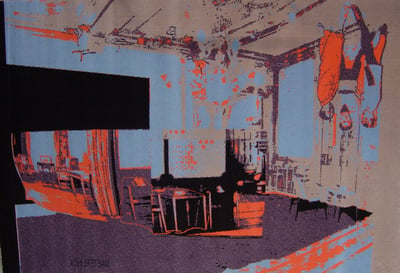
Anne-Mie Van Kerckhoven
Maeterlinck - reverse, 2003
Tapestry
Tapestry
Currently Not Available
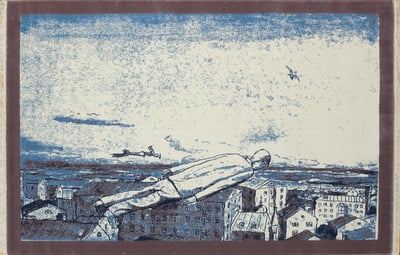
Ilja Kabakov
The Flying #4, 2006
Tapestry
Tapestry
EUR 13,500
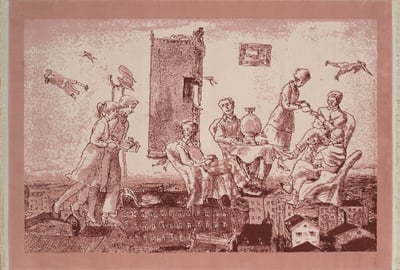
Ilja Kabakov
The Flying #3, 2006
Tapestry
Tapestry
EUR 13,500
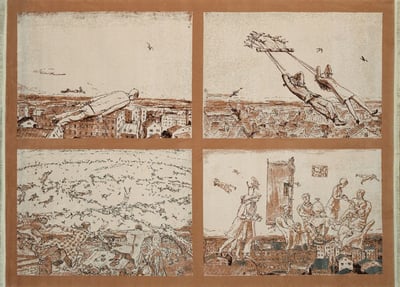
Ilja Kabakov
The Flying #2, 2006
Tapestry
Tapestry
EUR 24,000
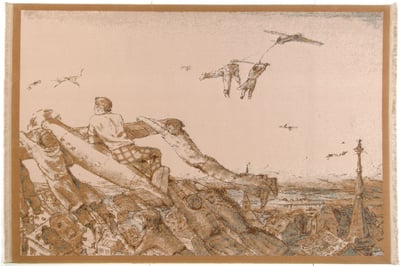
Ilja Kabakov
The Flying, 2006
Tapestry
Tapestry
EUR 13,500

Gunther Forg
Teppich 3, 2006
Tapestry
Tapestry
EUR 7,500

Gunther Forg
Teppich 2, 2006
Tapestry
Tapestry
Currently Not Available

Gunther Forg
Teppich I, 2006
Tapestry
Tapestry
EUR 7,500
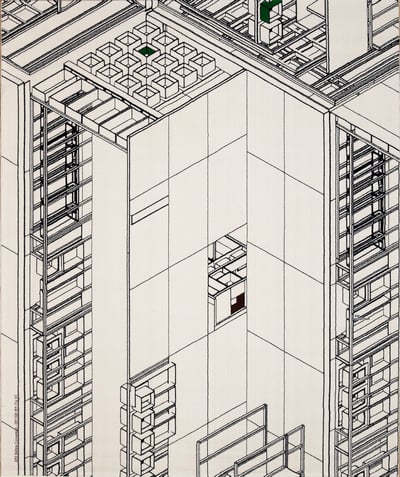
Jan De Cock
D53 Before Conversation Fig.154, 2006
Tapestry
Tapestry
EUR 11,000

Jan De Cock
D53 Before Converdation Fig.271, 2006
Tapestry
Tapestry
EUR 7,500

Jan De Cock
D53 Before Conversation Fig.267, 2006
Tapestry
Tapestry
EUR 7,500

Jan De Cock
D53 Before Conversation - fig323, 2006
Tapestry
Tapestry
EUR 6,500

Jan De Cock
D53 Before Conversation - Fig275, 2006
Tapestry
Tapestry
EUR 6,500

Jan De Cock
D53 Before Conversation - Fig252, 2006
Tapestry
Tapestry
EUR 6,500

Tony Cragg
Form Code (III), 2006
Tapestry
Tapestry
EUR 4,800
Related Articles


Crayon is a French word that means pencil. In art, a crayon is a stick made of colored wax, chalk, charcoal, or clay used for drawing and coloring. Crayons are typically made from paraffin wax, which is derived from petroleum, coal, or wood. Types of crayons include wax crayons, pastel crayons, and oil pastels.

Gouache is an opaque watercolor paint that allows artists to layer from light to dark. Unlike traditional transparent watercolors, gouache is used for creating solid, vibrant colors. It belongs to the water-media category and is made of pigment, a binding agent, and an inert material, specifically designed for opaque painting.
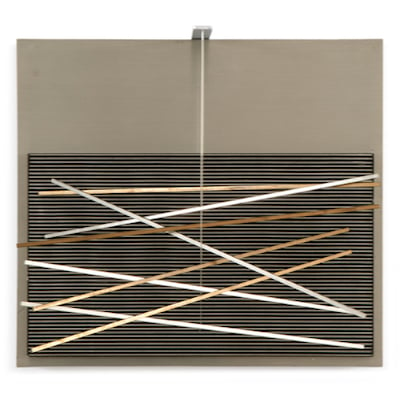
Kinetic art is an international movement that emerged in the 1920s and gained prominence in the 1960s, referring to art that involves both apparent and real motion. It encompasses any medium that includes movement, either relying on actual motion for its effect or being perceived as moving by the viewer. Early examples include canvas paintings designed to create optical illusions of movement. Today, kinetic art often refers to three-dimensional figures and sculptures, such as those operated by machines or those that move naturally. The movement covers a variety of styles and techniques that frequently overlap.
Can't find your Answer?
Thank you! Your question has been sent — we'll get back to you shortly.
