

Georg Baselitz
© Georg Baselitz. All rights reserved.
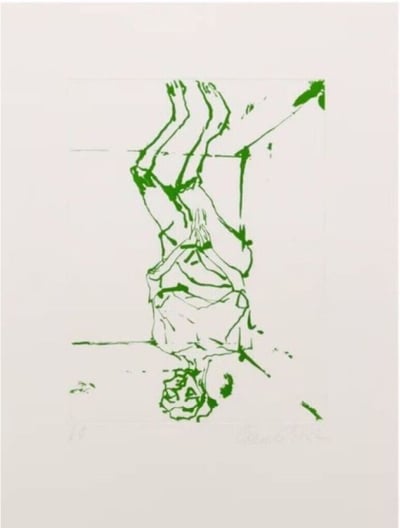
Georg Baselitz
Serpentine - green, 2022
Limited Edition Print
Etching and Aquatint
Inquire For Price

Georg Baselitz
Hirsche (set of 4), 2022
Limited Edition Print
Etching and Aquatint
Make Your Offer

Georg Baselitz
Adler (Eagle) 1, 1981
Limited Edition Print
Woodcut
Inquire For Price
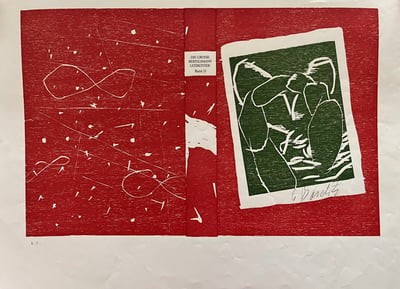
Georg Baselitz
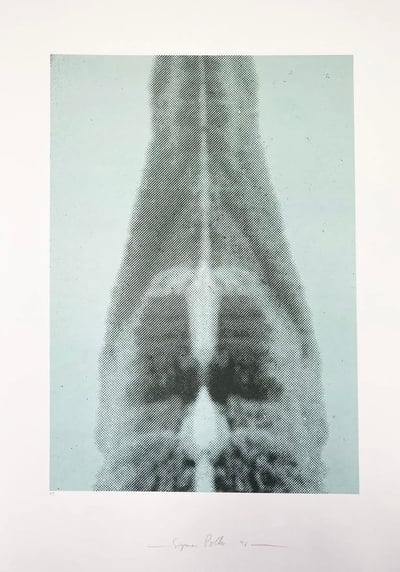
Die Grosse..., 1992
Limited Edition Print
Serigraph
EUR 1,550
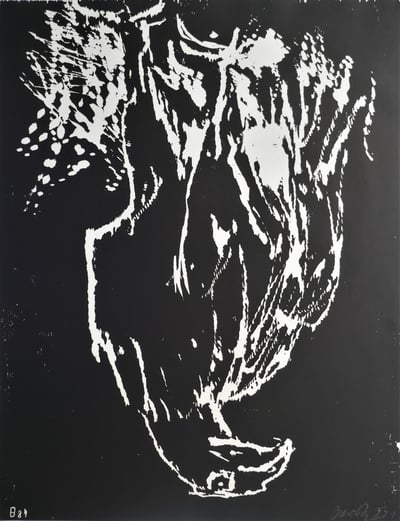
Georg Baselitz
Adler (Eagle) 2, 1981
Limited Edition Print
Woodcut
Currently Not Available

Georg Baselitz
Sono sei piedi, 2015
Limited Edition Print
Etching and Aquatint
Currently Not Available
- Georg Baselitz
Among Baselitz’s early influences were Art Brut and Abstract Expressionism, as well as the work of artists such as Wassily Kandinsky and Edvard Munch. The exaggerated features present throughout his work were intended as symbolic devices, and one of his most recognised bodies of work is the Hero series, depicting wounded and scarred soldiers in the aftermath of war.
Towards the end of the 1960s, Baselitz began painting his subjects upside down as a deliberate strategy to shift focus away from representation and toward the act of painting itself. His Elke series stands among the most notable examples of this approach.
Related Artists

Related Articles
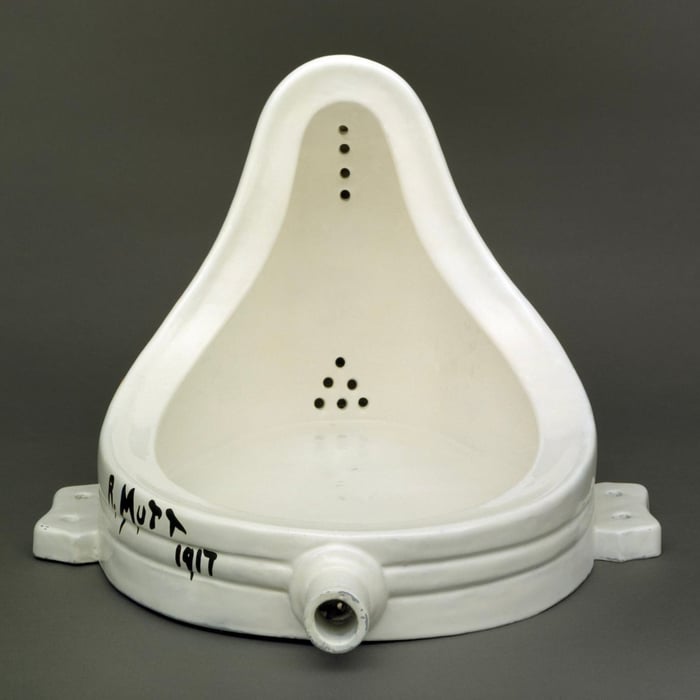
Popular, Art Movements - January 24, 2025
Exploring Dadaism: Art in the Absurd
Discover Dadaism, the radical 20th-century art movement that challenged norms with absurdity and defiance. Explore its origins, techniques, and lasting legacy.Read More
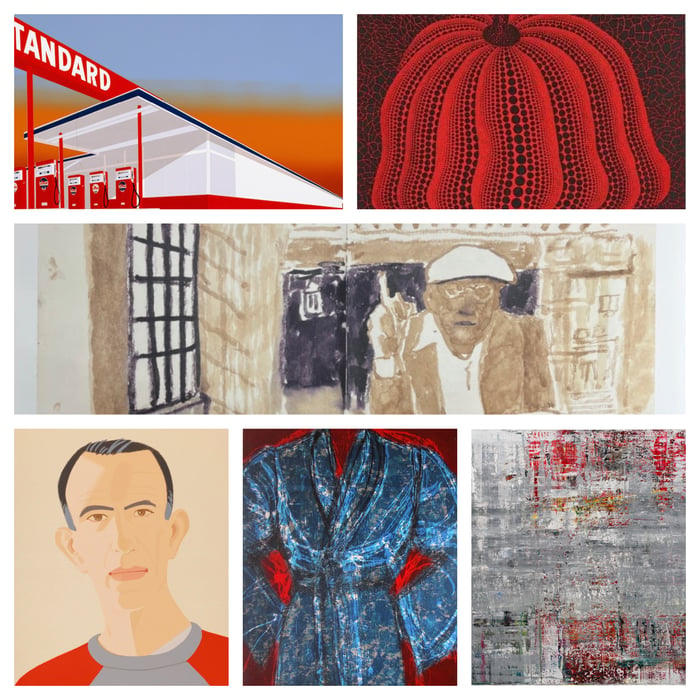
 Artwork by Alex Katz
What is figurative art?
Sometimes known as Figurativism, figurative art refers to sculptures and paintings that are clearly or specifically derived from real objects, making them representational. The term figurative art is often used in contrast to abstract art. However, since the emergence of abstract art, figurative art has come to describe any form of modern art that has strong…
Explore »

