
What is abstract expressionism?
- Show All
- Established
- Discoveries
- Show All
Artworks Related to Abstract expressionism
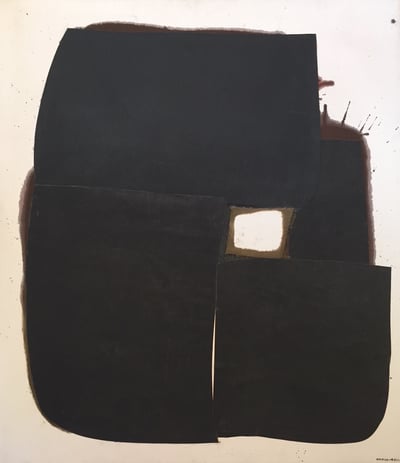
Conrad Marca-Relli
F-M-2-67, 1967
Painting
Mixed Media
USD 60,000

Adolph Gottlieb
Green Ground Blue Disc, 1966
Limited Edition Print
Serigraph
Currently Not Available

Sam Francis
Metal Line, 1971
Limited Edition Print
Lithograph
USD 8,500

John Chamberlain
Kent, 1979
Limited Edition Print
Lithograph
USD 5,500
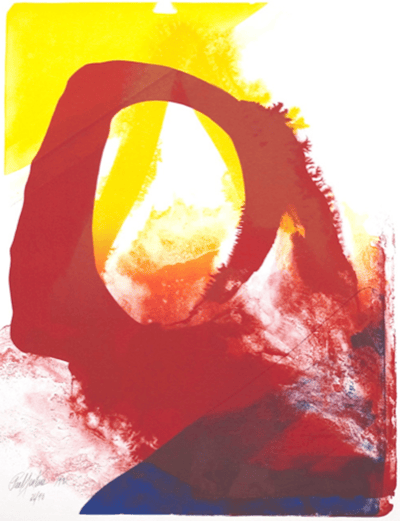
Paul Jenkins
Aspects d’Amadeus et les Autres, 1992
Limited Edition Print
Lithograph
USD 1,350

Jasper Johns
Untitled (Faces on purple), 1988
Limited Edition Print
Carborundum
USD 21,000 - 30,000
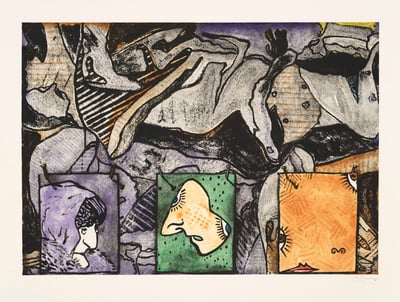
Jasper Johns
Untitled - Faces (ULAE 243), 1988
Limited Edition Print
Carborundum
USD 41,000 - 45,000

Adolph Gottlieb
Levitation, 1969
Limited Edition Print
Serigraph
Currently Not Available

Robert Rauschenberg
Opal Gospel, 1971
Sculpture / Object
Screen-print
USD 13,000 - 15,000
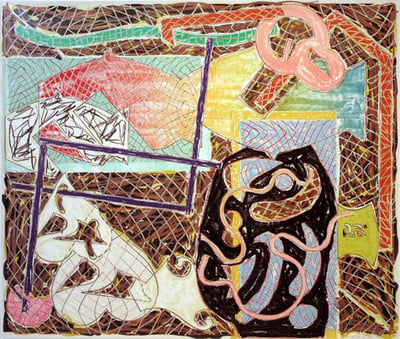
Frank Stella
Shards II, 1982
Limited Edition Print
Lithograph
USD 19,500
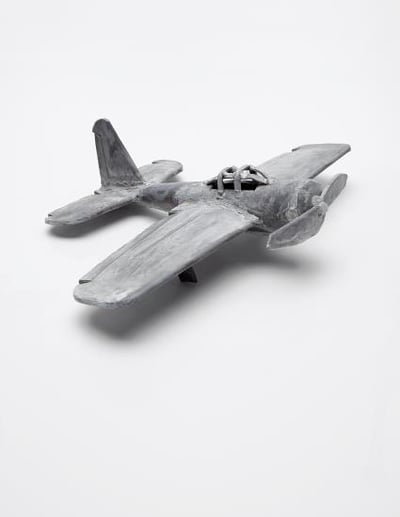
Anselm Kiefer
Die Argonauten, 2014
Sculpture / Object
Mixed Media
Currently Not Available
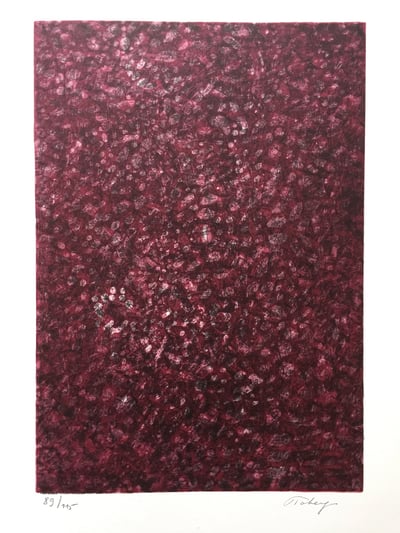
Mark Tobey
Jean Cassau
Limited Edition Print
Lithograph
Currently Not Available

Allen Jones
Catwalk II, 1999
Limited Edition Print
Etching
EUR 2,500

Allen Jones
Catwalk IV, 1999
Limited Edition Print
Etching
EUR 2,500

Allen Jones
Dance, 1999
Limited Edition Print
Lithograph
EUR 2,000
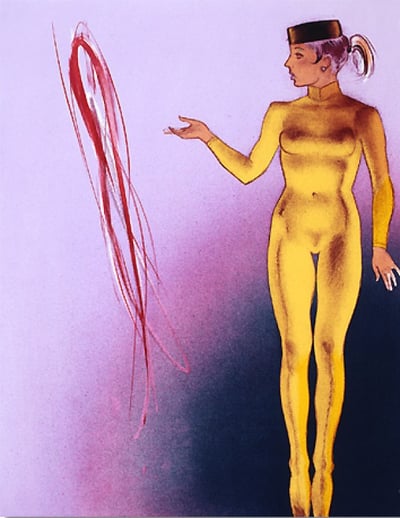
Allen Jones
Intro
Limited Edition Print
Lithograph
Currently Not Available
Related Articles

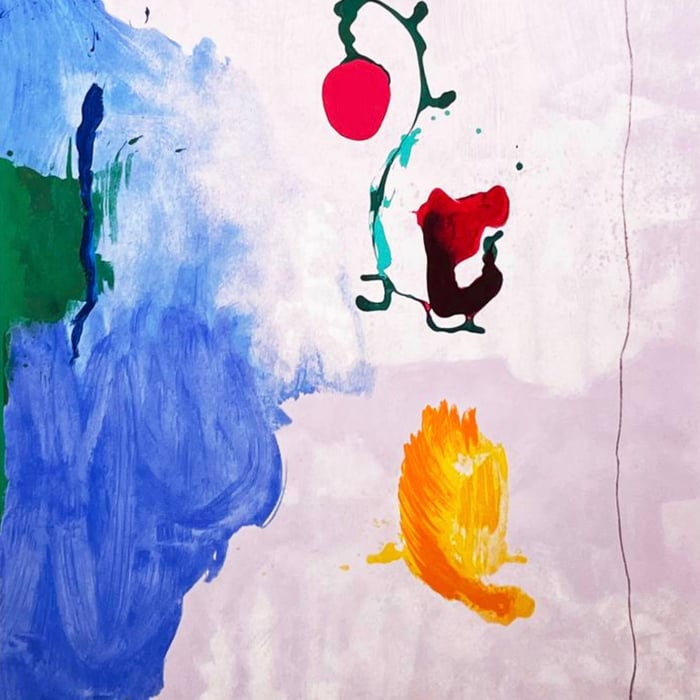
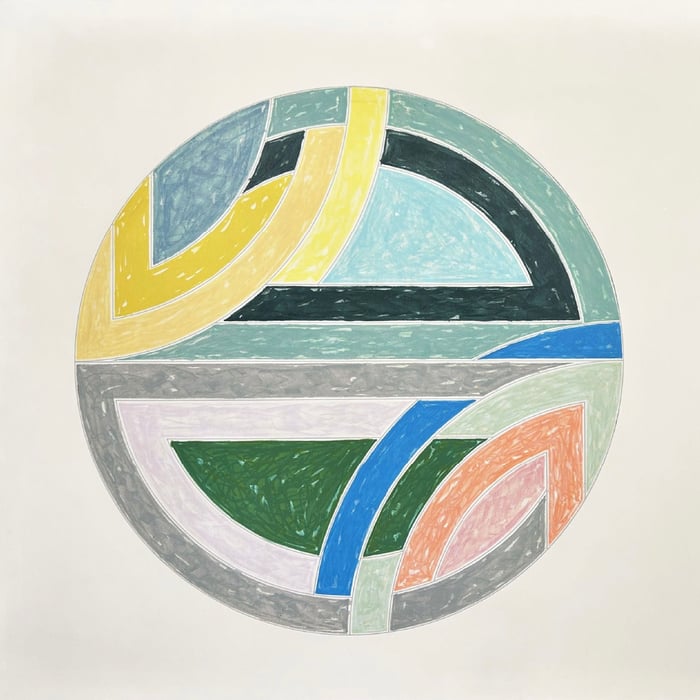

A print proof refers to any test impressions made from a printing plate or block to check the image quality before the final print is completed. These proofs are used as quality checks to ensure that the details and alignment are correct. Different types of proofs, such as artist's proofs or trial proofs, serve specific purposes during the printmaking process.

Drawing and watercolor are two traditional art techniques which stand alone as media, but are often used in conjunction with each other. Drawing can create the basic outlines for watercolor painting. Drawing over dried watercolor or using watercolor pencils are combined media techniques.
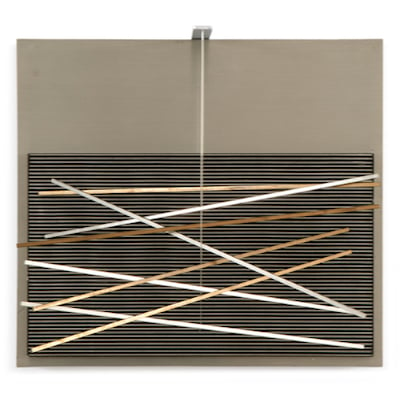
Kinetic art is an international movement that emerged in the 1920s and gained prominence in the 1960s, referring to art that involves both apparent and real motion. It encompasses any medium that includes movement, either relying on actual motion for its effect or being perceived as moving by the viewer. Early examples include canvas paintings designed to create optical illusions of movement. Today, kinetic art often refers to three-dimensional figures and sculptures, such as those operated by machines or those that move naturally. The movement covers a variety of styles and techniques that frequently overlap.
Can't find your Answer?
Thank you! Your question has been sent — we'll get back to you shortly.
