
What is abstract expressionism?
- Show All
- Established
- Discoveries
- Show All
Artworks Related to Abstract expressionism

Robert Rauschenberg
In Transit (Goddess Depot), 2001
Limited Edition Print
Lithograph
USD 6,600

Louise Bourgeois
Untitled (Undulating Ribbon), 1997
Drawing / Watercolor
Mixed Media
Inquire For Price

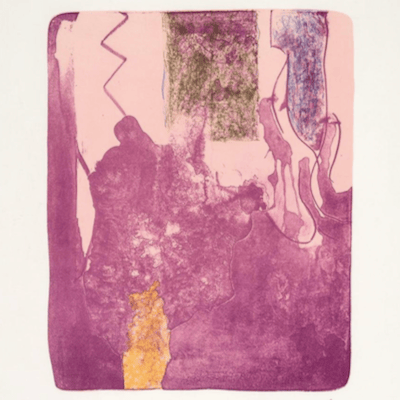
Helen Frankenthaler
Reflections IX, 1995
Limited Edition Print
Lithograph
USD 7,150

Willem de Kooning
Untitled from Self Portrait in a Convex Mirror, 1984
Limited Edition Print
Lithograph
Inquire For Price

Frank Stella
Had Gadya: Front Cover, from Illustrations after El Lissitzky's Had Gadya, 1984
Limited Edition Print
Collage
USD 19,850
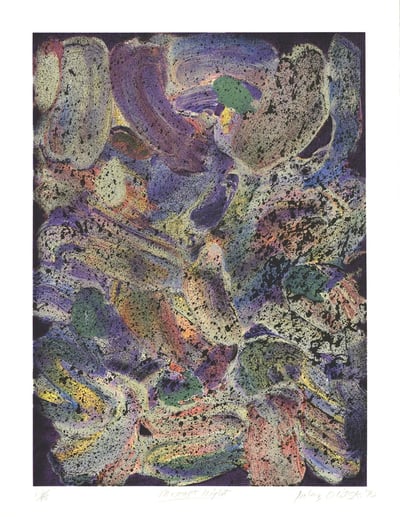
Jules Olitski
Mozart Night, 1992
Limited Edition Print
Silkscreen
USD 3,960

Jasper Johns
The Season, 1990
Limited Edition Print
Etching
USD 14,000 - 17,000

Carmen Herrera
Untitled (Vertical Blue Band), 2018
Limited Edition Print
Intaglio
GBP 7,000 - 10,000
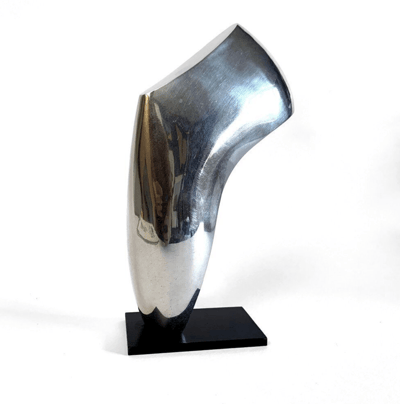
Allen Jones
Shoe Box, 1968
Sculpture / Object
Metal
GBP 7,000 - 10,000

André Butzer
Untitled 1–3 (Suite of 3), 2021
Limited Edition Print
Screen-print
USD 10,800

André Butzer
Pendant Light, 2021
Sculpture / Object
Mixed Media
USD 10,000 - 12,000

Donald Sultan
Mimosa, April 12, 2023, 2023
Limited Edition Print
Archival Print
USD 4,200

Donald Sultan
Mimosa with Green, Jan 25, 2023, 2023
Limited Edition Print
Archival Print
USD 4,200

Donald Sultan
Red and Yellow Poppies, 2023
Sculpture / Object
Mixed Media
USD 15,450

Donald Sultan
Blue and Yellow Poppies, 2023
Sculpture / Object
Mixed Media
USD 15,450

Robert Rauschenberg
One More and We Will Be More Than Halfway There, from Suite of Nine Prints, 1979
Limited Edition Print
Offset Print
USD 2,125
Related Articles

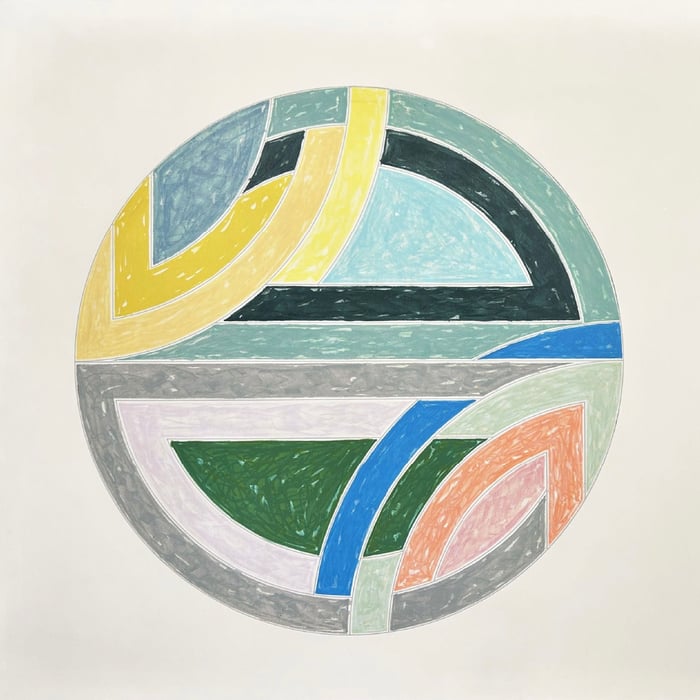

Photorealism is a genre of art or artistic movement that involves drawing, painting, and other graphic media in which the artist carefully studies a photograph and attempts to reproduce it as realistically as possible in another medium. While the term can broadly describe any artwork created in this manner, it specifically refers to a group of painters and paintings in the U.S. art movement that emerged in the late 1960s and early 1970s.

A replica is a copy of an artwork that is so precisely made that it is nearly indistinguishable from the original. Artists may create replicas of their own work, or replicas can be produced for educational purposes, preservation, or display when the original cannot be shown. While replicas aim to closely mimic the original, they are usually identified as reproductions rather than original works.
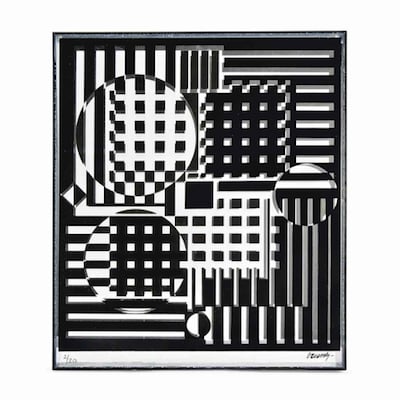
Op Art is a visual art style that uses optical illusions to create the impression of movement, vibrating patterns, flashing, or hidden images. The works are typically abstract, with many well-known pieces in black and white. The roots of Op Art can be traced back to earlier movements like Futurism, Constructivism, Dada, and Neo-Impressionism, particularly in their use of color effects and graphic design.
Can't find your Answer?
Thank you! Your question has been sent — we'll get back to you shortly.
