

What is late modernism?
- Show All
- Established
- Discoveries
- Show All
Artworks Related to Late modernism

Claes Oldenburg
Centennial Print for the Judson Memorial Church, 1990
Limited Edition Print
Screen-print
USD 1,150

Red Grooms
Katherine Marcel and the Bride, 1997
Sculpture / Object
Mixed Media
USD 6,300
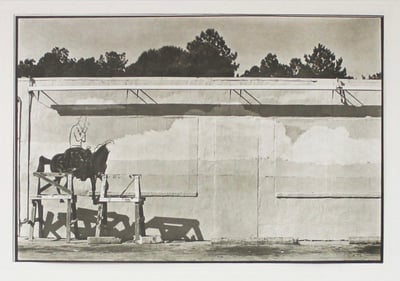
Robert Rauschenberg
Plate from Photogravures Suite 1, 1983
Limited Edition Print
Photogravure
Currently Not Available
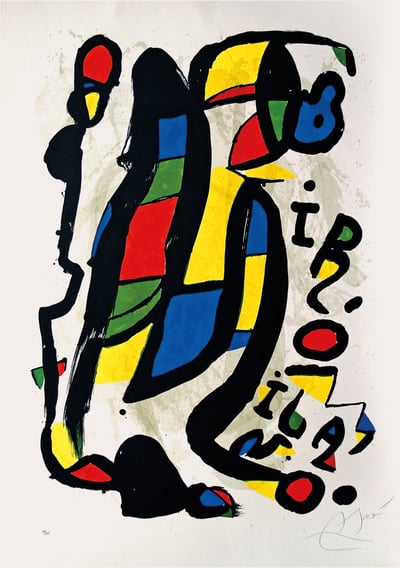
Joan Miró
Mirò Milano, 1981
Limited Edition Print
Lithograph
EUR 11,300

Richard Hamilton
Kent State, 1970
Limited Edition Print
Silkscreen
EUR 3,450

Richard Hamilton
Poster, 1973-74
Limited Edition Print
Mixed Media
EUR 5,000

Man Ray
Cactus Diamond , 1969
Limited Edition Print
Silkscreen
EUR 4,850

Man Ray
Rue Férou, 1974
Limited Edition Print
Lithograph
EUR 2,500

Man Ray
La Fortune II, 1973
Limited Edition Print
Lithograph
EUR 4,250

Man Ray
Incompris, 1962
Limited Edition Print
Lithograph
EUR 3,660
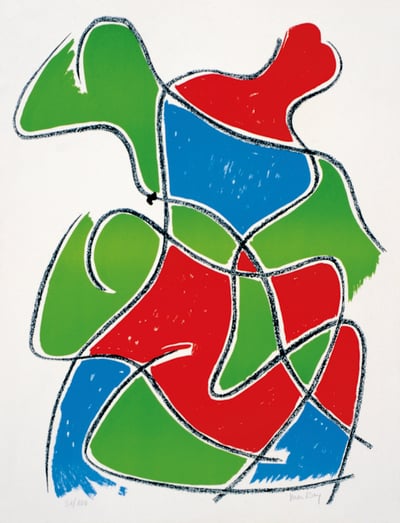
Man Ray
Tre Figure, 1968
Limited Edition Print
Lithograph
EUR 3,450

Piero Dorazio
Blue Lines, 1988
Limited Edition Print
Silkscreen
EUR 4,250

Piero Dorazio
Color fax 4, 1990
Limited Edition Print
Aquatint
EUR 2,250

Piero Dorazio
Color fax 3, 1990
Limited Edition Print
Aquatint
EUR 2,250

Piero Dorazio
Color fax 2, 1990
Limited Edition Print
Aquatint
EUR 2,250

Piero Dorazio
Color fax 1, 1990
Limited Edition Print
Aquatint
EUR 2,250
Related Articles


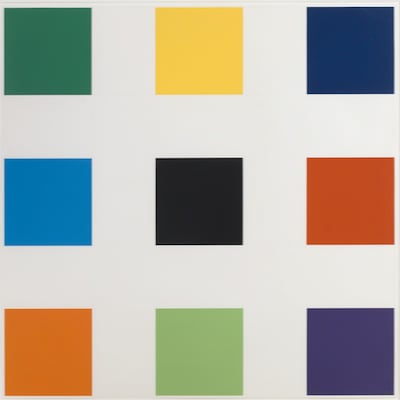
Hard Edge art is a style of abstract painting that became popular in the 1960s. It features areas of color separated by crisp, sharp edges that are painted with geometric precision. The term hard-edge painting was coined by art critic Jules Langsner to describe this approach, which contrasts with the softer, more fluid forms of other abstract styles.

Entropy, in a broader sense, refers to the inevitable deterioration or decline of a society or system. In art, the concept was popularized by artist Robert Smithson in the 1960s. He used the term to critique what he saw as the static and overly simplified nature of contemporary minimalist art. Smithson's work often explored the idea of entropy as a force of chaos and decay, contrasting with the perceived order and purity of minimalist works.

Graffiti art refers to drawings and writings that are painted, scratched, or scribbled on walls or other surfaces, typically in public spaces. This art form ranges from small tags to elaborate wall paintings. Graffiti has been in existence since ancient times, with examples dating back to the Roman Empire, Ancient Greece, and Ancient Egypt.
Can't find your Answer?
Thank you! Your question has been sent — we'll get back to you shortly.
