
What is abstract art?
- Show All
- Established
- Discoveries
- Show All
Artworks Related to Abstract art

Antonio Saura
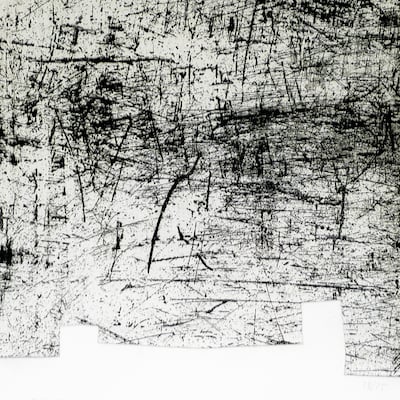
India, 1983
Limited Edition Print
Mixed Media
EUR 2,000

Antonio Saura
Cocktail party, 1982
Limited Edition Print
Mixed Media
EUR 2,000
Antonio Saura
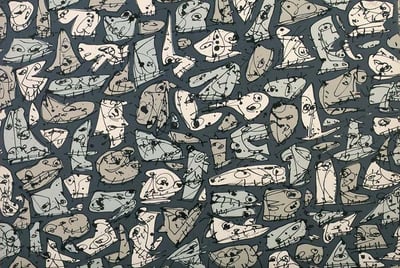
Diada I, 1977
Limited Edition Print
Mixed Media
EUR 2,000

Antonio Saura
Les dangers de la liaison, 1984
Limited Edition Print
Mixed Media
EUR 3,390

Antonio Saura
Serie abierta, 1989
Limited Edition Print
Mixed Media
EUR 2,000
Antonio Saura
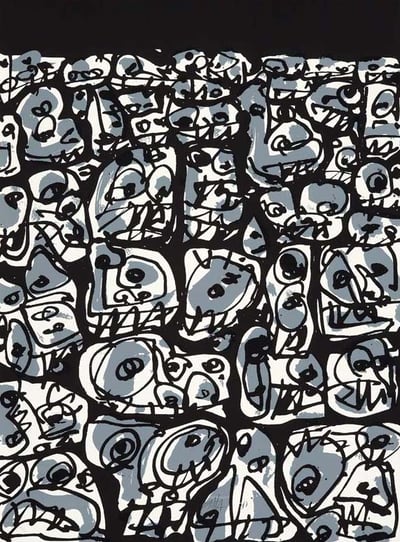
Multitud, 1993
Limited Edition Print
Screen-print
EUR 1,650

Antonio Saura
Melanchton III, 1988
Limited Edition Print
Lithograph
EUR 1,650

Antonio Saura
Melanchton II, 1988
Limited Edition Print
Lithograph
EUR 1,650

Antonio Saura
Don, 1988
Limited Edition Print
Lithograph
EUR 1,650

Antonio Saura
Philippe II, 1988
Limited Edition Print
Lithograph
EUR 1,650

Antonio Saura
Melanchton I, 1988
Limited Edition Print
Lithograph
EUR 1,650

Antonio Saura
El caballero, 1996
Limited Edition Print
Mixed Media
EUR 1,750

Antonio Saura
Foule, 1989
Limited Edition Print
Lithograph
EUR 2,200

Antonio Saura
Felipe II, 1971
Limited Edition Print
Serigraph
EUR 3,000

Antonio Saura
Remembrandt, 1973
Limited Edition Print
Serigraph
EUR 1,350

Antonio Saura
Aphorismen V, 1973
Limited Edition Print
Serigraph
EUR 1,350
Related Articles

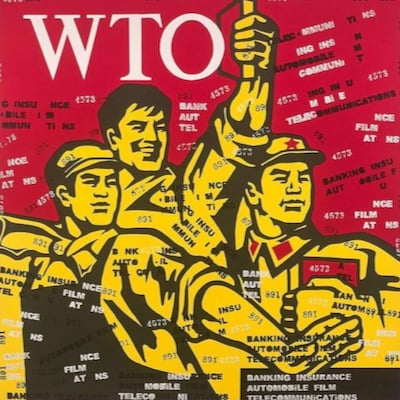
Political Pop was an art movement that emerged in China during the 1980s, blending the Pop Art style of Western countries with the socialist realism of China. This movement arose during a time of rapid social and political change in China, as artists sought to create works that questioned and critiqued these cultural shifts. Political Pop often juxtaposed iconic images from Chinese propaganda with Western consumer culture, highlighting the tensions between tradition and modernization.

Performance Art is a genre of fine art that is traditionally interdisciplinary, involving various art forms. It can be scripted or unscripted, random or carefully orchestrated, spontaneous, or meticulously planned, with or without audience participation. Performance Art can be presented live or through media, with the artist either present or absent. It typically involves four basic elements: space, the performer’s body or presence through a medium, time, and the relationship between performer and audience. The artwork consists of actions performed by an individual or group in a specific time and space.

Nouveau Réalisme is an artistic movement founded in 1960 by art critic Pierre Restany and painter Yves Klein during a collective exhibition at a gallery in Milan. Restany wrote the original manifesto in April 1960, proclaiming the movement. In October of that year, nine artists, including Martial Raysse, Yves Klein, Daniel Spoerri, Jean Tinguely, Arman, Pierre Restany, and three Ultra-Lettrists—Jacques de la Villeglé, François Dufrêne, and Raymond Hains—signed the declaration. In 1961, the movement expanded to include Mimmo Rotella, Niki de Saint Phalle, Gérard Deschamps, and César. The movement emphasized a return to reality in art, often incorporating everyday objects and exploring the boundaries between art and life.
Can't find your Answer?
Thank you! Your question has been sent — we'll get back to you shortly.
